

Table of Contents
TogglePendant lights do more than illuminate countertops, they set the mood, define zones, and act as functional sculpture hanging over the busiest room in the house. In 2026, kitchens are embracing fixtures that break away from builder-grade basics: think hand-blown glass, reclaimed metal, and geometric forms that double as conversation pieces. Whether you’re planning a full remodel or just swapping out outdated fixtures, the right pendant can shift a kitchen from forgettable to striking without tearing into drywall.
Key Takeaways
- Unique pendant lighting defines kitchen zones, creates visual interest, and transitions from task illumination during meal prep to ambient glow during dining when paired with dimmer switches.
- Industrial pendants with powder-coated steel or aged brass finishes, paired with Edison-style LED bulbs (2700K–3000K, 800+ lumens), deliver both durability in humid kitchens and warmth without requiring frequent maintenance.
- Hand-blown glass pendants diffuse light beautifully and work best over islands in neutral kitchens; prioritize tempered or double-walled glass for impact resistance and reserve colored shades for ambient rather than task lighting.
- Geometric and sculptural fixtures bring architectural drama in contemporary kitchens, with proper sizing following the rule of one-half to two-thirds of your island width, and spacing 24–30 inches apart (center to center) for balanced coverage.
- Natural-fiber pendants in rattan, bamboo, and wood soften modern spaces but require moisture-resistant coatings in humid kitchens and weekly dusting with dry cloths to prevent warping or mold.
- Proper installation requires mounting 30–36 inches above countertops for islands, confirming your junction box supports the fixture’s weight, and verifying LED dimmer compatibility before purchase to avoid flickering.
Why Pendant Lighting Makes a Statement in Modern Kitchens
Pendant fixtures bring light down to task height, ideal over islands, peninsulas, and breakfast bars where prep work and conversation happen. Unlike recessed cans or flush mounts, pendants create vertical visual interest and draw the eye upward, making ceilings feel taller.
They also offer flexibility. A single oversized pendant can anchor a small eat-in kitchen, while a trio of matching or mixed fixtures can define a large island. The fixture itself becomes part of the design language, industrial pendants reinforce modern or loft aesthetics, while organic materials like rattan soften contemporary spaces.
From a practical standpoint, pendants put light exactly where it’s needed. Hanging 18 to 30 inches above an island surface provides ample task illumination without glare. Pair them with dimmer switches, and they transition from bright work light during meal prep to ambient glow during dinner.
Installation is straightforward for anyone comfortable working with electrical boxes. Most pendants mount to standard 4-inch round or octagonal junction boxes. If you’re replacing an existing fixture, it’s often a direct swap. Adding new pendants over an island may require running new wiring, check local codes and consider hiring a licensed electrician if you’re unfamiliar with the National Electrical Code (NEC) requirements for kitchen circuits.
Industrial-Inspired Pendant Lights: Raw Materials Meet Modern Design
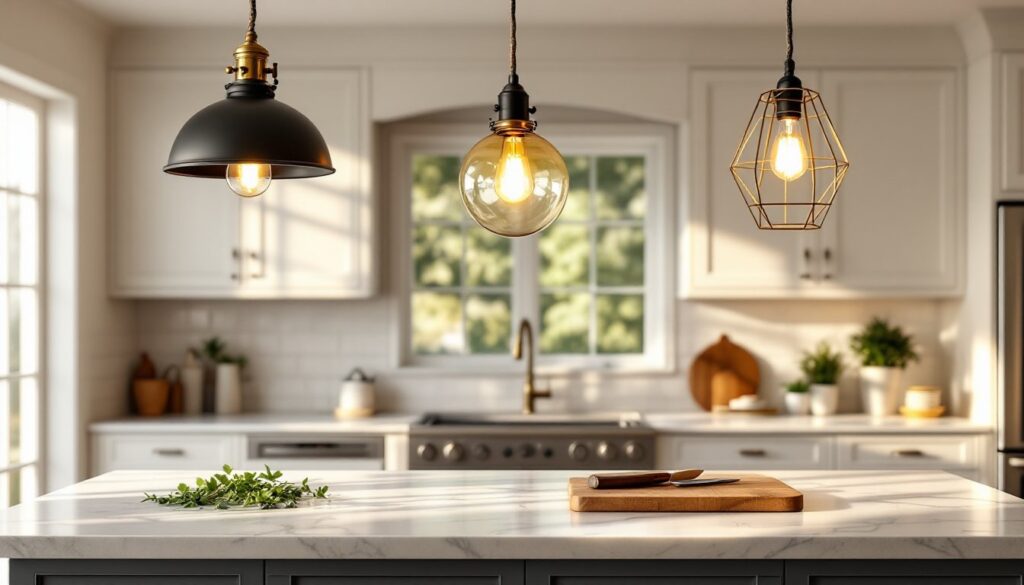
Industrial pendants lean on exposed hardware, raw metal finishes, and utilitarian shapes, cage guards, barn shades, and warehouse-style enamel domes. These fixtures work especially well in kitchens with open shelving, stainless appliances, or exposed ductwork.
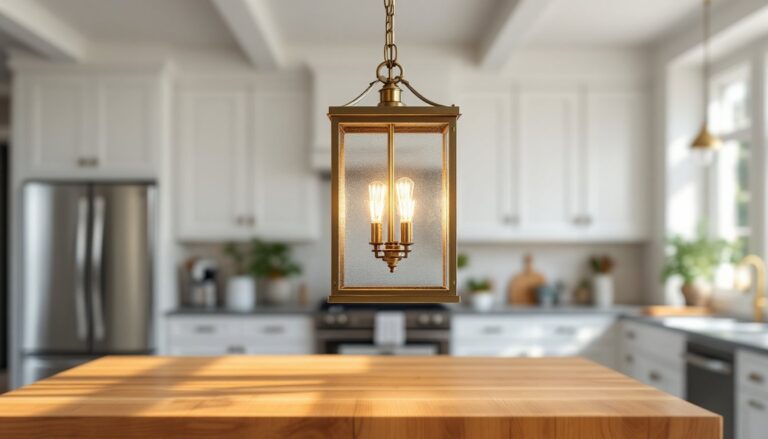
Look for powder-coated steel or aged brass finishes. Powder coating resists chips and corrosion better than spray paint, important in humid kitchen environments. Brass develops a natural patina over time, adding character without maintenance.
Many industrial pendants use Edison-style LED bulbs (the kind with visible filaments). They deliver warm light (2700K–3000K) and last 15,000+ hours, far outlasting incandescent bulbs they mimic. Check the lumens, 800 lumens is roughly equivalent to a 60-watt incandescent, sufficient for ambient lighting but consider 1100+ lumens if the pendant is your primary task light.
Cord length matters. Most industrial pendants ship with adjustable cloth-covered or braided metal cords. Plan to trim the cord during installation to achieve the right drop, measure twice, and leave a few extra inches coiled inside the canopy for future adjustments. Homeowners seeking additional ambient lighting options often pair industrial pendants with flush mount fixtures in adjacent spaces.
Installation tip: Industrial metal shades can be heavy. Confirm your junction box is rated for the fixture’s weight (most standard boxes support up to 50 pounds, but check the label). If you’re mounting to drywall or plaster without solid backing, use a fan-rated pancake box screwed directly into a ceiling joist.
Artistic Glass Pendants: Adding Color and Texture Overhead
Hand-blown glass pendants range from subtle frosted globes to vibrant art-glass pieces with swirls, bubbles, or layered colors. They diffuse light beautifully and work in kitchens where the fixture itself is meant to stand out, over islands in white or neutral kitchens, or as a focal point in open-concept layouts.
Mouth-blown glass versus machine-pressed glass: Mouth-blown pieces show subtle irregularities (slight thickness variations, tiny air bubbles) that catch light differently than mass-produced shades. They’re often heavier and pricier but deliver a custom look. Machine-pressed glass is uniform, lighter, and more affordable, perfectly fine for most installations.
Color choice affects the light quality. Clear or lightly tinted glass provides bright, unfiltered illumination. Amber, green, or cobalt shades cast colored light, which can be striking but may distort food colors during prep. Consider using colored glass for ambient fixtures and reserving neutral shades for task lighting.
Glass is fragile. If you have young kids or low ceilings, choose tempered or double-walled glass, which is more impact-resistant. When installing, always wear work gloves to avoid fingerprints and oils that can etch the surface over time. Platforms like Houzz showcase hundreds of glass pendant installations for visual reference.
Cleaning: Dust monthly with a microfiber cloth. For deeper cleaning, remove the shade (turn off power first), wash with warm soapy water, and dry completely before reinstalling. Avoid abrasive cleaners that can scratch or dull the finish.
Geometric and Sculptural Fixtures: Bold Shapes for Contemporary Kitchens
Geometric pendants, hexagons, wireframe cubes, asymmetrical cages, bring architectural drama without competing with cabinetry or countertops. They’re popular in modern and transitional kitchens, where clean lines and mixed materials (metal + wood, matte black + brass) define the aesthetic.
Open-frame versus solid-shade designs: Open wireframe pendants cast interesting shadows and work well in multiples, creating a repeating pattern overhead. Solid geometric shades (like faceted metal or folded paper-look fixtures) concentrate light downward, better for task-focused areas.
Scale is critical. A 12- to 16-inch diameter pendant works over a standard 36-inch-wide island: go larger (20+ inches) for wider islands or if hanging a single statement piece. When clustering multiple fixtures, odd numbers (three or five) typically look more balanced than pairs.
Many sculptural fixtures use LED strip lighting or integrated LED modules rather than standard bulb sockets. Integrated LEDs are energy-efficient and long-lasting (25,000–50,000 hours) but can’t be replaced when they fail, you’ll need to replace the entire fixture. Weigh that against fixtures with standard E26 sockets, where you can swap bulbs as needed.
Mounting height: For island pendants, aim for 30 to 36 inches above the countertop. Taller users may prefer the higher end of that range to avoid head-bumping. If your ceilings are higher than 9 feet, you may need to adjust the drop to maintain proper scale, too much empty space between fixture and counter looks disconnected.
Natural and Organic Materials: Bringing Warmth with Wood, Rattan, and Bamboo
Natural-fiber pendants, woven rattan, bamboo lattice, carved wood, soften modern kitchens and complement farmhouse, coastal, or Scandinavian styles. They filter light through textured surfaces, casting warm, dappled patterns on counters and walls.
Material durability: Rattan and bamboo are naturally moisture-resistant but not waterproof. In kitchens with high humidity (poor ventilation, frequent boiling), fibers can warp or develop mold over time. Look for pendants with a clear protective finish or polyurethane coating. Avoid placing them directly above ranges or sinks where steam exposure is constant.
Wood shades, especially those carved or turned from hardwoods like walnut or oak, are heavier and more stable than woven fibers. They pair well with butcher-block counters and natural wood cabinetry. Lighter woods like birch or ash reflect more light: darker woods like walnut absorb it, creating moodier illumination.
These fixtures often ship as a shade only, requiring a separate cord kit or pendant conversion kit. Kits typically include a canopy, cord, socket, and mounting hardware, easy to assemble, and they let you customize cord length and finish. Choose a cord color (black, white, brass, or fabric-wrapped) that complements the shade.
Maintenance: Dust weekly with a dry microfiber cloth or soft brush. Avoid water or spray cleaners, which can stain or degrade natural fibers. If fibers loosen over time, a tiny dab of clear craft glue can secure them without visible residue. Kitchens with vintage farmhouse aesthetics often lean heavily on natural material pendants for cohesive design.
How to Choose the Right Pendant Size and Placement for Your Kitchen
Sizing formula: For a single pendant over a small table or narrow island, measure the width of the surface in inches, then aim for a pendant diameter that’s one-half to two-thirds that width. For example, a 36-inch-wide island works well with an 18- to 24-inch pendant.
For multiple pendants, space them 24 to 30 inches apart (center to center). On a 6-foot island, three 12-inch pendants spaced 28 inches apart provide even coverage. Adjust spacing if your pendants are larger or if you’re mixing different sizes.
Ceiling height considerations: Standard 8- to 9-foot ceilings limit how much cord you can show. Keep the bottom of the pendant at least 30 inches above the counter, leaving roughly 6 feet of clearance from the floor (important in walk-through kitchens). Taller ceilings (10+ feet) let you extend the drop for more visual drama, just maintain that 30-inch minimum clearance from the work surface.
Electrical planning: If you’re adding pendants to a space with no existing ceiling fixture, you’ll need to run new wiring from a switch or junction box. This often means opening the ceiling, fishing wire through joists, and patching drywall, doable for experienced DIYers but a good candidate for professional help if you’re not comfortable with rough-in electrical work. Check whether your project requires a permit: most jurisdictions require one for new circuits or junction boxes.
Dimmer compatibility: Not all LED bulbs dim smoothly. If you’re installing a dimmer switch, verify the bulbs (or integrated LED driver) are labeled dimmable and match the dimmer type (most modern LEDs work with TRIAC or ELV dimmers). Incompatible combinations cause flickering or buzzing. Designers on Remodelista frequently recommend testing dimmers with fixture samples before finalizing purchases.
Mixing styles: Clustering different pendant styles over a single island can work, if they share a unifying element (finish, shape language, or scale). Mixing a glass globe with a metal cage and a wood shade usually reads as chaotic unless tied together by matching cord color or a cohesive palette. When in doubt, stick to a single style in multiples.
Conclusion
Unique pendant lighting transforms kitchens from purely functional spaces into rooms with personality and focus. Whether you lean toward the raw edge of industrial metal, the artistry of hand-blown glass, or the warmth of natural fibers, the fixture you choose shapes how the space feels and functions. Measure carefully, plan your electrical runs, and don’t skip the dimmer, it’s the difference between a fixture that works and one that works beautifully at any hour.