
Table of Contents
ToggleLandscape lighting transforms a yard from invisible after dark to a functional, safe, and inviting outdoor space. But professional installation can easily run thousands of dollars. That’s where Costco steps in. The warehouse giant offers a rotating selection of landscape lighting kits that deliver solid quality at a fraction of what specialty retailers charge. Whether you’re lighting a pathway, highlighting a favorite tree, or adding security around the perimeter, Costco’s options combine value, decent warranties, and plug-and-play simplicity that most DIYers can handle in a weekend.
Key Takeaways
- Costco landscape lighting kits cost 30-50% less than specialty retailers and include all components needed for DIY installation, making professional outdoor lighting affordable for most budgets.
- Choose between solar-powered kits (zero operating costs, no wiring required) and low-voltage LED systems (brighter, weather-independent output) based on your yard’s sunlight exposure and electrical access.
- Proper installation requires planning your layout, burying cable 6 inches deep for low-voltage systems, testing before backfilling, and checking that fixtures are spaced 8-10 feet apart for pathway coverage.
- Layer your landscape lighting with pathway lights for safety, accent lighting for visual interest, and ambient lighting for atmosphere—avoid overlighting, which creates clutter rather than elegance.
- LED landscape lighting costs only $2-4 per month to operate and pays for itself within 10 years through energy savings compared to older halogen systems, plus minimal maintenance beyond annual cleaning and inspections.
Why Choose Costco for Your Landscape Lighting Needs?
Costco’s business model, bulk purchasing and limited SKU rotation, means they negotiate directly with manufacturers and pass savings on to members. Landscape lighting kits at Costco typically cost 30-50% less than equivalent systems at home improvement chains or lighting specialty stores.
Most Costco lighting kits include everything needed for installation: fixtures, cable or solar panels, transformers (for low-voltage systems), connectors, and stakes. This eliminates the frustration of buying components piecemeal and discovering you’re short a connector at 8 PM on a Saturday.
Warranties tend to be competitive. Many Costco-branded and third-party lighting systems come with 2-5 year warranties covering defects, and Costco’s return policy adds an extra layer of buyer protection. If a fixture fails in the first 90 days, you can return the entire kit, no questions asked.
Availability is the trade-off. Costco rotates inventory seasonally and regionally. A kit available in March might be gone by June, and what’s stocked in Phoenix won’t necessarily appear in Portland. If you find a kit that fits your project, it’s wise to buy it then rather than waiting.
Top Costco Landscape Lighting Options Available Now
Costco’s landscape lighting selection breaks down into two main categories: solar-powered kits and low-voltage LED systems. Each has distinct advantages depending on your site conditions, budget, and willingness to run cable.
Solar-Powered Landscape Lighting Kits
Solar kits are the easiest entry point. No wiring, no transformer, no electrical permit. Most Costco solar kits include 6-12 fixtures with integrated LED bulbs, a solar panel with a ground stake, and a rechargeable battery pack. Fixtures connect to the panel via low-voltage cable (usually 18-22 AWG), and the panel charges during the day to power lights at dusk.
Pros: Zero operating cost after purchase. Installation takes 30-60 minutes. Fixtures can be repositioned anytime without rewiring.
Cons: Performance depends on sunlight exposure. If your yard is heavily shaded or you live in a region with long winters, expect shorter runtime and dimmer output. Most solar LEDs produce 10-30 lumens per fixture, which is enough for accent lighting but won’t replace porch floods.
Look for kits with monocrystalline solar panels rather than polycrystalline. They’re more efficient in partial shade. Battery capacity matters too, lithium-ion packs outlast NiMH and hold a charge longer in cold weather.
Low-Voltage LED Lighting Systems
Low-voltage kits run on 12V DC power supplied by a plug-in transformer. Costco’s typical offerings include a transformer (ranging from 45W to 200W capacity), 8-16 LED fixtures, and 50-100 feet of direct-burial cable (usually 12 or 14 AWG).
Pros: Consistent, bright output regardless of weather. Most fixtures deliver 50-150 lumens, enough for pathway lighting and landscape accents. Runtime is unlimited as long as the transformer is plugged in. Many transformers include timers and photocells for automatic operation.
Cons: Requires a GFCI-protected outdoor outlet within reach of the transformer. Cable must be buried (typically 6 inches deep, per NEC guidelines for low-voltage landscape lighting). Voltage drop becomes an issue on long runs, if you’re lighting a path more than 100 feet from the transformer, you’ll need to calculate wire gauge carefully or add a second transformer.
Costco’s low-voltage kits often feature cast aluminum or heavy-duty plastic housings. Aluminum resists corrosion better and handles freeze-thaw cycles without cracking, but plastic fixtures are lighter and easier to reposition. Check the IP rating, IP65 or higher ensures the fixture can handle rain and sprinkler spray.
Brands rotate, but as of early 2026, Costco frequently stocks Feit Electric, Hampton Bay, and private-label Kirkland Signature kits. All three use standard MR16 or wedge-base LED bulbs, so replacements are easy to source if a bulb fails after the warranty expires.
How to Install Costco Landscape Lighting: A DIY Step-by-Step Guide
Most landscape lighting installs follow a similar workflow, whether solar or low-voltage. Budget 3-5 hours for a typical 8-12 fixture layout, including layout planning and cable burial.
Tools and materials:
- Measuring tape
- Flat-blade shovel or edging tool
- Wire strippers (for low-voltage systems)
- Cable staples or landscape fabric pins
- Safety glasses and gloves
Step-by-step installation:
-
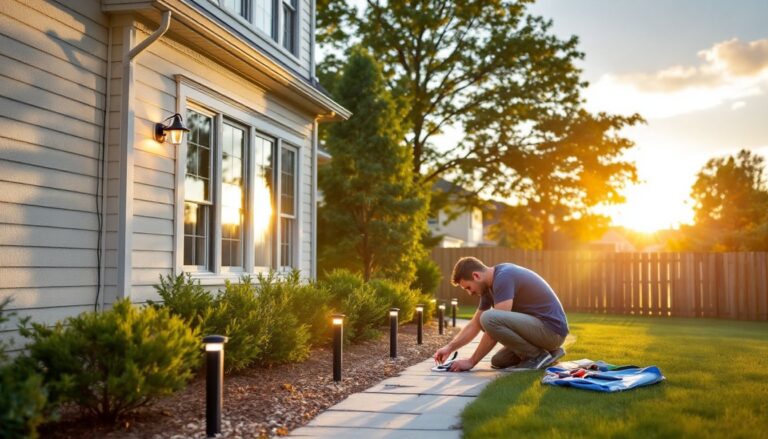
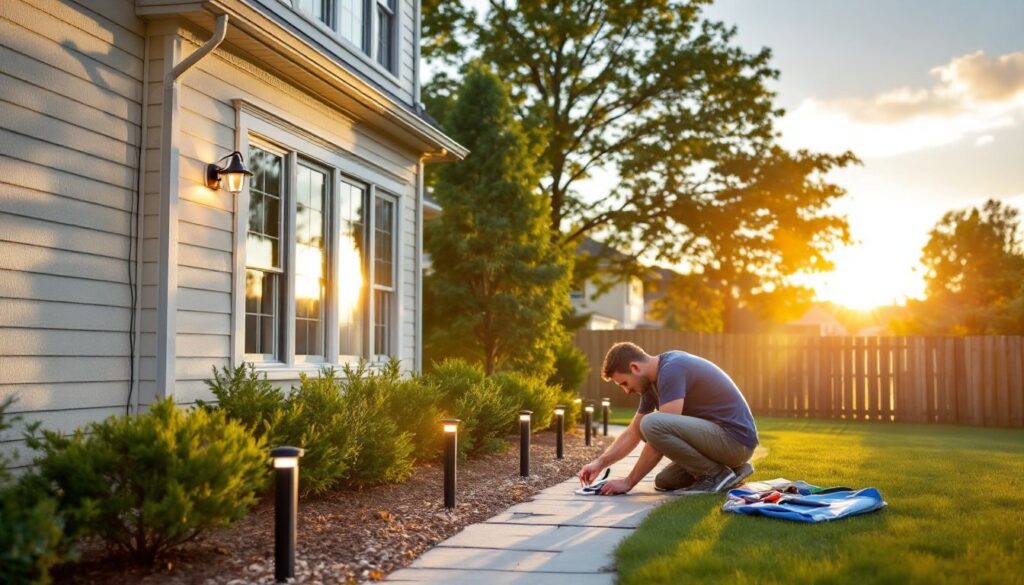
Plan your layout on paper. Walk the yard at dusk and mark where you want light. Common targets include pathway edges, steps, driveway borders, and landscape features like specimen plants or boulders. Space pathway lights 8-10 feet apart for even coverage.
-
Test placement before digging. Lay out fixtures and cable (or solar panel and wiring) on the ground. Plug in the transformer or set the solar panel in a sunny spot and turn the system on after dark. Adjust fixture positions until the lighting looks balanced.
-
Bury the cable. For low-voltage systems, use a flat shovel or edging tool to cut a narrow trench 6 inches deep along your planned route. Lay the cable in the trench, leaving a few inches of slack at each fixture location. Don’t pull the cable taut, temperature changes cause expansion and contraction. For solar kits, you can lay cable on the surface and secure it with landscape staples, but burying it looks cleaner and protects it from foot traffic and mowers.
-
Connect fixtures. Low-voltage systems use quick-connect pigtails or screw terminals. Strip 1/2 inch of insulation from the main cable, insert the wire into the connector, and tighten. Solar kits usually have plug-and-play connectors, just match the male and female ends.
-
Mount the transformer or solar panel. Low-voltage transformers should be mounted on an exterior wall near a GFCI outlet, at least 12 inches above grade to prevent water damage. Solar panels need full sun for 6-8 hours daily, avoid spots under eaves or tree canopies. Angle the panel south (in the Northern Hemisphere) and tilt it to match your latitude for optimal exposure.
-
Backfill and test. Once connections are secure, backfill the trench and tamp the soil lightly. Turn the system on and check each fixture. If a light doesn’t work, recheck the connection and ensure the fixture bulb is seated properly.
Pro tip: Voltage drop is real. If you’re running cable more than 100 feet or powering more than 8 fixtures on a single run, step up to 12 AWG cable or split the load across two transformer outputs. You can calculate voltage drop with online calculators, aim to keep it under 10% to maintain brightness.
Permitting: Low-voltage landscape lighting (under 30V) typically doesn’t require an electrical permit, but always check local codes. If you’re tapping into household wiring to add an outdoor outlet, that does require a permit and should be handled by a licensed electrician.
Design Tips for Maximizing Your Outdoor Lighting Layout
Good landscape lighting isn’t about blasting every square foot with lumens. It’s about creating layers: task lighting for safety, accent lighting for visual interest, and ambient lighting to tie it all together.
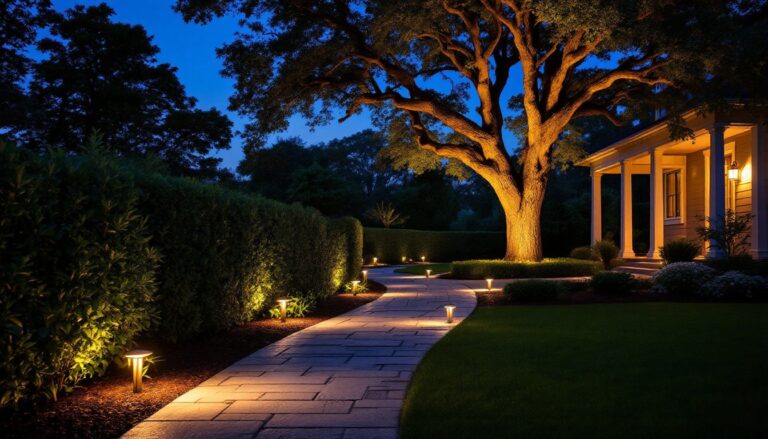
Pathway and step lighting: Safety first. Light every step, grade change, and path edge. Fixtures should illuminate the walking surface without glare. Downward-facing bollard lights or low-profile path lights work well. Aim for 30-50 lumens per fixture at ground level.
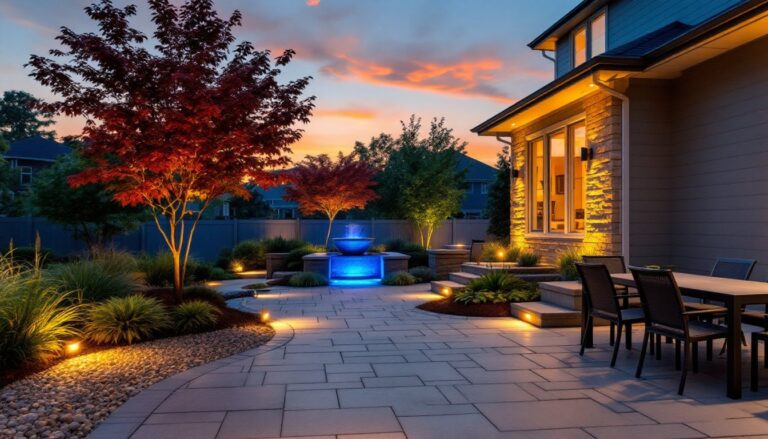
Accent lighting: Highlight architectural features, mature trees, or focal points like a fountain or sculpture. Uplighting, placing a fixture at the base of a tree or column and aiming up, creates drama. Use fixtures with narrow beam angles (15-30 degrees) for focused highlights and wider beams (60+ degrees) for washing walls or large plantings.
Shadowing and silhouetting: For a more sophisticated effect, place a light behind a plant or ornamental object to cast a shadow on a wall or fence. This works especially well with plants that have interesting leaf structure, like ornamental grasses or Japanese maples. Garden design ideas can spark inspiration for layering textures and focal points.
Avoid overlighting: More fixtures don’t always mean better results. Too many lights create visual clutter and flatten depth. Step back and ask, “What do I want to see at night?” Light those elements and leave the rest in shadow.
Color temperature matters. Most Costco LED landscape lights emit 2700-3000K (warm white), which mimics incandescent bulbs and looks natural against foliage and wood. Avoid cool white (4000K+) in residential landscapes, it feels clinical.
Consider beam spread. Narrow spots (15-30 degrees) work for tall trees and architectural details. Floods (60-120 degrees) are better for ground cover, shrubs, and wide facades.
Many outdoor living ideas emphasize creating zones, dining areas, fire pits, garden beds, and lighting helps define those spaces after dark. Use ambient lighting at the perimeter and task lighting where people gather.
Maintenance and Cost Savings Over Time
Landscape lighting is low-maintenance, but it’s not zero-maintenance. A little upkeep keeps the system looking sharp and extends its lifespan.
Seasonal cleaning: Twice a year, wipe down fixture lenses with a damp cloth to remove dirt, pollen, and spider webs. Check for corrosion around connections and apply dielectric grease if you see oxidation. For solar panels, clean the surface with glass cleaner, dust and grime reduce charging efficiency by up to 30%.
Bulb replacement: LEDs last 25,000-50,000 hours, but they do eventually dim or fail. Most Costco systems use replaceable bulbs. Keep a spare on hand so you’re not left with a dark spot when one goes out.
Cable inspection: Every few years, inspect buried cable for damage from digging, rodents, or freeze-thaw heaving. If you notice flickering or dead fixtures, trace the cable and look for nicks or breaks. Repair with waterproof wire connectors rated for direct burial.
Transformer checks: Low-voltage transformers should be inspected annually. Make sure the GFCI outlet is functioning (press the test button), and check that the timer or photocell is operating correctly. If the transformer hums loudly or feels excessively hot, replace it, it’s a sign the internal components are failing.
Cost savings: LED landscape lighting is cheap to run. A typical 100W system operating 6 hours per night costs about $2-4 per month in electricity, depending on local rates. Solar systems cost nothing to operate. Compare that to older halogen systems that could run $15-20 monthly for the same output.
Over a 10-year lifespan, a Costco low-voltage LED kit costing $200-300 upfront will save $150-250 in energy costs compared to halogen and require fewer bulb replacements. Solar kits pay for themselves even faster if you factor in zero electrical costs.
Winter prep: In cold climates, consider bringing solar panels indoors and disconnecting batteries to prevent freeze damage. Low-voltage systems can stay in place year-round, but if snow and ice are common, protect transformers with weatherproof covers and elevate them above snowdrift level.
Regular maintenance also means the system looks intentional, not neglected. Home improvement guides stress that small, consistent upkeep prevents bigger repairs down the line, and that applies to landscape lighting just as much as it does to roofing or siding.