



Table of Contents
ToggleWall lighting can change everything about how your living room feels. A well-placed sconce or accent light draws the eye, creates depth, and makes a space feel intentional instead of thrown together. If you’re relying solely on overhead fixtures or table lamps, you’re missing the chance to layer light in ways that make rooms feel larger, more inviting, and better suited to how you actually use the space. The right wall lights can highlight architectural details, set the mood for movie nights, or make your art collection pop, all while freeing up floor and table space. Here’s what works in 2026.
Key Takeaways
- Living room wall lighting creates layered illumination that reduces harsh shadows, makes colors richer, and frees up floor and table space compared to relying solely on overhead fixtures.
- Accent wall lights should be spaced 24 to 36 inches apart for even wall wash effects, use 5 to 15 watts with LED bulbs, and positioned to highlight architectural features like crown molding, brick, or fireplaces.
- Contemporary sconce styles favor clean lines and mixed materials, with fixtures mounted 60 to 66 inches from the floor at eye level, and mismatched pairs or varying heights creating modern visual interest.
- Picture lights and gallery wall illumination benefit from LED fixtures mounted 12 to 18 inches from the wall using CRI 90+ bulbs, with track lighting or recessed adjustable downlights offering flexibility for multi-frame arrangements.
- LED strip lighting provides ambient glow behind TVs, shelves, or crown molding to reduce eye strain and make rooms feel larger, and should use aluminum channel tracks for better adhesion and heat dissipation on textured walls.
- DIY-friendly installations include battery-powered sconces and plug-in LED strips, while hardwired wall lighting typically requires professional electricians ($75–$150 per fixture) to ensure safety and code compliance.
Why Wall Lighting Matters in Your Living Room Design
Most living rooms default to a ceiling fixture and maybe a floor lamp, which leaves you with flat, one-dimensional lighting. Wall-mounted fixtures solve that problem by adding layers. They direct light horizontally, washing walls in soft illumination that reduces harsh shadows and makes colors look richer.
Wall lights also free up surfaces. No more cords snaking across the floor or bulky lamps hogging end table real estate. They’re particularly useful in rooms with low ceilings where pendants or chandeliers feel oppressive.
From a design standpoint, wall lighting draws attention to what you want people to see, a textured accent wall, built-in shelving, or a fireplace surround. It’s not just about visibility: it’s about creating focal points and guiding the eye through the room. If you’re working with an open floor plan, wall lights help define zones without adding physical barriers.
And practically speaking, wall fixtures are often easier to control. Many modern lighting systems integrate with dimmers and smart switches, giving you flexibility for different activities without rewiring your entire room.
Accent Wall Lights to Highlight Architectural Features
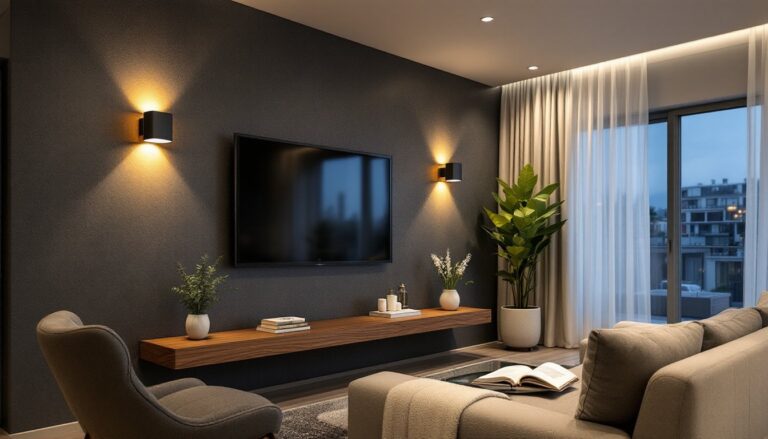
Accent lighting is all about directing focus. If you’ve got crown molding, wainscoting, exposed brick, or built-ins, uplight or downlight sconces can emphasize texture and depth that overhead lights wash out.
Uplights mounted low on the wall send light toward the ceiling, which works well for highlighting molding or creating a soft glow in rooms with high ceilings. They’re also effective along textured stone or brick walls where shadows add dimension. Downlights, mounted higher, create dramatic shadows and work well flanking a fireplace or framing a feature wall.
For recessed niches or alcoves, consider using narrow-beam spotlights with adjustable heads. These let you angle light exactly where you need it, onto a sculpture, vase, or architectural detail. Many interior designers favor targeted spot lighting for this purpose because it adds drama without cluttering the wall.
Spacing matters. A common mistake is installing too few fixtures too far apart, which creates uneven pools of light. For a wall wash effect, place fixtures 24 to 36 inches apart, depending on beam spread. For highlighting specific features, one fixture per focal point usually suffices.
Make sure your fixtures are rated for the wattage you need. Accent lights typically use 5 to 15 watts with LED bulbs, which is enough to create contrast without overpowering the room. If you’re working with dimmers, check compatibility, not all LEDs dim smoothly.
Modern Sconce Styles for Contemporary Living Rooms
Sconces have come a long way from brass candle holders. In 2026, contemporary styles emphasize clean lines, mixed materials, and integrated LED technology that eliminates bulky shades.
Geometric sconces, squares, hexagons, or linear bars, fit well in modern and minimalist lighting design schemes. Look for matte black, brushed nickel, or aged brass finishes, which feel current without being trendy. Many of these fixtures use edge-lit acrylic or frosted glass diffusers to spread light evenly without glare.
Swing-arm sconces are making a comeback, especially in living rooms that double as reading nooks. These mount on an articulating arm that extends and retracts, giving you task lighting exactly where you need it. They’re ideal beside sofas or lounge chairs where overhead reading light creates shadows on the page.
For a softer look, fabric or paper drum sconces add warmth without sacrificing a modern silhouette. Pair them with warm-white LEDs (2700K to 3000K) to avoid the clinical feel that cooler color temperatures can create.
Current design trends also favor asymmetry, mounting sconces at varying heights or using mismatched pairs for visual interest. Just keep proportions in mind: a sconce should be roughly one-fifth to one-sixth the height of the wall space it occupies to avoid looking out of scale.
Installation tip: Sconces generally mount 60 to 66 inches from the floor to the center of the fixture, about eye level for most adults. If you’re flanking a sofa, aim for the bottom of the shade to sit just above the back cushion.
Picture Lights and Gallery Wall Illumination
If you’ve invested time in a gallery wall or a single statement piece, proper lighting makes the difference between “nice art” and a showstopper.
Picture lights mount directly above or onto the frame and cast light downward at a 30-degree angle, which minimizes glare and highlights texture in paintings or prints. Traditional brass picture lights are still available, but sleek LED versions in black or nickel are more popular now. They’re low-profile, energy-efficient, and many include integrated dimmers.
For larger pieces or multi-frame arrangements, track lighting offers flexibility. Surface-mounted or recessed track systems let you position adjustable heads to illuminate multiple artworks without drilling separate holes for each fixture. Look for LED track heads with narrow beam angles (15 to 25 degrees) for precise control.
Another option: recessed adjustable downlights (also called “eyeball” or “gimbal” trims). These recess into the ceiling but tilt and rotate to direct light at wall art. They’re cleaner-looking than track but require ceiling access during installation, not a DIY job if you’re working with a finished ceiling and no attic above.
When lighting art, avoid placing fixtures too close to the wall. A general rule is to mount lights 12 to 18 inches out from the wall to prevent hot spots. Use CRI 90+ bulbs to render colors accurately, cheaper LEDs can shift hues and make reds look orange or blues appear greenish.
According to interior design experts, layering picture lights with ambient wall sconces creates a more dynamic gallery effect than relying on a single light source.
LED Strip Lighting for Ambient Wall Effects
LED strip lighting has moved beyond under-cabinet kitchen installs into living room design, and for good reason. It’s flexible, low-profile, and creates ambient glow that feels modern without overwhelming the space.
The most common application is behind wall-mounted TVs or floating shelves, where the strip sits in a recessed channel and casts a halo effect. This reduces eye strain when watching TV in a dark room and adds depth to otherwise flat wall surfaces. Choose warm white (2700K to 3000K) for a cozy feel or tunable RGB strips if you want color-changing options for parties or movie nights.
Installing strips along crown molding or behind baseboards creates an indirect wash of light that makes ceilings appear higher and rooms feel larger. This works especially well in smaller living rooms where floor lamps would crowd the space.
Installation basics: Most LED strips come with adhesive backing, but that alone won’t hold long-term on textured walls. Use aluminum channel tracks with diffusers for a cleaner look and better adhesion. Channels also protect the strip and improve heat dissipation, which extends bulb life.
You’ll need a compatible power supply and controller. Strips typically run on 12V or 24V DC, so factor in the transformer and any smart controllers if you want dimming or app control. Wiring isn’t complicated, most strips use simple plug-in connectors, but you’ll want to plan where the power supply hides. Behind furniture or inside a media console usually works.
For long runs (over 16 feet), you may need to wire power at both ends to prevent voltage drop, which causes dimming at the far end of the strip. Many LED panel lights use similar driver technology if you’re looking for a more permanent, built-in solution.
Installing Wall Lights: DIY vs. Professional Help
Some wall light installations are straightforward weekend projects. Others require an electrician, a permit, and possibly drywall patching.
DIY-friendly installs include:
- Battery-powered or plug-in sconces that don’t require hardwiring
- LED strip lighting with adhesive backing and plug-in transformers
- Picture lights that mount to frames with battery packs
These avoid electrical work entirely, though aesthetics suffer if cords are visible. If you go this route, use cord covers or run cables behind furniture.
Hardwired installs are more involved but look cleaner. If you’re comfortable working with electrical boxes and have a solid understanding of your home’s wiring, you can handle basic sconce installation. You’ll need:
- Voltage tester to confirm power is off
- Wire strippers and connectors
- Drywall saw if you’re cutting in a new box
- Stud finder to avoid cutting into framing
Most sconces mount to a standard round or octagonal electrical box. Match wire colors (black to black, white to white, green or bare copper to ground), secure with wire nuts, tuck into the box, and mount the fixture. If you’re replacing an existing fixture, it’s usually a 30-minute job.
When to call a pro:
- Installing new circuits or adding switches (requires NEC-compliant wiring and often a permit)
- Working with aluminum wiring or knob-and-tube systems (common in pre-1970s homes)
- Cutting into load-bearing walls or ceilings without knowing what’s behind them
- Installing fixtures in damp-rated areas (near fireplaces or exterior walls) where code compliance matters
Electricians typically charge $75 to $150 per fixture for installation, not including the cost of the light itself. It’s not cheap, but it’s a lot less than repairing fire damage from incorrect wiring.
If you’re planning multiple wall lights, having an electrician rough in the boxes and circuits while walls are open (during a remodel) is far easier than retrofitting later. According to tips from design and decor professionals, planning your lighting layout early in a renovation saves time and money.
Safety note: Always turn off power at the breaker, not just the switch. Test with a non-contact voltage tester before touching any wires. If you’re unsure, stop and call someone who knows what they’re doing. Electrical work isn’t the place for trial and error.
Conclusion
Wall lighting isn’t a luxury, it’s one of the most practical upgrades for making a living room feel finished. Whether highlighting architecture with accent lights, flanking a sofa with modern sconces, or adding LED strips for ambiance, the right fixtures change how a room looks and functions. Plan your layout carefully, use the appropriate fixtures for each application, and don’t skip the prep work. If wiring is involved and you’re not confident, hire it out. The results are worth it.