

Table of Contents
ToggleSan Diego homeowners have something most of the country doesn’t: year-round outdoor living weather. That means patios, decks, and yards get used long after the sun goes down. But coastal conditions, salt air, marine layer moisture, and intense UV exposure, demand lighting that can handle more than your average backyard setup. Whether illuminating a walkway in La Jolla or adding ambiance to a North Park patio, choosing and installing outdoor lighting here requires understanding both the climate and the code.
Key Takeaways
- San Diego’s year-round 266-day sunny climate, marine layer moisture, salt air, and intense UV radiation require weather-resistant outdoor lighting fixtures rated for wet locations to prevent corrosion and electrical failures.
- Low-voltage LED pathway lighting systems (12V or 24V) with stainless steel or powder-coated aluminum fixtures spaced 6-8 feet apart and rated 100-200 lumens per fixture offer the best durability for San Diego coastal conditions.
- All outdoor lighting installations in San Diego require GFCI protection for 120V circuits, underground utilities must be marked via 811 call, and permits may be required for new circuits before excavation begins.
- LED outdoor lighting fixtures pay for themselves within two years in San Diego’s year-round usage conditions and provide 15,000-25,000 hours of lifespan while using 85% less energy than incandescent bulbs.
- Marine-grade stainless steel (316 alloy) and silicone gaskets outlast standard materials in coastal zones, and dielectric grease applied to all connections prevents galvanic corrosion between dissimilar metals during installation.
- Smart controls, photocells, motion sensors, and circuit zoning by use pattern (entry, ambiance, security) optimize energy consumption and prevent lights from running in empty spaces throughout the night.
Why San Diego’s Climate Makes Outdoor Lighting Essential
San Diego’s Mediterranean climate creates unique lighting needs. With an average of 266 sunny days annually and mild evenings that hover between 55-65°F most of the year, outdoor spaces function as extensions of indoor living areas. Unlike regions where winter shuts down outdoor use, San Diego homeowners entertain, dine, and relax outside nearly every night.
The marine layer brings consistent moisture exposure, especially in coastal zones within three miles of the ocean. This humidity accelerates corrosion on unsealed fixtures and can cause electrical connection failures if components aren’t rated for damp or wet locations. Salt air compounds the problem, sodium chloride deposits pit metals and degrade plastic housings faster than inland environments.
Intense UV radiation during cloudless summer months breaks down polycarbonate lenses and fades painted finishes. Fixtures that look fine in Portland or Seattle can crack or discolor within two years here. Code-compliant installations must also account for seismic activity: all permanent fixtures need secure mounting that won’t shake loose.
Year-round use means higher energy consumption. A pathway lighting system that runs 8-10 hours daily in San Diego uses significantly more power than one operating 4-5 hours in Seattle. That’s why energy-efficient solutions matter more here than in seasonal climates.
Best Outdoor Lighting Types for San Diego Homes
Pathway and Landscape Lighting
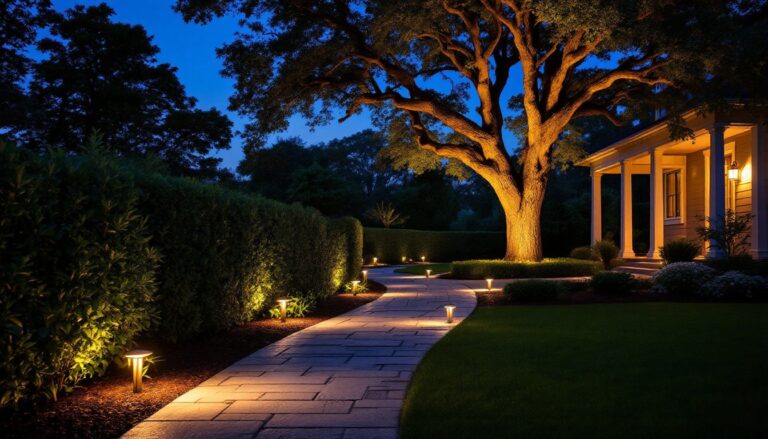
Low-voltage LED path lights (12V or 24V systems) offer the most flexibility for San Diego yards. These systems use a transformer to step down 120V household current, making installation safer and eliminating the need for conduit in most applications, though local amendments to the National Electrical Code (NEC) may require burial depth of 6-12 inches depending on wire gauge and location.
Stainless steel or powder-coated aluminum fixtures hold up best in coastal zones. Avoid bare copper or brass unless you want a green patina within months. Spacing path lights 6-8 feet apart provides adequate illumination without creating harsh light pools: aim for 100-200 lumens per fixture for walkways.
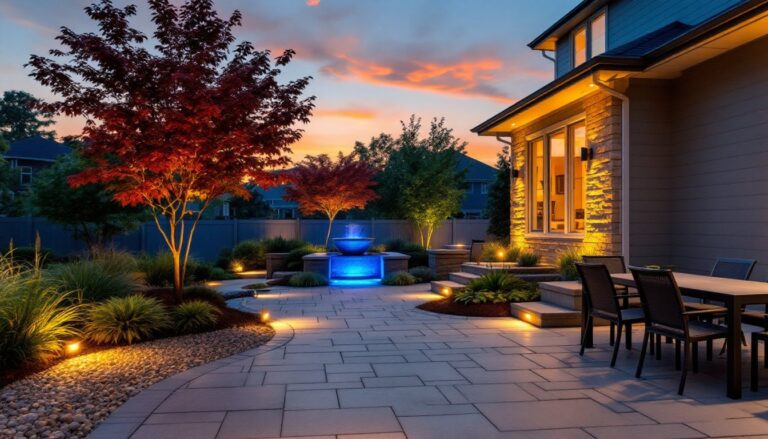
Uplighting accent lights work well for highlighting architectural features or mature palms and succulents. Use narrow beam angles (15-25 degrees) for tall specimens and wider beams (40-60 degrees) for spreading plants or wall washing. In design-focused outdoor spaces, layered lighting creates depth and drama after dark.
Security and Motion-Sensor Lights
Motion-activated LED floodlights serve double duty for security and convenience. Install these on a standard 120V circuit with weather-resistant boxes rated NEMA 3R minimum (NEMA 4X for direct coastal exposure). Position sensors to cover entry points, garage doors, side gates, and front approaches.
Adjustable sensitivity and time delay settings prevent false triggers from palm fronds or neighborhood cats. Look for lights with photocell sensors that disable the motion function during daylight, extending bulb life and reducing energy waste.
Dusk-to-dawn fixtures with integrated photocells work well for areas needing constant illumination, like driveways or back gates. Choose fixtures with replaceable LED modules rather than integrated units: when the diodes eventually fail (typically after 25,000-50,000 hours), replacing a $15 module beats buying a new $80 fixture.
Choosing Weather-Resistant Fixtures for Coastal Conditions
The UL wet location rating isn’t optional near the coast, it’s mandatory for any fixture exposed to direct spray or moisture. Damp-rated fixtures work under covered patios or eaves: wet-rated units handle full exposure. Check the label inside the fixture or on the packaging: it’ll specify “Suitable for Wet Locations” if properly rated.
Material selection makes or breaks longevity. Marine-grade stainless steel (316 alloy) resists salt corrosion better than standard 304 stainless. Powder-coated die-cast aluminum offers good durability at a lower price point, but inspect the coating quality, cheap powder coating chips and allows oxidation underneath.
Gaskets and seals deteriorate in UV exposure. Silicone gaskets outlast rubber: replace them every 3-4 years even if they look intact. Corroded or green-tinged connections indicate moisture intrusion: that fixture needs replacement or resealing before it fails completely.
Lens material matters. Polycarbonate resists impact but yellows with UV exposure. Tempered glass holds clarity longer but can crack if struck. Some outdoor lighting specialists recommend UV-stabilized acrylic lenses as a middle ground for coastal installations.
All connections need dielectric grease on threads and contact points. This waterproof compound displaces moisture and prevents galvanic corrosion between dissimilar metals. Apply it to bulb bases, wire nuts, and mounting hardware during installation.
DIY Installation Tips for San Diego Homeowners
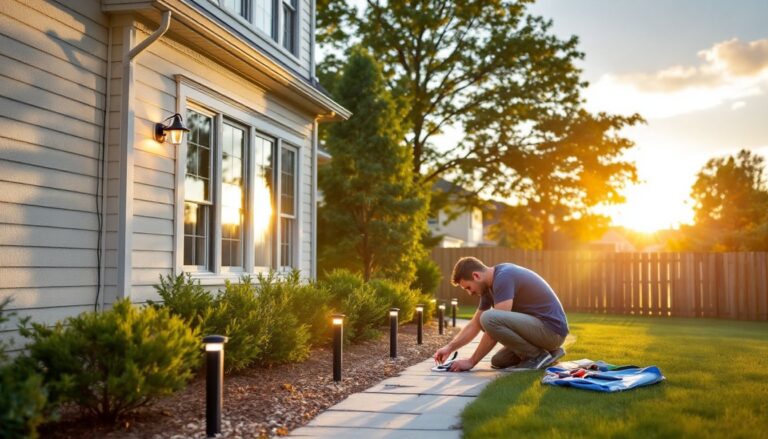
Start with a lighting plan sketched on graph paper or a yard diagram. Mark existing outlets, proposed fixture locations, and cable runs. Calculate total wattage to size transformers correctly, most residential low-voltage systems use 150W to 300W transformers. Don’t exceed 80% of transformer capacity to prevent voltage drop and overheating.
For 120V installations (security lights, porch fixtures), shut off power at the breaker and verify with a non-contact voltage tester. San Diego requires GFCI protection for all outdoor receptacles and fixtures, if the circuit doesn’t have GFCI, install a GFCI breaker or use a GFCI receptacle. A permit may be required for new 120V circuits: check with your local building department before trenching or adding junction boxes.
Low-voltage pathway lighting doesn’t typically require permits but follows these steps:
- Mount the transformer near a GFCI-protected outlet, at least 12 inches above grade to prevent water contact.
- Run 12-gauge or 14-gauge landscape wire in trenches 6-8 inches deep. Bury deeper if crossing under driveways.
- Use waterproof wire connectors at each fixture splice, standard wire nuts aren’t rated for direct burial.
- Test the system before backfilling trenches. Check voltage at the last fixture on each run: it should be within 10% of the transformer output.
For clustered patio lighting over dining areas, mounting height affects both function and code compliance. Fixtures under 7 feet require guarding or recessed installation to prevent head strikes.
Safety gear: Wear gloves when handling cut wire (sharp strands), safety glasses if drilling mounting holes overhead, and hearing protection if using a roto-hammer for concrete anchors. If digging near property lines or utility easements, call 811 at least two business days before excavation, underground utility strikes are preventable and expensive.
Energy-Efficient Lighting Solutions for Year-Round Use
LED fixtures pay for themselves within two years in San Diego’s year-round operating conditions. An LED bulb drawing 9W produces the same light output (lumens) as a 60W incandescent while lasting 15,000-25,000 hours. At $0.28/kWh (San Diego Gas & Electric’s average tier 2 rate), that’s roughly $60 in savings per bulb over its lifetime.
Color temperature affects outdoor ambiance. 2700K-3000K (warm white) mimics incandescent glow and suits residential landscaping. 4000K-5000K (neutral to cool white) provides better visibility for security applications but feels institutional in living spaces. Avoid LEDs below 80 CRI (Color Rendering Index), they make plants and finishes look washed out.
Solar-powered path lights work well in San Diego’s sunny climate but have limitations. Budget solar fixtures use nickel-cadmium batteries that fail within two years. Better units use lithium-ion batteries with 5-7 year lifespans. Expect 4-6 hours of runtime after a full charge: that’s adequate for early evening use but won’t last all night in winter when days are shorter.
Smart controls extend energy savings. Timers prevent lights from running past midnight when nobody’s outside. Photocells activate lights at dusk and shut them off at dawn automatically. Wireless systems with app control let homeowners adjust schedules seasonally without rewiring.
Bi-level switching makes sense for large yards, run pathway lights at 30% brightness most nights and boost to 100% when hosting. Some LED drivers support this with a simple switch configuration.
Zoning circuits by use pattern optimizes consumption. Front entry lights run dusk-to-dawn. Backyard ambiance lights run 6 PM to 11 PM. Security floods stay motion-activated 24/7. Separating these onto different transformers or breakers prevents paying to light empty spaces all night.