

Table of Contents
ToggleBethesda homeowners know curb appeal matters, not just for resale value, but for enjoying your property after sunset. The right outdoor lighting setup does more than illuminate walkways: it adds layers of security, highlights architectural details, and extends your living space into the yard. With Montgomery County’s mix of traditional colonials, contemporary builds, and wooded lots, choosing fixtures that work with your home’s style and the local landscape takes planning. Whether you’re upgrading builder-grade path lights or designing a full landscape lighting scheme from scratch, understanding your options, local codes, and installation requirements will save time and prevent costly mistakes.
Key Takeaways
- Outdoor lighting in Bethesda enhances security, safety, and property value by illuminating dark entry points, walkways, and architectural details while signaling home maintenance to potential buyers.
- Match lighting fixtures to your home’s style—traditional lanterns for colonials, contemporary linear sconces for modern builds, and rustic or bistro options for farmhouse aesthetics—and coordinate finishes with existing hardware for a cohesive look.
- Low-voltage 12V LED systems are DIY-friendly and cost-effective at roughly $3.50 per month to operate, while line-voltage installations require permits and licensed electricians to comply with Maryland’s electrical codes.
- Strategic placement of path lights (8–10 feet apart), uplighting for mature trees, and motion-activated sensors near entries provide both functional safety and dramatic visual impact suited to Bethesda’s wooded landscape.
- LED fixtures save 75–80% on energy costs compared to traditional bulbs, last 25,000–50,000 hours, and pair well with timers, photocells, and smart controls to reduce unnecessary runtime and waste.
Why Outdoor Lighting Matters for Bethesda Homeowners
Security ranks first for most homeowners. Dark entry points, shadowed corners, and unlit driveways invite unwanted attention. Motion-activated fixtures near doors, garage entries, and side gates discourage trespassers and give you visibility when arriving home after dark. Pair them with dusk-to-dawn photocell sensors for hands-free operation.
Safety comes next. Uneven flagstone paths, stepped terraces, and deck stairs become hazards without proper lighting. Low-voltage path lights (typically 12V systems) reduce trip risks and help guests navigate your property confidently. Montgomery County’s frequent freeze-thaw cycles can shift pavers and flagstones, making well-placed lighting even more critical.
Aesthetic impact shouldn’t be underestimated. Uplighting mature oaks or highlighting stonework adds depth and drama that’s impossible during daylight. Bethesda’s tree canopy and varied topography, rolling lots, sloped yards, offer natural features worth showcasing. Modern smart home systems integrate outdoor lighting controls with scheduling and voice commands, letting homeowners adjust scenes for entertaining or everyday use.
Property value gets a measurable boost. Real estate agents note that thoughtfully designed exterior lighting makes homes more memorable during evening showings and signals that a property has been maintained. It’s a relatively affordable upgrade that delivers visible returns.
Popular Outdoor Lighting Styles for Bethesda Homes
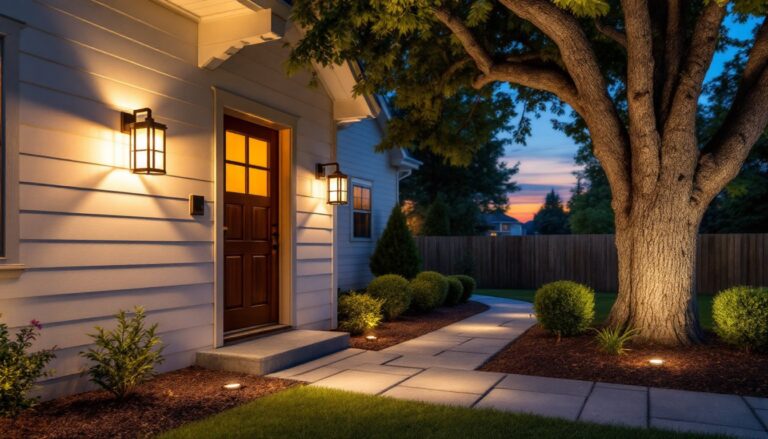
Traditional lantern fixtures suit colonial and craftsman-style homes common in neighborhoods like Edgemoor and Drummond. Look for weather-resistant finishes, oil-rubbed bronze or black powder-coated aluminum, that hold up in humid summers and icy winters. Pair coach lights flanking the front door with matching post lights along the driveway for a cohesive look.
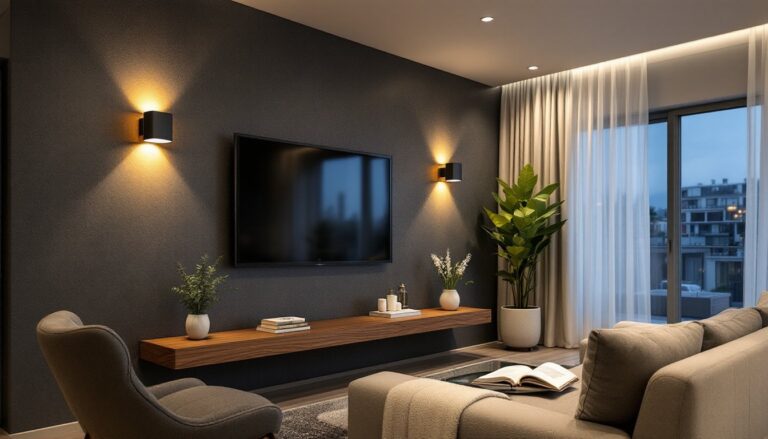
Contemporary linear fixtures work well on mid-century modern and newer custom builds. Clean-lined wall sconces with integrated LED strips provide even illumination without fussy details. Flush-mount ceiling fixtures in covered porches offer shadow-free light for entries and sitting areas.
Rustic or farmhouse styles fit homes with wood siding, stone accents, or barn-inspired architecture. Edison-bulb fixtures in caged housings or wrought-iron chandeliers hung from covered patios add character without looking overly precious. For a relaxed vibe that works across styles, consider bistro lighting strung across pergolas or between posts, it softens hardscapes and creates an inviting glow for outdoor dining.
Minimalist bollard lights and in-ground well lights suit contemporary landscapes where fixtures should disappear into the design. Bollards (typically 18–24 inches tall) mark pathways without visual clutter, while die-cast aluminum well lights can uplight tree trunks or architectural features from below. Choose fixtures rated IP65 or higher for weather resistance.
Match finish and style to your home’s hardware, door handles, house numbers, and mailbox, for a pulled-together look. Mixing metals can work, but stick to two finishes max to avoid a chaotic appearance.
Best Outdoor Lighting Options for Different Areas
Pathways and Walkways
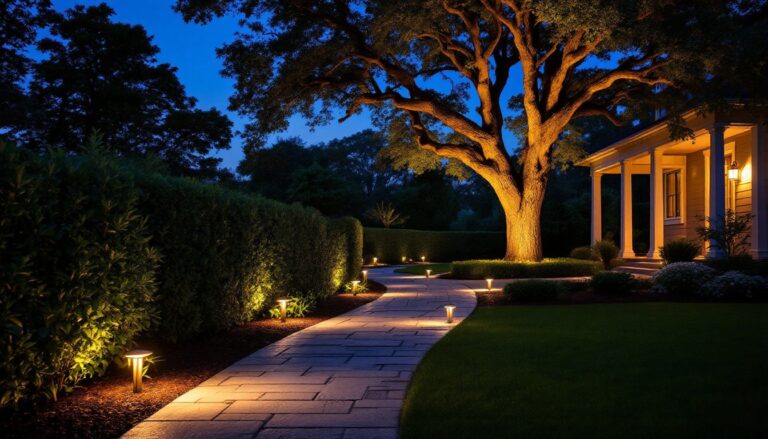
Low-voltage path lights are the workhorse for walkways, typically spaced 8–10 feet apart depending on fixture lumen output (look for 100–200 lumens per fixture for adequate visibility). Stake-mounted fixtures in brass or copper develop a natural patina over time, while composite or aluminum housings stay uniform.
For sloped or terraced paths, use step lights recessed into risers, they prevent tripping hazards and define elevation changes without glare. Bethesda’s terrain often includes natural stone steps: choose fixtures with trim kits that fit standard masonry openings to simplify retrofitting.
Solar path lights have improved significantly, but they’re still inconsistent under tree canopy or during Maryland’s cloudy winters. If you go solar, choose models with separate panels that can be positioned in full sun, even if fixtures are shaded. Expect to replace batteries every 2–3 years.
For driveways, in-ground paver lights withstand vehicle weight (rated for 2,000+ pounds) and mark edges without posts that snow plows or lawn equipment can damage. Pair them with photocell controls so they activate automatically.
Landscape and Garden Lighting
Uplighting transforms mature trees into nighttime focal points. Position well lights at the base of oaks, maples, or evergreens, angling them to graze bark texture or illuminate the canopy. Use narrow beam angles (10–15 degrees) for tall, single trunks and wider floods (35–60 degrees) for multi-trunk specimens or shrubs.
Downlighting from tree branches or eaves mimics moonlight and provides subtle ambient light for patios and seating areas. Mount fixtures 15–20 feet high and aim them to filter through foliage. Brass or copper fixtures blend into branches better than black housings.
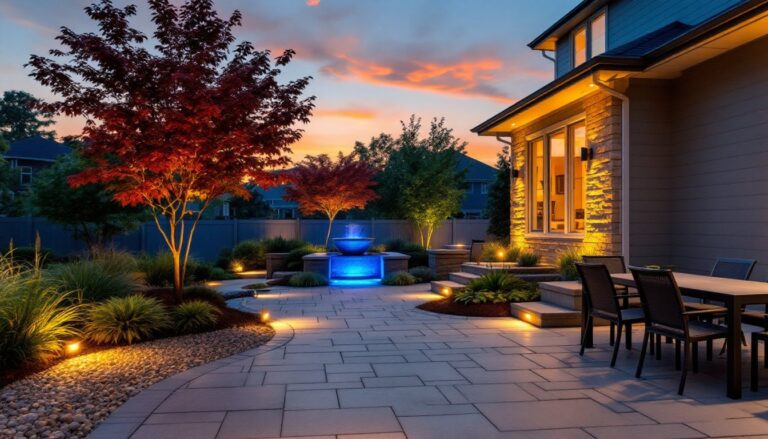
Accent lighting highlights garden beds, ornamental grasses, or water features. Spike-mounted spotlights offer flexibility, you can reposition them seasonally as plants grow or garden layouts change. Recent reviews on connected outdoor fixtures show smart systems let homeowners adjust brightness and color temperature from apps, useful for shifting between task lighting and ambiance.
Hardscape lighting adds drama to stone walls, patios, and outdoor kitchens. Recessed deck lights or strip lighting under railings and steps define edges without cluttering sightlines. For stone or stucco walls, surface-mount wash lights installed every 6–8 feet create even coverage. Use warm white LEDs (2700–3000K) to complement natural materials, cooler temperatures look clinical outdoors.
DIY vs. Professional Installation: What Bethesda Homeowners Should Consider
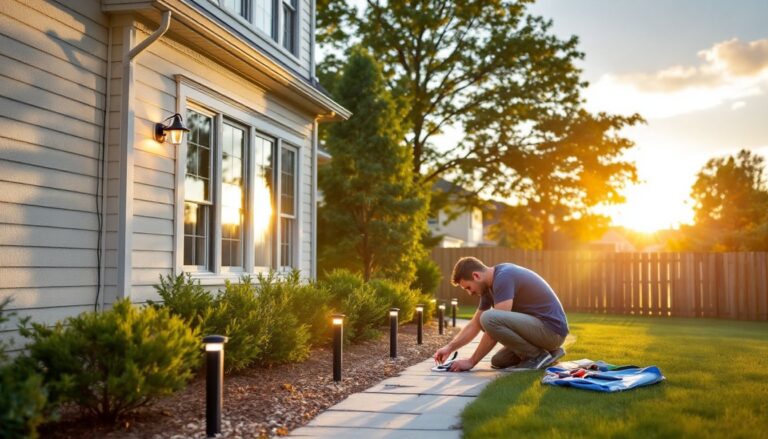
Low-voltage systems (12V) are DIY-friendly. You’ll need a transformer (sized to handle total wattage plus 20% headroom), direct-burial landscape cable (14-gauge or 12-gauge for longer runs to minimize voltage drop), wire connectors, and fixtures. Most transformers mount near an outdoor GXCI outlet and include timers or photocell controls.
Running cable is straightforward: dig a trench 6–8 inches deep, lay the cable along the path, connect fixtures using waterproof wire nuts or quick-connect clips, then backfill. Test everything before burying completely. Low-voltage systems don’t require permits in most jurisdictions, but always check with Montgomery County’s Department of Permitting Services, regulations change.
Line-voltage installations (120V) require pulling permits and often hiring a licensed electrician. Maryland follows the National Electrical Code (NEC), which mandates GFCI protection for outdoor circuits, proper conduit sizing, and burial depths of 12–18 inches depending on conduit type. Wall-mounted fixtures, post lights fed from underground conduit, and anything hard-wired into your home’s electrical panel falls into this category.
If you’re adding circuits or tying into existing outdoor outlets, hire a pro. Mistakes can trip breakers, create fire hazards, or fail inspection. Electricians in the Bethesda area typically charge $75–$125 per hour, and a straightforward outdoor lighting job (4–6 fixtures with trenching) runs $800–$1,500 depending on distance and complexity.
Smart systems add another layer. Basic on/off timers are simple, but integrating with Z-Wave, Zigbee, or Wi-Fi hubs requires network setup and sometimes firmware updates. Technology guides from connected home platforms walk through compatibility and troubleshooting, but expect a learning curve if you’re new to home automation.
Be realistic about your skill level. If you’re comfortable with basic electrical work, a low-voltage kit is a weekend project. If the job involves running conduit under a driveway or tying into your main panel, call a licensed electrician.
Energy-Efficient Outdoor Lighting Solutions
LED fixtures are the standard now, they use 75–80% less energy than incandescent bulbs and last 25,000–50,000 hours compared to 1,000–2,000 for halogens. Upfront costs are higher, but payback comes within 2–3 years through lower electric bills and eliminated bulb replacements. Look for fixtures with integrated LEDs rather than retrofittable sockets: integrated designs manage heat better and maintain consistent color temperature.
Motion sensors reduce runtime and energy waste. Install them on garage lights, side entries, and backyard floodlights. Adjustable sensitivity and duration settings let you fine-tune performance, set to 1–3 minutes for entryways, longer for outdoor work areas. Pair motion activation with photocells so lights only activate after dusk.
Solar fixtures eliminate wiring but depend on adequate sun exposure. Maryland averages 4–5 peak sun hours daily in summer, less in winter. Position panels facing south with no tree shade for best results. Solar works well for remote areas, mailbox lights, shed entries, garden accents, but low-voltage LED systems outperform solar in reliability and light quality.
Timers and smart controls prevent lights from running unnecessarily. Programmable transformers cycle lights on at dusk and off at a set time (midnight or 1 a.m. is common for security lighting). Smart systems let you adjust schedules seasonally, longer runtimes in winter when evenings are dark, shorter in summer. Geofencing triggers lights when you arrive home, and vacation modes randomize patterns to simulate occupancy.
Zoning circuits lets you control different areas independently, front entry, backyard, driveway, so you’re not lighting the entire property every night. Use separate transformers or multi-tap models with independent timers for each zone.
Choose fixtures with replaceable drivers if possible. LED diodes rarely fail, but drivers (the internal components managing power) can. Fixtures with accessible drivers extend lifespan and reduce waste.
Bethesda’s Pepco rates average $0.13–$0.15 per kWh. A typical low-voltage LED system drawing 100 watts running 6 hours nightly costs about $3.50 per month to operate, minimal compared to the security and aesthetic benefits it provides.