
Table of Contents
ToggleRecessed lighting has evolved from the utilitarian can lights of the 1990s into something genuinely impressive. Today’s fixtures offer clean aesthetics, incredible energy efficiency, and features like tunable color temperatures and smartphone control. Whether someone’s gutting a kitchen or just wants to ditch a dated flush mount, modern recessed lighting delivers a sleek, minimalist look that actually performs. This guide covers what makes today’s recessed lights different, how to choose the right fixtures, and what DIYers need to know before cutting holes in their ceilings.
Key Takeaways
- Modern recessed lighting uses LED technology that consumes 75–80% less energy and lasts 25,000–50,000 hours, providing both cost savings and minimal maintenance compared to older incandescent fixtures.
- Today’s modern recessed lighting offers slim or ultra-thin designs (1–2 inches deep) with clean, trimless aesthetics that fit into tight ceiling spaces and complement contemporary home designs.
- Smart recessed lighting options with Wi-Fi, app control, and tunable color temperatures (2700K to 5000K) allow homeowners to adjust brightness and warmth from their phone or voice assistant.
- Proper fixture selection requires calculating lumens per square foot (20–30 for general living, 50–75 for kitchens) rather than relying on wattage to ensure optimal brightness for your space.
- DIY installation of modern recessed lighting is achievable for intermediate homeowners but requires permits, proper cable routing, and adherence to electrical codes—hiring a professional is recommended for new circuits or complex ceiling work.
- Strategic spacing and placement of recessed lights—24–30 inches apart in kitchens, 4–6 foot intervals in living rooms, and 3–4 feet in bathrooms—maximize both functionality and visual appeal while preventing shadows.
What Makes Recessed Lighting Modern?
The term “modern” refers to more than just aesthetics. Today’s recessed fixtures differ from older generations in several measurable ways.
First, they’re nearly all LED-based. Incandescent and halogen recessed cans are effectively obsolete. LEDs consume 75–80% less power, generate minimal heat, and last 25,000–50,000 hours. That’s 15–25 years at typical residential usage.
Second, modern fixtures use slim or ultra-thin housings. Many new-construction and remodel cans are only 1–2 inches deep, fitting into joist bays where older 6-inch cans wouldn’t. This matters in spaces with limited ceiling depth or where ductwork and wiring compete for room.
Third, trim options are cleaner. Older recessed lights often featured visible flanges, baffles, or decorative rings. Modern trims are frequently trimless (the drywall edge is flush with the aperture) or use extremely low-profile bezels. The result: the fixture almost disappears into the ceiling plane.
Finally, many current models include integrated smart features, dimming, color tuning, and wireless control, without the need for separate dimmers or switches. This integration represents a genuine shift from the basic on/off fixtures of a decade ago.
Benefits of Installing Modern Recessed Lighting
Why choose recessed over pendants, track lights, or surface-mount fixtures? Several practical reasons make recessed lighting a go-to for both new builds and renovations.
Energy Efficiency: Modern LED recessed lights typically draw 8–15 watts per fixture to produce the equivalent of a 65–100 watt incandescent. Over a year, a kitchen with six fixtures can save $100+ in electricity compared to older bulbs, depending on local rates.
Unobstructed Ceiling Lines: Recessed fixtures don’t hang down, making them ideal for rooms with low ceilings (8 feet or less), narrow hallways, or spaces where head clearance matters. They also complement contemporary and minimalist design schemes where visual clutter is minimized.
Flexible Layouts: Because each fixture is independent, homeowners can create custom lighting zones, task lighting over counters, ambient wash on walls, or accent lighting on artwork. Pairing recessed lights with dimmers allows fine control over mood and brightness.
Reduced Maintenance: With lifespans measured in decades, LED recessed fixtures eliminate the ladder-and-bulb routine. Most integrated LED units are sealed, so there’s no replacing bulbs, just the whole fixture when it eventually fails, which is rare within the first 20 years.
Higher Home Value: Updated lighting is one of the more cost-effective upgrades that appeals to buyers. Clean, modern recessed fixtures signal that electrical systems and finishes have been refreshed.
Popular Types of Modern Recessed Lights
Not all recessed lights are created equal. Understanding the main categories helps narrow down choices before anyone starts cutting drywall.
Integrated LED vs. Retrofit Kits: Integrated units have the LED module built into the housing, no separate bulb. Retrofit kits (also called conversion kits) attach to an existing recessed can, upgrading an old fixture without replacing the housing. Retrofitting recessed lights is often the simplest path when ceiling access is limited.
New Construction vs. Remodel Housings: New-construction cans nail directly to joists before drywall goes up. Remodel (old-work) housings use spring clips or screws to grip finished ceilings from below. If walls are open, new-construction cans offer better stability. If the ceiling is intact, remodel fixtures are the only practical choice.
Aperture Size: Common diameters are 3-inch, 4-inch, and 6-inch. Smaller apertures (3–4 inch) suit tight spacing, hallways, and accent tasks. Larger 6-inch fixtures provide broader illumination and work well for general ambient lighting in living rooms or kitchens.
Beam Angles: Narrow spots (15–25°) highlight art or architectural details. Wide floods (60–120°) wash walls and provide general illumination. Many fixtures offer interchangeable reflectors or adjustable trims to tweak the beam.
Smart and Color-Changing Options
Smart recessed lights connect via Wi-Fi, Zigbee, or Bluetooth to home automation systems. Users control brightness, color temperature (warm 2700K to cool 5000K), and scheduling from a phone or voice assistant.
Tunable White: Fixtures adjust from warm (2700K, mimicking incandescent) to cool daylight (5000K) without changing hardware. This feature suits spaces like home offices or kitchens, where task visibility and circadian rhythm matter.
RGB+W: Full-color LEDs add red, green, and blue diodes to white, enabling any hue. While less common in general home lighting, they’re popular in media rooms, accent installations, or anywhere a homeowner wants flexibility for holidays and events.
Voice and App Control: Integration with Alexa, Google Assistant, or HomeKit allows hands-free adjustments. Scenes can be programmed, “movie mode” dims lights to 10%, “cooking” ramps to bright white, etc.
Smart fixtures do add cost, typically $25–$60 per unit versus $10–$25 for non-smart LEDs, but the convenience and energy scheduling often justify the premium.
How to Choose the Right Modern Recessed Lighting for Your Space
Selecting fixtures requires matching technical specs to the room’s function and architecture. A systematic approach prevents over- or under-lighting.
Lumens, Not Watts: LED efficiency varies, so wattage is a poor brightness indicator. Instead, target lumens per square foot. General living spaces need 20–30 lumens/sq ft, kitchens and workspaces 50–75 lumens/sq ft. A 120-square-foot kitchen would need roughly 6,000–9,000 total lumens. Divide by fixture count to find per-fixture output.
Color Temperature: Warm white (2700–3000K) suits living rooms, bedrooms, and dining areas, anywhere ambiance matters. Neutral to cool white (3500–5000K) works for task zones like kitchens, bathrooms, and garages. Mixing temperatures in adjacent spaces can feel jarring, so keep color consistent or use tunable fixtures.
Ceiling Depth and Joist Layout: Measure the space between the drywall and any obstruction (insulation, ductwork, joists). Shallow-depth (1–2 inch) cans fit almost anywhere. Standard 4–6 inch cans need at least 6 inches of clearance. Always check joist direction, spacing fixtures between joists is easier than cutting through them (which may require a header and isn’t recommended unless an engineer approves).
IC Rating: If the fixture will contact insulation, it must be IC-rated (Insulation Contact). Non-IC fixtures require a 3-inch clearance around the housing, which compromises energy efficiency in insulated ceilings. Nearly all modern LEDs are IC-rated by default, but verify before purchase.
Wet/Damp Locations: Bathrooms, covered porches, and soffits require fixtures rated for damp or wet conditions. Standard recessed lights aren’t sealed against moisture and will corrode or fail prematurely in humid environments.
Dimming Compatibility: Not all LED recessed lights dim smoothly. Look for fixtures explicitly labeled “dimmable” and pair them with an LED-compatible dimmer (trailing-edge or ELV dimmers work best). Mismatched dimmers cause flickering, buzzing, or a limited dimming range.
For guidance on recessed downlighting across budgets, lighting professionals emphasize evaluating beam spread, color rendering (CRI), and ceiling brightness to avoid common pitfalls.
Installation Tips for DIY Homeowners
Installing modern recessed lighting is within reach for intermediate DIYers, but it’s electrical work, local codes, permits, and safety precautions apply.
Permits and Codes: Most jurisdictions require a permit for new circuits or adding fixtures to existing circuits. The National Electrical Code (NEC) governs box fill, wire gauge, and circuit load. A typical 15-amp lighting circuit can handle roughly 1,400 watts: ten 12-watt LED fixtures draw only 120 watts, leaving plenty of headroom. Still, confirm with local building departments before starting.
Turn Off Power: Flip the breaker and verify with a non-contact voltage tester before touching any wires. Double-check, voltage can backfeed from other circuits.
Marking and Cutting Holes: Use the fixture’s template or measure the aperture diameter. Mark the ceiling, check for obstructions with a stud finder or by drilling a small pilot hole, then cut with a drywall saw or hole saw. For remodel cans, the spring clips hold the fixture: for new construction, the housing nails to joists before drywall.
Running Cable: If ceiling access exists (attic or crawl space above), 14/2 or 12/2 NM-B (Romex) cable runs from the switch box to each fixture. Secure cable every 4.5 feet and within 12 inches of boxes per NEC. If there’s no attic access, fishing wire through finished ceilings is tedious and may require opening additional drywall.
Wiring the Fixtures: Most modern recessed lights use quick-connect plugs. Strip 1/2 inch of insulation, insert wires into the connector (black to black, white to white, ground to green or bare), and lock. Some fixtures have integral junction boxes with wire nuts, standard practice applies.
Testing and Trim Installation: Restore power and test each fixture. Once confirmed, install trim rings, baffles, or trimless drywall rings per the manufacturer’s instructions. Many trims simply press into spring clips inside the housing.
Safety Gear: Wear safety glasses when cutting drywall (dust and debris), work gloves, and use a sturdy ladder. If working in an attic, a dust mask or respirator protects against insulation fibers.
When to Call a Pro: If the project involves adding a new circuit, working in a crawl space with limited clearance, or the home has aluminum wiring or knob-and-tube, hire a licensed electrician. Structural concerns, cutting joists or dealing with load-bearing members, require an engineer’s approval.
Design Ideas: Where to Use Modern Recessed Lighting
Strategic placement maximizes both function and aesthetics. Here are proven layouts for common residential spaces.
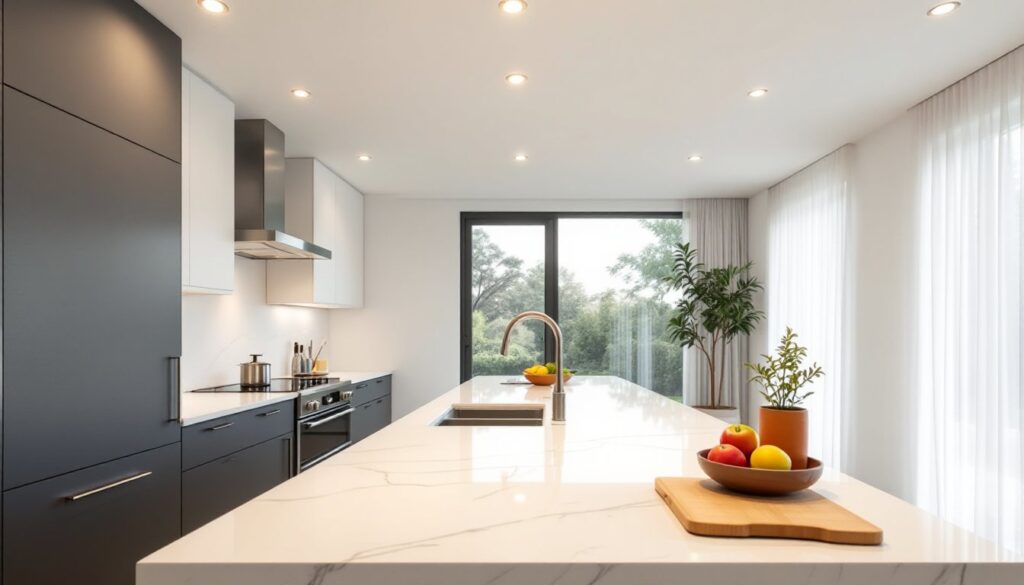
Kitchens: Place fixtures 24–30 inches apart in a grid over the main work area, with dedicated task lights 18–24 inches in front of upper cabinets (to illuminate counters without shadows). Avoid spacing fixtures too close to walls, 12–18 inches from the wall is standard to prevent harsh shadows and wasted spill.
Living Rooms: Use recessed lights for ambient wash, spacing 4–6 foot intervals around the perimeter. Combine with table or floor lamps for layered lighting. If highlighting artwork or built-ins, narrow-beam spots (adjustable gimbal trims) provide focused accent light. Platforms like Houzz showcase countless living room layouts that pair recessed lighting with other fixture types for balanced illumination.
Bathrooms: Install fixtures over the vanity (avoid placing directly above the mirror, side-mounted or above-mirror fixtures reduce shadows). In showers, use wet-rated trims and ensure housings are IC-rated if insulation is present. Spacing of 3–4 feet provides even light without hot spots.
Hallways and Stairways: A single row down the center, spaced 4–6 feet apart, lights the path safely. For stairways, mount fixtures at each landing or every 3–4 steps to eliminate shadows on treads.
Home Offices: Task lighting over the desk (50–75 lumens/sq ft) reduces eye strain. Tunable-white smart fixtures let users shift to cooler temps (4000–5000K) during work hours, then warm tones in the evening.
Vaulted and Cathedral Ceilings: Angled or sloped-ceiling remodel housings accommodate non-horizontal installations. Spacing and aiming become more complex, vaulted ceiling recessed fixtures require careful calculation to achieve even floor illumination without creating dark zones.
Kitchens with Low Ceilings: Where flush mount lighting traditionally dominates, modern slim recessed fixtures offer a cleaner alternative without sacrificing brightness or headroom.
Accent and Display: Adjustable spot lighting trims or gimbal fixtures highlight art, sculpture, or architectural features. Narrow beams (15–25°) concentrate light precisely, while adjustable heads allow re-aiming without rewiring.
Outdoor Soffits and Porches: Wet-rated recessed fixtures extend modern aesthetics to exterior spaces. Space 4–6 feet apart, and use warm white (2700–3000K) to complement outdoor living areas without harsh glare.