


Table of Contents
ToggleKitchen island lighting isn’t just about visibility, it’s about defining the heart of your home. When done right, luxury fixtures transform a functional workspace into a design statement that anchors the entire room. Whether you’re renovating a dated kitchen or putting the finishing touches on a new build, the lighting over your island sets the tone for everything from morning coffee to evening entertaining. In 2026, homeowners are moving beyond builder-grade basics and investing in fixtures that blend artistry with illumination. This guide walks through the styles, sizing rules, materials, and installation considerations that separate premium island lighting from the pack.
Key Takeaways
- Luxury kitchen island lighting serves as a design focal point that blends artistry with function, requiring 50-75 foot-candles of task illumination while offering dimmability for ambient moods.
- Pendant lights dominate high-end island lighting designs, with two to three fixtures spaced 24-30 inches apart and hanging 30-36 inches above the countertop for optimal visibility and clearance.
- Premium materials such as hand-blown glass, aged brass, blackened steel, and natural fibers like rattan define luxury island lighting and should be chosen to complement your kitchen’s color palette and design aesthetic.
- Proper sizing is critical—keep combined fixture width to two-thirds of your island’s width, and ensure linear chandeliers measure two-thirds to three-quarters of the island’s length for balanced proportions.
- Professional installation with LED-compatible dimmers, verified ceiling support rated for fixture weight, and precise leveling ensures your luxury kitchen island lighting performs safely and looks flawless for years.
- Layering multiple light sources, including under-cabinet lighting with your island fixture, creates visual hierarchy and provides both task and ambient illumination for different occasions.
Why Kitchen Island Lighting Matters in Luxury Design
A kitchen island serves triple duty: prep surface, dining spot, and social hub. The lighting above it needs to match that versatility. Luxury fixtures do more than cast lumens, they create visual hierarchy, draw the eye upward, and provide balanced task illumination without harsh shadows.
In high-end design, the island fixture often becomes the room’s focal point. It’s the first thing guests notice when they walk in, and it anchors the space in a way that recessed cans or track lighting simply can’t. That’s why designers allocate a disproportionate share of the lighting budget here.
From a practical standpoint, island lighting needs to deliver 50-75 foot-candles of task illumination for food prep, while also offering dimmability for ambient moods. Luxury fixtures typically integrate LED modules with high CRI (Color Rendering Index) values, 90+ is standard, so colors appear true, which matters when you’re chopping vegetables or plating dinner.
Finally, the right fixture bridges architectural styles. A sculptural pendant can soften a modern kitchen’s hard lines, while a linear chandelier can add structure to a transitional space. It’s one of the few design elements that works equally hard on form and function.
Top Luxury Lighting Styles for Kitchen Islands
Pendant Lights: The Crown Jewel of Island Illumination
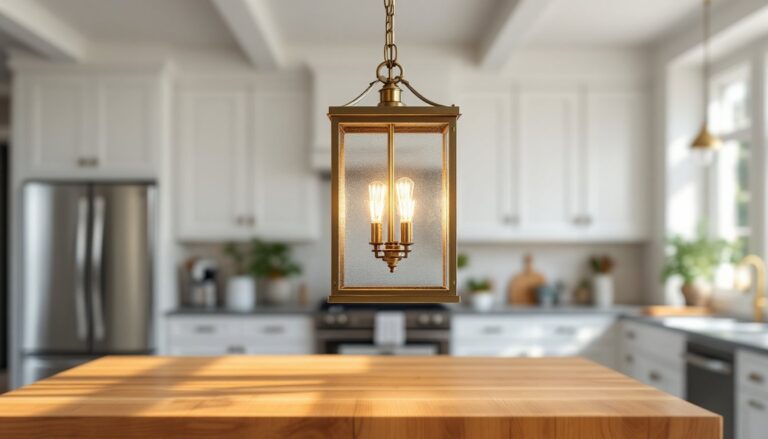
Pendants dominate luxury island lighting for good reason: they’re modular, scalable, and endlessly customizable. Unlike flush mounts, pendants provide downward-focused task light while maintaining visual presence.
Most designers specify two to three pendants for islands measuring 6 to 9 feet in length. Spacing should be 24 to 30 inches apart, with the fixture bottoms hanging 30 to 36 inches above the countertop. That height allows clearance for tall homeowners while keeping the light effective.
Materials matter. Hand-blown glass pendants, think Murano glass or artisan pieces, refract light beautifully and add texture. Metal finishes like aged brass, blackened steel, or brushed nickel provide contrast against cabinetry. Some premium lines incorporate mixed materials: leather-wrapped cords, marble canopies, or carved wood accents.
LED filament bulbs have become the go-to for pendant installations. They mimic the warm glow of Edison bulbs while drawing 4-6 watts instead of 40-60. Many feature task lighting design principles to balance aesthetics with function.
Safety note: Pendants over islands don’t typically require special wiring, but if your island includes a cooktop, verify local code, some jurisdictions restrict fixtures within a certain radius of open flame.
Chandeliers for a Grand Statement
Chandeliers aren’t just for dining rooms anymore. Over the past five years, linear and geometric chandeliers have become statement pieces in luxury kitchens, especially those with 9-foot or higher ceilings.
Linear chandeliers, also called island chandeliers, run parallel to the island’s length, typically measuring 40 to 60 inches long for a standard 8-foot island. They provide even light distribution and visual symmetry. Materials range from crystal and glass to reclaimed wood and industrial metal.
For kitchens with a more traditional bent, multi-arm chandeliers work well. Look for designs with adjustable canopy mounts that let you offset the fixture if your island isn’t centered under a ceiling junction box, a common issue in renovations.
Recent kitchen lighting trends highlight sculptural designs that blend function with art. Chandeliers in this category often feature exposed bulbs, geometric cages, or layered tiers.
Installation tip: Chandeliers weigh more than standard pendants, some top 50+ pounds. Verify your junction box is rated for the weight, and consider adding a ceiling brace if you’re mounting to drywall rather than a ceiling joist.
How to Choose the Right Size and Scale
Getting the size wrong is the fastest way to undermine a luxury fixture. Too small, and it looks like an afterthought. Too large, and it overwhelms the space, or worse, becomes a head hazard.
Start with the island’s dimensions. For pendants, a common rule is to keep the combined width of your fixtures to two-thirds the island’s width. So if your island is 6 feet (72 inches) wide, your pendants should total roughly 48 inches across. With three pendants, that’s about 16 inches per fixture.
For linear chandeliers, aim for a fixture that’s two-thirds to three-quarters the island’s length. An 8-foot island pairs well with a 60-inch chandelier.
Ceiling height dictates how much visual weight you can handle. Standard 8-foot ceilings call for more compact profiles. If you’ve got 10-foot or vaulted ceilings, you have room for larger, more dramatic pieces. In homes featured by publications like Architectural Digest, designers often specify oversized fixtures that would dwarf a standard kitchen, because the proportions support it.
Hanging height is non-negotiable: 30 to 36 inches above the countertop for pendants and linear fixtures. If your island has bar-height seating (typically 42 inches instead of 36), you can go slightly higher, 36 to 40 inches, to maintain clearance.
Before you buy, mock it up. Cut out a cardboard template to the fixture’s dimensions and hang it at the proposed height. Walk around the island. Sit at the stools. If it feels intrusive, go smaller or adjust the height.
Premium Materials That Define Luxury Lighting
Material choice separates a luxury fixture from a mass-market lookalike. It affects light quality, durability, and how the piece ages.
Glass remains a top-tier choice. Hand-blown glass pendants, whether clear, seeded, or colored, diffuse light softly and add depth. Seeded glass, embedded with tiny bubbles, is popular in transitional and farmhouse styles. It works well if you’re also considering vintage farmhouse lighting options elsewhere in the home. Murano glass from Italy commands premium prices but offers unmatched craftsmanship.
Metal finishes define the fixture’s personality. Polished nickel and chrome lean modern. Aged brass and oil-rubbed bronze suit traditional or industrial aesthetics. Blackened steel is a favorite in 2026, it pairs well with dark cabinetry and offers contrast without competing. Many luxury lines offer custom patinas or hand-applied finishes that develop character over time.
Natural materials are gaining traction. Rattan, woven jute, and carved wood bring warmth to otherwise sterile modern kitchens. These work best in homes with strong natural light and organic design elements. Keep in mind that natural fibers may require occasional dusting, and they’re not ideal near high-moisture areas like sinks.
Crystal and cut glass still appear in high-end designs, though they’ve evolved beyond traditional chandeliers. Modern interpretations use geometric crystal arrangements or single statement crystals as accents rather than full-on glitz.
For homeowners balancing multiple light sources, some designers integrate the island fixture with under-cabinet lighting systems to layer ambient and task illumination.
When comparing materials, consider how they interact with your kitchen’s palette. A polished brass fixture over white quartz and white cabinets creates contrast. The same fixture over walnut counters and warm wood tones creates harmony. There’s no wrong answer, just intentional design.
Installation Tips for a Professional Finish
Luxury fixtures deserve professional-grade installation. Most homeowners can handle the electrical work if they’re comfortable with basic wiring, but if you’re dealing with a heavy chandelier or a complicated multi-pendant setup, hiring a licensed electrician is worth it.
Electrical prep: Verify you have a ceiling junction box at the desired location. If your island doesn’t align with an existing box, you’ll need to add one. In new construction or gut renovations, this is straightforward. In existing kitchens, you may need to cut into drywall, run new wire, and patch. Check local codes, most jurisdictions require a permit for new electrical runs.
For multi-pendant installations, consider a linear canopy that houses multiple junction points. These mount to a single ceiling box but distribute power to two or three pendants. It’s cleaner than running separate boxes and gives you flexibility on pendant spacing.
Dimmer compatibility: LED fixtures require LED-compatible dimmers. Old-school rotary or slide dimmers can cause flickering or buzzing. Lutron and Leviton both make reliable LED dimmers, and many integrate with smart home systems. Dimming capability is essential, you don’t want full task lighting during a dinner party.
Weight considerations: Ceiling boxes are typically rated for 50 pounds, but verify yours. If your chandelier exceeds that, install a fan-rated brace box between the ceiling joists. These are adjustable and rated for 70+ pounds. Missing this step can lead to a sagging fixture or, worse, a fixture on the floor.
Leveling and alignment: Use a laser level or plumb bob to ensure your fixture is centered over the island. Even a 2-inch offset is noticeable. If you’re installing multiple pendants, measure from a fixed reference point, like the island’s corner, rather than eyeballing it.
Final adjustments: Most pendants have adjustable cord or chain lengths. Set the height with the island in place and bar stools positioned. Have someone sit at the island while you adjust, if they feel cramped or the light is too direct, raise the fixture an inch or two.
Keep in mind that flush mount options exist for kitchens with lower ceilings or limited clearance, though they lack the sculptural presence of pendants.
Safety gear: Wear safety glasses when working overhead, especially if you’re drilling into drywall or cutting wire. If you’re working with an existing fixture, shut off power at the breaker, not just the wall switch, and use a non-contact voltage tester to confirm the circuit is dead.
Finally, check the manufacturer’s instructions. Some luxury fixtures have specific mounting requirements or proprietary hardware. Skipping the instructions is how you end up with a crooked $2,000 chandelier.