



Table of Contents
ToggleGetting the lighting right in your living room isn’t just about screwing in a bulb and calling it done. It’s about creating a space that works for movie nights, reading sessions, and hosting friends without harsh glare or dim corners. The right fixtures can make an 8-foot ceiling feel taller, a cramped room feel open, or a cavernous space feel cozy. But walk into any home center and you’ll face dozens of fixture types, each with different installation requirements, light output, and price points. This guide cuts through the confusion and walks through what actually works, from the types of fixtures worth considering to how they layer together for a room that looks and functions the way it should.
Key Takeaways
- Living room lighting fixtures require layering three types—ambient, task, and accent light—to create a functional space that supports movie nights, reading, and entertaining without relying on a single overhead fixture.
- Proper living room lighting design can reduce energy costs by $15–30 monthly and improve light quality by swapping to LED fixtures and planning fixture placement strategically.
- Chandeliers and pendant lights serve as focal points and require ceiling junction boxes rated for their weight, with sizing based on room dimensions and a 7-foot minimum clearance above the floor.
- Recessed and track lighting offer flexible solutions: recessed cans (5–6 inches) work best for living rooms, while track lighting suits renters and spaces avoiding ceiling demolition.
- Floor and table lamps are the easiest fixtures to install and provide critical layering for reading, task work, and filling dark corners without requiring any electrical permits.
- Match fixture style to your room’s architecture and use warm color temperatures (2700K–3000K) to create an inviting feel, while ensuring scale and proportion fit your space without appearing oppressive or undersized.
Why Living Room Lighting Matters More Than You Think
Most people treat lighting as an afterthought, something to figure out once the sofa’s in place. But lighting directly affects how the room feels and functions. Poor lighting makes paint colors look muddy, creates eye strain during tasks, and can make guests feel uncomfortable without anyone pinpointing why.
Ambient light sets the overall brightness and mood. Task light supports specific activities like reading or working on a laptop. Accent light highlights architectural features or artwork. Miss any of these layers and the room feels off, even if the furniture and finishes are dialed in.
Lighting also impacts energy costs. A living room with inefficient fixtures and poor planning can add $15–30 per month to an electric bill, depending on usage and local rates. Swapping to LED fixtures and designing with intention cuts that cost while improving light quality.
There’s also a code consideration. Adding new circuits or altering existing electrical requires permits in most jurisdictions, especially if you’re opening walls or upgrading panel capacity. For simple fixture swaps on existing circuits, permits typically aren’t required, but double-check local rules. If you’re unsure about electrical work, hire a licensed electrician, mistakes aren’t just frustrating, they’re dangerous.
Types of Living Room Lighting Fixtures Every Homeowner Should Know
Chandeliers and Pendant Lights
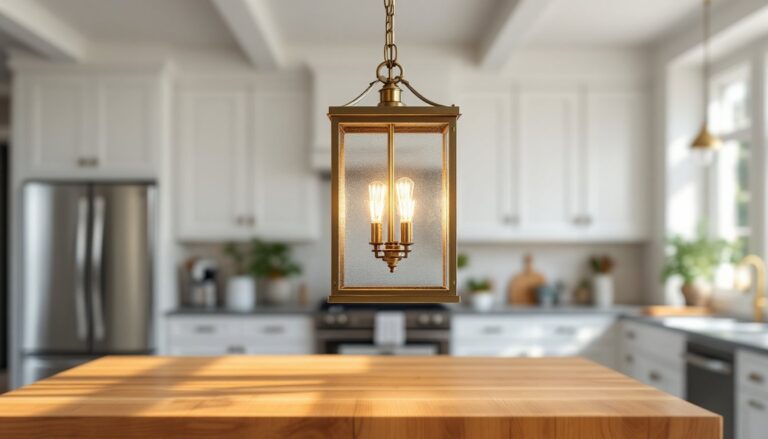
Chandeliers and pendants hang from the ceiling and serve as focal points. Chandeliers work well in living rooms with at least an 8-foot ceiling: for rooms with 9- or 10-foot ceilings, you can go bigger without the fixture feeling oppressive. Pendants are smaller, often hung in clusters or used over specific zones like a reading nook.
Installation: Both require a ceiling junction box rated for the fixture’s weight. Most chandeliers weigh 10–50 pounds: check the box rating (stamped on the side) before hanging. If the existing box isn’t rated, you’ll need to install a fan-rated or heavy-duty box, which may mean opening the ceiling. Use a stud finder to locate joists for secure mounting.
Sizing: A common rule is to add the room’s length and width in feet, then convert to inches for fixture diameter. For a 14′ × 16′ room, that’s 30 inches. Hang the bottom of the fixture at least 7 feet above the floor to avoid head strikes. Dimmer switches are nearly mandatory here, most chandeliers and pendants overpower a room at full brightness.
Designers often recommend statement fixtures like those seen in galleries on sites such as House Beautiful, where layered lighting transforms entire spaces.
Recessed and Track Lighting
Recessed lighting (often called can lights) installs flush with the ceiling. Standard cans are 4, 5, or 6 inches in diameter. For living rooms, 5- or 6-inch cans with LED retrofits are the sweet spot, they provide enough output without looking like a commercial space.
Installation: Recessed lights require ceiling access (attic or crawl space above, or opening drywall from below). New construction housings install before drywall: remodel housings clip into finished ceilings. Space cans 4–6 feet apart for even coverage. Avoid placing them directly over seating, no one wants a spotlight in their eyes. Angle adjustable trims toward walls or artwork instead.
Recessed lighting in living rooms with vaulted ceilings demands sloped-ceiling housings to maintain proper lamp angle and avoid glare.
Track lighting mounts to the ceiling or wall on a linear track, with adjustable heads that slide and pivot. It’s ideal for renters or anyone avoiding ceiling demo. Tracks come in single-circuit (all lights on one switch) or multi-circuit (independent control of heads). Most residential tracks use a standard 120V connection: some designer systems use low-voltage halogen or LED, requiring a transformer.
Tip: LED retrofit kits for recessed cans cost $8–15 each and drop into existing housings in under 5 minutes. They cut energy use by 75% compared to old incandescent BR30 bulbs.
Floor Lamps and Table Lamps
Floor lamps and table lamps are the simplest fixtures to add, no wiring, no permits, just plug and go. They’re critical for layering because they put light exactly where it’s needed: next to a sofa for reading, beside a chair, or filling a dark corner.
Types:
- Torchiere lamps throw light upward, bouncing it off the ceiling for soft ambient fill. They work well in rooms with white or light-colored ceilings.
- Arc lamps extend over seating, acting like a pendant without ceiling installation. They need a heavy base to avoid tipping.
- Tripod and task floor lamps direct light downward for reading or hobbies.
Shades matter. Light-colored fabric or paper shades diffuse light softly. Dark or opaque shades focus light up and down, creating more drama but less ambient fill. For table lamps, the bottom of the shade should sit at eye level when seated to avoid glare.
Pair lamps with 3-way bulbs (50/100/150W equivalent in LED) for flexibility. A single switch gives three brightness levels without installing a dimmer. Lamps also support zones, turn on only what’s needed instead of flooding the whole room.
Many modern living room approaches, as showcased by Domino, blend portable and hardwired fixtures to create impact without major renovation.
How to Layer Your Living Room Lighting Like a Pro
Layering means combining multiple fixture types to cover ambient, task, and accent needs. A single overhead fixture, no matter how nice, won’t do all three.
Start with ambient. This is the base layer, usually recessed lights, a chandelier, or a flush-mount ceiling fixture. Aim for 1.5–2 watts per square foot of LED output (or 15–20 watts per square foot for old incandescent equivalent). A 200-square-foot living room needs roughly 300–400 LED watts total, split across fixtures.
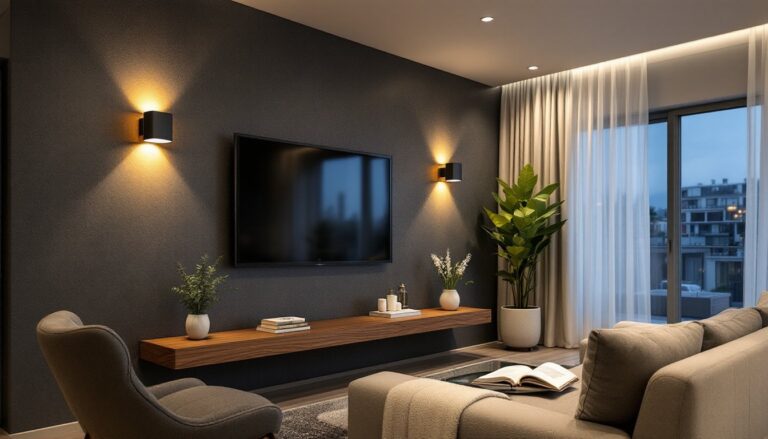
Add task lighting. Place floor lamps or table lamps near seating, desks, or reading areas. For true task lighting, aim for 40–60 watts (LED equivalent) per task area. Adjustable arms or swing-arm wall sconces give pinpoint control.
Finish with accent. Use track heads, picture lights, or wall-mounted spot lighting to highlight artwork, built-ins, or architectural features. Accent lights should be roughly 3 times brighter than ambient light on the object being lit to create contrast.
Control is everything. Put each layer on its own switch or dimmer. A basic setup uses three switches: one for overhead ambient, one for accent/track, and plug-in lamps controlled manually. For flexibility, consider smart bulbs or switches that allow scenes (“movie mode,” “reading mode,” etc.).
Avoid common mistakes:
- Don’t rely on a single center ceiling fixture. It creates harsh shadows and offers no flexibility.
- Don’t place all light sources at the same height. Vary ceiling, mid-level (sconces, pendants), and floor-level fixtures.
- Don’t forget corners. Dark corners make rooms feel smaller. A simple floor lamp solves this.
Integrated lighting systems can automate layering, adjusting intensity and zones based on time of day or activity, though they add complexity and cost.
Choosing the Right Fixtures for Your Living Room Style
Fixture style should match the room’s architecture and furnishings, but function comes first. A gorgeous chandelier that blinds everyone isn’t doing its job.
Traditional and transitional rooms lean toward chandeliers with multiple arms, sconces with fabric shades, and table lamps with classic silhouettes. Finishes like brushed nickel, oil-rubbed bronze, or brass fit well. Look for fixtures with opaque or frosted glass to soften light.
Modern and contemporary spaces favor clean lines, geometric shapes, and minimal ornamentation. Recessed lighting, track systems, and LED panel lights integrate seamlessly. Pendants with exposed bulbs or metal cages add industrial edge without clutter. Matte black, polished chrome, and brushed aluminum dominate.
Farmhouse and rustic styles work with wood, wrought iron, and vintage-inspired fixtures. Vintage farmhouse lighting brings warmth through aged finishes and Edison bulbs. Lantern-style pendants and mason jar sconces fit the aesthetic, but make sure they provide enough light, some decorative fixtures sacrifice output for looks.
Minimalist designs strip away excess. A single statement piece, a sculptural pendant or a sleek arc lamp, does the talking. Minimalist lighting design prioritizes function and negative space, often pairing recessed ambient light with one or two carefully chosen portable fixtures.
Color temperature matters as much as style. 2700K–3000K (warm white) suits living rooms, creating a cozy, inviting feel. Anything above 3500K starts to feel clinical. Check the Kelvin rating on bulb packaging before buying.
Fixture finish and room finishes should complement each other. In rooms with warm wood tones and earth colors, brass or bronze fixtures feel cohesive. In spaces with cool grays and whites, chrome or matte black work better. Mixing metals is fine, just keep it intentional, not random.
Scale matters. Oversized fixtures in a small room feel oppressive. Undersized fixtures in a large room disappear. When in doubt, go slightly larger than your first instinct, most people err on the side of too small. Proportion beats perfection every time.