

Table of Contents
ToggleNew Orleans homeowners know the city comes alive after dark, on Bourbon Street, in garden districts, and increasingly, in private yards and courtyards. Landscape lighting does more than show off azaleas and Crepe Myrtles: it extends living space outdoors, deters intruders, and highlights architectural details that define Southern homes. With year-round outdoor entertaining and the city’s signature humidity, choosing and installing the right fixtures requires local know-how. This guide walks through lighting types, design strategies, weather-proofing tactics, and when to tackle installation yourself versus calling in a pro.
Key Takeaways
- Landscape lighting in New Orleans enhances safety, security, and curb appeal while extending usable outdoor living space year-round in a warm climate where entertaining thrives after dark.
- Proper path and walkway lighting prevents trips and falls on uneven surfaces, while uplighting in warm white LEDs (2700K–3000K) showcases Southern architecture, live oaks, and historic facades.
- Layer multiple lighting types—paths, uplights, accents, and downlights—while keeping light coverage to 30–40% of visible features to create visual depth and avoid the washed-out appearance of overlighting.
- Marine-grade fixtures with IP65+ ratings, silicone-sealed connectors, and UV-stabilized materials resist New Orleans’ 60+ inches of annual rain, salt air, and 90°F humidity that corrode standard hardware.
- Low-voltage (12V or 24V) landscape lighting systems are DIY-friendly when properly planned, but line-voltage work, tree-mounted fixtures, and complex smart controls require licensed professionals and permits.
- Space path lights 8–10 feet apart, size transformers for total wattage plus 20% headroom, bury cable 6–12 inches deep, and always inspect systems after hurricanes for water damage and shifted fixtures.
Why Landscape Lighting Matters in New Orleans
The Big Easy doesn’t shut down at sunset. Courtyards host cocktail parties in January, and front porches serve as second living rooms most of the year. Landscape lighting keeps these spaces functional and safe after dark.
Safety and security top the list. Unlit paths, stairs, and driveways invite trips and falls, Louisiana’s high water table means uneven settling is common, making footing unpredictable even in daylight. Properly lit entries and perimeters also discourage prowlers: motion-activated fixtures or consistently illuminated zones signal occupancy.
Curb appeal and property value get a measurable boost. Well-designed lighting showcases Queen Anne facades, centuries-old oaks, and cast-iron fences, features that buyers pay premiums for in neighborhoods like the Garden District and Lakeview. Even modest shotgun cottages gain drama when columns, shutters, and foundation plantings are uplit.
Extended outdoor living is essential in a climate where December evenings hit 60°F. Ambient lighting around patios, pools, and outdoor kitchens turns backyards into usable square footage nine or ten months a year. Install dimmable systems to shift from task lighting during grilling to softer ambiance for late-night conversation.
Best Types of Landscape Lighting for New Orleans Homes
Path and Walkway Lighting
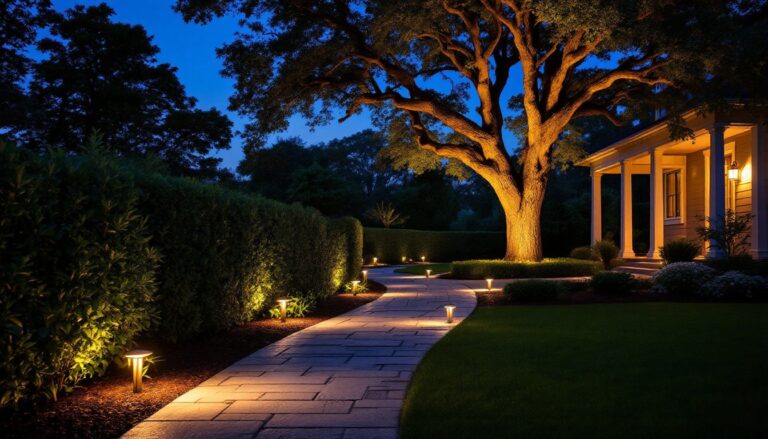
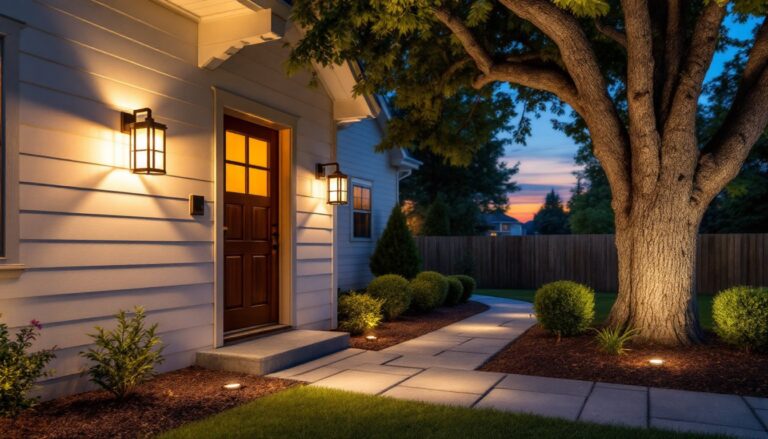
New Orleans’ sidewalks buckle, driveways crack, and flagstone paths shift, low-level path lights prevent twisted ankles and guide guests from street to stoop. Bollard fixtures (18–24 inches tall) work well along driveways and wider walkways, casting pools of downward light without glare. For narrow garden paths or courtyard edges, recessed well lights or small stake-mounted fixtures (6–12 inches high) offer subtler guidance.
Choose fixtures rated IP65 or higher for dust and water resistance. New Orleans sees 60+ inches of rain annually, and even covered walkways catch spray during thunderstorms. LEDs are standard now, they draw 75% less power than incandescent bulbs, run cool, and last 25,000+ hours, reducing ladder time for bulb swaps in humid, mosquito-heavy summers.
Space path lights 8–10 feet apart for even coverage. Too close creates a runway effect: too far leaves dark gaps. Test spacing with battery-powered clip lights or landscape stakes before trenching cable.
Accent and Uplighting for Architecture and Trees
Southern architecture begs for drama. Uplights placed at the base of columns, beneath eaves, or aimed at façade details create depth and shadow play. Use narrow-beam bullet or well lights (15–30-degree spread) for pinpoint precision on architectural features: wider floods (60–120 degrees) wash entire walls or canopies.
New Orleans’ iconic live oaks, Magnolias, and Palmettos deserve their own stage. Position uplights 3–5 feet from the trunk, angled to graze bark texture and illuminate branching structure. Avoid centering lights directly under the canopy, offset placement adds dimension and prevents a “spotlight on a pole” look. For Crepe Myrtles with exfoliating bark, spot lighting techniques enhance texture beautifully.
Use warm white LEDs (2700K–3000K) to complement brick, stucco, and painted wood siding common in local homes. Cool whites (4000K+) can make historic finishes look washed out. Dimmable drivers or smart controllers let homeowners dial intensity for different occasions, full brightness for entertaining, subdued glow for everyday evenings.
Designing Your New Orleans Landscape Lighting Layout
Start with a scaled site plan, graph paper works, or use a smartphone app to overlay measurements on a photo. Mark existing features: trees, walkways, architectural elements, planting beds, and utilities. Identify focal points (front door, fountain, specimen tree) and circulation routes (driveway, side yard gate, back patio).
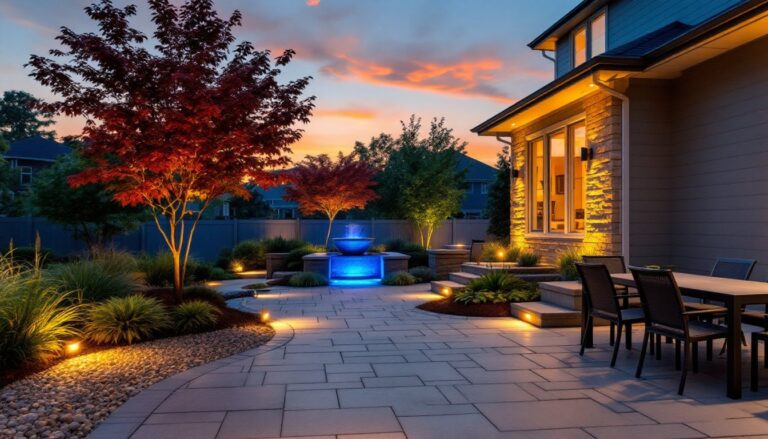
Layer lighting types for a professional result. Combine path lights, uplights, downlights (mounted in trees or under eaves), and accent fixtures. A single type, say, all path lights, looks utilitarian: mixing creates visual interest and serves multiple functions.
Avoid overlighting. New Orleans’ best landscape lighting designs embrace shadow and contrast. If every shrub and tree glows, nothing stands out. Aim to light 30–40% of visible landscape features: the interplay of light and dark gives depth.
Plan for zoning and control. Run separate circuits or use smart relays to control front yard, side paths, and backyard independently. Timers or photocells automate on/off cycles, but manual overrides let homeowners adjust for parties or vacations. Low-voltage systems (12V or 24V) are standard for landscape work, they’re safer to install than 120V line-voltage, and code requirements are less stringent (though always check local amendments to the NEC Article 411).
Consider professional input for complex layouts. Many landscape lighting professionals in New Orleans offer design consultations even if homeowners plan DIY installation. An hour of expert advice can prevent costly mistakes like undersized transformers or poorly placed fixtures.
Weather Considerations for New Orleans Outdoor Lighting
New Orleans weather is outdoor lighting’s stress test: 90°F heat, 90% humidity, salt air near the lakefront, and torrential summer thunderstorms. Fixtures and wiring must withstand it all.
Corrosion resistance is non-negotiable. Choose fixtures in marine-grade brass, copper, or powder-coated aluminum, avoid bare steel or cheap pot metal. Stainless-steel hardware resists rust: brass and copper develop patinas that blend with historic architecture. Check that lenses and gaskets are UV-stabilized to prevent yellowing and cracking under relentless sun.
Moisture ingress kills electronics. Look for IP65 or IP67 ratings (dust-tight, protected against water jets or brief immersion). Silicone-filled wire connectors beat twist-on wire nuts in wet locations. Bury low-voltage cable 6–12 inches deep in conduit or direct-burial-rated jacket: surface-laid cable degrades fast in UV and mower strikes.
Hurricane prep matters. Secure fixtures with ground stakes or mounting brackets, loose lights become projectiles in 80-mph gusts. Removable stake lights and portable bistro lighting fixtures should be stored indoors when tropical systems approach. After storms, inspect for water in junction boxes, damaged lenses, and shifted aim, even well-installed systems need post-event checks.
Heat and ventilation affect LED driver lifespan. Enclosed fixtures trap heat: choose designs with ventilation slots or heat-sink fins. Transformers and drivers mounted in weatherproof enclosures should have knockouts for cable entry positioned downward to shed water. Mount transformers on walls or posts, not directly on soil, ground moisture accelerates corrosion.
DIY Installation Tips and When to Hire a Professional
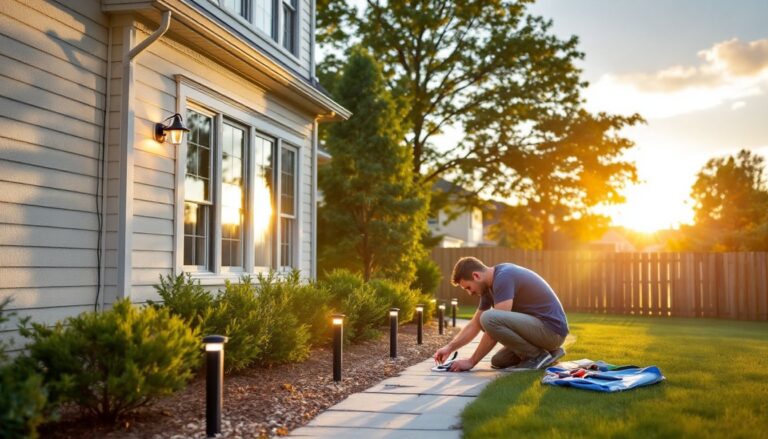
Most low-voltage landscape lighting is DIYer-friendly, but planning and prep separate clean installs from headaches.
Start with the transformer. Size it to handle total fixture wattage plus 20% headroom, undersized transformers overheat and fail early. Mount within 10 feet of a GFCI-protected outdoor outlet: hardwiring to a circuit requires a permit and licensed electrician in Orleans Parish. Use a transformer with built-in timer and photocell: manual switches get forgotten.
Run cable in straight lines or gentle curves, not zigzags. Measure voltage drop at the end of each cable run with a multimeter, low-voltage systems lose efficiency over distance. Keep runs under 100 feet for 12-gauge wire, 150 feet for 10-gauge to maintain voltage above 10.8V at fixtures. If voltage sags, split the load across multiple transformer taps or upgrade wire gauge.
Bury cable properly. Rent a flat-blade edger or trenching spade to cut narrow, clean trenches. Lay cable in a shallow sand bed if soil is rocky, then backfill and tamp. Mark cable routes on your site plan, future digging for irrigation or fencing can sever forgotten lines.
Aim and adjust after dark. Daytime positioning looks different once the sun sets. Stake fixtures loosely, connect power, and walk the property at dusk to fine-tune angles and spacing. Use a helper to hold lights while you judge from multiple viewpoints.
Safety gear: Wear work gloves when handling metal fixtures and digging: safety glasses if cutting or drilling: knee pads for ground-level work.
When to call a pro:
- Line-voltage (120V) installations, these require permits, conduit, and electrical licensing.
- Complex systems with multiple zones, smart controls, or integration with home automation.
- Permanent hardscape work, drilling into brick, mounting on historic facades, or running cable under driveways often needs specialized tools and insurance.
- Large properties, multi-acre layouts benefit from professional design and installation efficiency.
- Tree-mounted downlights, climbing trees with wiring and tools is hazardous: pros carry liability coverage and rigging equipment.
Even if hiring out installation, understanding modern lighting systems helps homeowners communicate priorities and evaluate bids. Request itemized quotes, confirm warranty coverage, and ask for maintenance schedules, New Orleans’ climate demands annual fixture checks and lens cleaning.
With the right fixtures, thoughtful layout, and weather-smart installation, landscape lighting transforms New Orleans homes into evening showcases. Whether highlighting centuries-old oaks or guiding guests through a Marigny courtyard, well-executed outdoor lighting pays dividends in safety, beauty, and year-round livability. For those comfortable with low-voltage electrical work and basic landscaping, it’s an achievable weekend project. For everyone else, a qualified installer ensures code compliance and long-term performance in one of the nation’s toughest outdoor environments.