




Table of Contents
ToggleChoosing the right light fixture for above a kitchen table isn’t just about illumination, it’s the anchor of the room. In farmhouse design, where warmth and function intersect, the fixture over the table sets the tone for family meals, assignments sessions, and late-night conversations. Get it wrong, and the space feels unfinished or awkward. Get it right, and it transforms the entire kitchen into a cohesive, inviting hub. This guide walks through selecting, sizing, and installing farmhouse lighting that balances rustic charm with practical performance.
Key Takeaways
- Farmhouse kitchen lighting over your table anchors the room and creates intimacy by providing focused task-level light while reinforcing rustic design elements like distressed wood and wrought iron.
- Choose fixture types based on table shape and ceiling height: chandeliers and pendants work well for round or square tables, while linear fixtures suit long rectangular tables with even light distribution.
- The ideal fixture width should be one-half to two-thirds the width of your table, hung 30–36 inches above the tabletop for proper clearance and effective illumination.
- Aged or matte black metal, galvanized steel, and distressed wood finishes are popular farmhouse lighting choices that complement white shiplap and light wood tones without rigid matching requirements.
- Warm white bulbs (2700K–3000K) and dimmable fixtures enhance farmhouse ambiance and adapt the space from bright task lighting to soft dinner mood.
- Confirm fixture weight compatibility with your junction box, verify dimmable bulb and switch compatibility, and always consult local building codes before moving electrical boxes or adding new circuits.
Why Lighting Over Your Kitchen Table Matters in Farmhouse Design
In farmhouse kitchens, the table is more than a place to eat, it’s the gathering spot. The light fixture above it defines the zone, drawing the eye and creating intimacy within an often open-concept layout.
Functional layers matter here. Overhead lighting provides general illumination, but the fixture above the table delivers focused, task-level light for dining, reading, and working. Without it, the table can feel detached from the rest of the kitchen, especially in larger rooms with high ceilings.
Farmhouse aesthetics lean on materials like distressed wood, wrought iron, and aged metal finishes. A well-chosen fixture reinforces those elements, tying together cabinetry, hardware, and architectural details. It’s not about matching perfectly, it’s about creating visual rhythm. A fixture with warm metal tones can echo cabinet pulls, while a wooden element might mirror open shelving or ceiling beams.
Many homeowners using vintage farmhouse lighting achieve that lived-in, collected-over-time look that defines the style. The right fixture also impacts color temperature and ambiance, warm white bulbs (2700K–3000K) suit farmhouse spaces better than cooler tones, which can feel clinical.
Best Types of Farmhouse Light Fixtures for Over the Table
Selecting the fixture type depends on table shape, ceiling height, and the overall design scheme. Here’s what works best.
Chandeliers and Pendant Lights
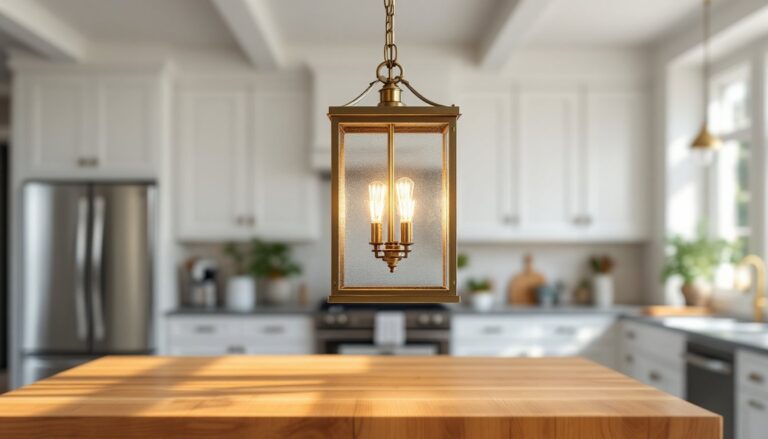
Chandeliers bring formal farmhouse elegance, think candelabra-style arms, exposed Edison bulbs, or wagon wheel designs. They work well over round or square tables and add vertical interest in rooms with 9-foot or higher ceilings. Look for fixtures with adjustable chain lengths to dial in the perfect hang height.
Single or clustered pendants offer flexibility. A single large pendant (18–24 inches in diameter) suits smaller round tables. For rectangular tables, three pendants spaced evenly down the length create balanced light distribution. Glass globes, wire cages, and barn-style shades are classic farmhouse choices. Pendant spacing should be roughly 30–36 inches apart, centered over the table.
Both options allow for dimmer switches, which are critical for adjusting mood from bright task lighting during assignments to soft ambiance during dinner. Many task lighting setups benefit from this flexibility, especially in multi-use spaces.
Linear Fixtures and Island Lights
Linear fixtures (also called island lights or billiard lights) stretch horizontally and suit long rectangular tables. They range from simple metal channels with multiple bulbs to more decorative multi-light frames. Typical lengths run 30–48 inches, though larger tables may need custom sizing.
These fixtures excel in modern farmhouse kitchens where clean lines meet rustic details. Black metal frames with clear seeded glass or industrial-style cages fit the aesthetic without feeling overly ornate. The advantage? Even light distribution across the entire table surface, reducing shadows at the ends.
When choosing between chandelier, pendant, or linear styles, consider the kitchen’s lighting systems as a whole, table lighting should complement under-cabinet or recessed lighting, not compete with it.
How to Determine the Right Size and Height for Your Fixture
Sizing and placement errors are the most common mistakes. Here’s how to get it right.
Fixture width: The fixture should be one-half to two-thirds the width of the table. For a 36-inch-wide table, aim for an 18–24 inch fixture diameter or linear fixture length proportional to table length. Too small reads as an afterthought: too large overwhelms the space.
Hanging height: The bottom of the fixture should sit 30–36 inches above the tabletop. This range provides adequate clearance for sightlines and decor while keeping light close enough for effective illumination. For ceilings taller than 9 feet, add 3 inches of hanging height for every additional foot of ceiling height.
Adjust for table shape: Round tables center a single fixture. Rectangular tables longer than 60 inches often need multiple pendants or a linear fixture. Measure the table, then mark the center point(s) on the ceiling, this prevents off-center installations that throw off the entire room’s balance.
Check the junction box location. If the existing electrical box isn’t centered over the table, you’ll need to move it, a job that may require opening the ceiling and running new wire. That’s permit-required work in most jurisdictions and often best left to a licensed electrician.
Many designers reference insights from sources like Remodelista when planning proportions for kitchen fixtures, as these ratios impact both function and visual harmony.
Popular Farmhouse Lighting Styles and Finishes
Farmhouse lighting spans from rustic to refined. Here are the go-to styles and finishes.
Aged or matte black metal dominates contemporary farmhouse kitchens. It contrasts beautifully with white shiplap, subway tile, and light wood tones. Black fixtures feel grounded and masculine without being heavy, especially when paired with warm-toned bulbs.
Galvanized steel and brushed nickel lean industrial-farmhouse. These finishes suit kitchens with stainless appliances or mixed-metal hardware. Galvanized pieces often feature visible welds or rivets, adding texture and authenticity.
Distressed wood and rope accents bring in organic warmth. Wood bead chandeliers, fixtures with wood canopies, or pendants wrapped in jute rope soften the harder edges of metal and tile. These work especially well in kitchens with butcher block counters or reclaimed wood elements featured in vintage farmhouse lighting collections.
Seeded or clear glass shades allow the bulb to be part of the design. Edison-style filament bulbs (often LED replicas) add nostalgic charm and work within transparent or minimally frosted glass. Avoid overly frosted or colored glass, it muddies the aesthetic and reduces light output.
Finish consistency matters, but not rigidly. If cabinet pulls are brushed nickel, the light fixture doesn’t have to match exactly, black or aged brass can coexist as intentional contrast. What to avoid: mixing too many metal tones (more than three finishes) in one sight line.
Kitchens with farmhouse style often layer textures, as seen in examples from Country Living, where pendant lighting ties together mixed finishes and natural materials.
Installation Tips and Electrical Considerations
Installing a new fixture over the table isn’t always a simple swap. Here’s what to expect.
Safety first: Turn off power at the breaker, not just the switch. Use a non-contact voltage tester to confirm the circuit is dead before touching any wires. Wear safety glasses in case of falling debris.
Check the existing box: Most kitchen light fixtures are mounted to a standard 4-inch round or octagonal junction box. For heavier chandeliers (over 50 pounds), you’ll need a fan-rated pancake box or a box with a brace rated for the fixture’s weight. If the existing box is plastic or feels loose, replace it before hanging the new fixture.
Wire connections: Typical wiring includes a black (hot), white (neutral), and bare copper or green (ground). Match fixture wires to house wires using wire nuts, black to black, white to white, ground to ground. Wrap connections with electrical tape for added security. If the fixture uses a proprietary plug or quick-connect system, follow the manufacturer’s instructions exactly.
Dimmer compatibility: If installing a dimmer, confirm the fixture and bulbs are dimmable. Not all LED bulbs dim smoothly, look for bulbs labeled “dimmable” and pair them with an LED-compatible dimmer switch. Incandescent-only dimmers can cause flickering or buzzing with LEDs.
Pendant height adjustment: Most pendants and chandeliers use adjustable chain or cord. Before securing the canopy, hang the fixture and step back to check the height from multiple angles. It’s easier to adjust before final installation than after.
Permit requirements: Replacing a fixture on an existing circuit generally doesn’t require a permit. But moving the junction box, adding a new circuit, or doing work in an older home with aluminum wiring may. When in doubt, check with the local building department or hire a licensed electrician. This is not the place to wing it, improper wiring is a fire hazard.
For spaces with insufficient general lighting, integrating the table fixture with other options like flush mount lighting elsewhere in the kitchen ensures balanced illumination.
Testing: Once installed, turn the breaker back on and test the fixture. Check that all bulbs light, the dimmer functions smoothly, and there’s no flickering or buzzing. If the fixture sways or feels loose, turn off power and re-tighten the mounting bracket.
Many DIYers also explore bistro lighting for outdoor kitchen extensions, creating cohesive lighting themes that flow from indoor dining to patio gatherings. Kitchen design resources like The Kitchn offer additional inspiration for coordinating table lighting with broader kitchen layouts.