
Table of Contents
ToggleAdding light to your yard shouldn’t mean programming a timer every season or fumbling with extension cords in the dark. Smart landscape lighting puts control in your pocket, literally. These systems integrate with your smartphone, voice assistants, and home automation platforms to deliver customizable outdoor illumination that responds to schedules, weather, and even your arrival home. Whether you’re highlighting architectural features, improving safety along pathways, or simply enjoying your patio after sunset, smart outdoor lighting offers flexibility that traditional low-voltage systems can’t match. This guide walks through what makes these systems tick, how to choose the right setup, and practical installation steps for DIYers ready to upgrade their outdoor spaces.
Key Takeaways
- Smart landscape lighting systems connect to your smartphone and voice assistants via Wi-Fi, Bluetooth, or dedicated hubs, offering customizable outdoor illumination far superior to traditional low-voltage alternatives.
- Motion-activated smart lights enhance security by deterring intruders and preventing trips on pathways, while geofencing ensures lights activate as you arrive home without manual control.
- LED-based smart landscape lighting reduces energy costs by 40–60% through automated scheduling and dimming compared to traditional dusk-to-dawn operation, with individual fixtures lasting 25,000–50,000 hours.
- When selecting a system, prioritize compatibility with your existing smart home ecosystem (Alexa, Google Home, Apple HomeKit) and verify IP65+ ratings for weatherproofing in wet conditions.
- DIY installation requires marking underground utilities via 811, running 12–14-gauge buried cable, and mounting the transformer near a GFCI-protected outlet—hire an electrician if no outdoor outlet exists.
- Layering uplighting, downlighting, and path lighting with customizable zones and scenes transforms your outdoor space, while seasonal color adjustments and motion-sensor automation keep your landscape fresh year-round.
What Is Smart Landscape Lighting and How Does It Work?
Smart landscape lighting consists of outdoor fixtures that connect to your home network via Wi-Fi, Bluetooth, or a dedicated hub using protocols like Zigbee or Z-Wave. Unlike traditional low-voltage landscape lighting that runs on simple transformers and timers, smart systems communicate with apps on your phone or integrate with platforms like Amazon Alexa, Google Home, or Apple HomeKit.
Most systems operate on 12-volt DC power, just like conventional landscape lighting, which is safer than 120-volt household current and meets National Electrical Code (NEC) requirements for wet locations without the need for GFCI protection in most jurisdictions. The transformer converts standard household voltage to 12V and often includes the smart controller, either built-in or as a separate hub that manages wireless signals to individual fixtures.
Fixtures themselves come in several varieties: path lights, spotlights, well lights, deck lights, and strip lighting. Smart versions include LED bulbs or integrated LEDs with built-in wireless receivers. Some systems use RGB+W LEDs (red, green, blue, plus white) that let you dial in any color, while others stick to tunable whites ranging from warm (2700K) to cool (5000K).
Control happens through manufacturer apps, third-party platforms, or voice commands. You can set schedules, create scenes (“Movie Night” dims pathway lights and highlights garden features), and trigger automation based on sunset/sunrise times or motion sensors. Higher-end systems sync multiple zones independently, so front yard security lighting operates differently from backyard ambiance.
Key Benefits of Installing Smart Outdoor Lighting
Enhanced Security and Safety
Motion-activated smart lights deter intruders more effectively than static fixtures. When integrated with security cameras or alarm systems, they can trigger recording, send alerts to your phone, or simulate occupancy when you’re traveling. Pathway lighting that automatically brightens as you approach prevents trips and falls, especially important on steps, uneven pavers, or gravel walks.
Geofencing adds another layer: lights turn on as your phone enters a defined radius around home, ensuring you never arrive to a dark driveway. Some systems integrate with smart locks and garage door openers for a coordinated entry sequence. If a fixture goes out, many apps send maintenance alerts so you’re not left with dark spots compromising visibility.
Energy Efficiency and Cost Savings
LED technology already slashes energy use compared to halogen landscape bulbs, a typical 3-watt LED replaces a 20-watt halogen. Smart controls amplify savings by eliminating the “lights on all night” waste. Scheduling ensures lights run only when needed, and dimming capabilities reduce consumption further. A transformer powering 200 watts of LED fixtures (roughly 15–20 typical landscape lights) costs about $7–$12 per month if left on dusk-to-dawn: smart scheduling can cut that by 40–60%.
Many systems report real-time energy use, helping you identify power-hungry fixtures. Pairing smart lighting with energy-efficient strategies across your home compounds the benefit. Since LEDs last 25,000–50,000 hours, you’ll also reduce replacement frequency and ladder time.
Choosing the Right Smart Landscape Lighting System
Start by assessing compatibility with your existing smart home ecosystem. If you’re already invested in Alexa or Google Home, look for systems that integrate natively, retrofitting later is a hassle. Hub-based systems like Philips Hue require an additional bridge but offer rock-solid connectivity across dozens of fixtures. Hubless Wi-Fi fixtures are simpler to set up but can strain your router if you’re adding 15+ lights.
Check the IP rating (Ingress Protection) on fixtures. IP65 handles rain and sprinkler spray: IP67 tolerates temporary submersion (useful for well lights in planting beds that puddle). Coastal or high-humidity climates benefit from corrosion-resistant housings, aluminum or stainless steel over plastic.
Transformer wattage matters. Total your fixture wattage and add 20% headroom. A 300-watt transformer comfortably powers about 240 watts of lights, leaving capacity for voltage drop over long cable runs. For systems covering more than 100 feet or multiple zones, consider multiple transformers or a higher-capacity model (up to 600 watts for whole-property installs).
Reviews from independent testing labs highlight reliability and app performance, factors that matter more long-term than flashy RGB features. Pay attention to reported connectivity issues, especially if your yard has thick walls or metal siding that blocks signals. Some systems allow daisy-chaining hubs or using mesh networking (common with Zigbee) to extend range.
Budget $15–$50 per fixture for quality smart landscape lights, plus $60–$150 for a capable transformer/controller. Cheaper kits may skimp on weatherproofing or use underpowered LEDs that dim noticeably after a year.
Installation Tips for DIY Homeowners
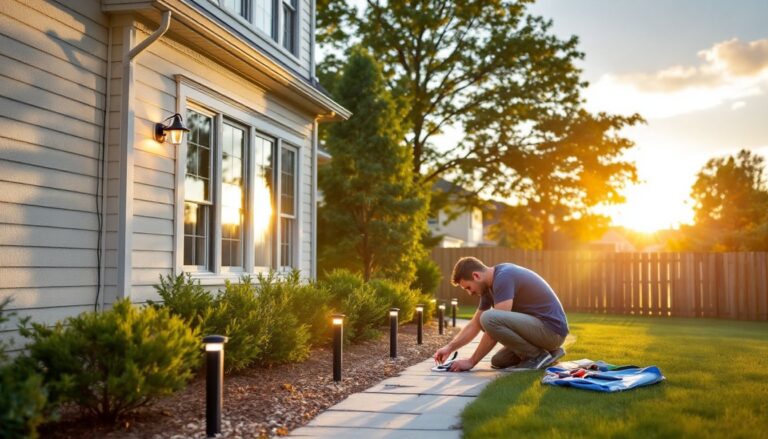
Before digging, call 811 to mark underground utilities, hitting a gas or electric line turns a weekend project into a disaster. Most landscape lighting runs shallow (6–8 inches), but telecom and sprinkler lines often share that depth.
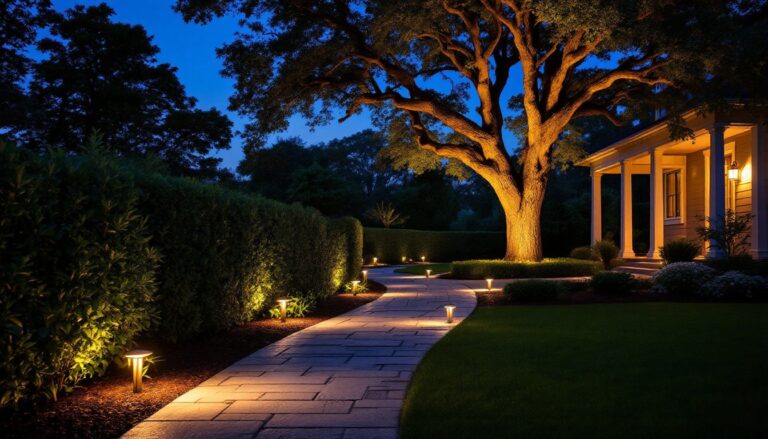
Layout comes first. Walk your property at dusk with temporary markers (landscape flags work well) to visualize fixture placement. For pathways, space lights 8–10 feet apart on alternating sides: closer spacing works for steps or narrow walks. Spotlights highlighting trees or architecture should sit 3–5 feet from the target at a 30–45° angle to avoid harsh shadows.
Start with the transformer. Mount it near a GFCI-protected outlet (required by NEC for outdoor receptacles), ideally under an eave or in a garage to keep it dry. Even though low-voltage wiring is DIY-friendly, the transformer plugs into 120V household power. If you lack a suitable outdoor outlet, hire an electrician, adding one involves working inside your breaker panel and exterior wall penetrations.
Run 12-gauge or 14-gauge direct-burial cable from the transformer to fixtures. Larger wire (12-gauge) minimizes voltage drop on runs over 50 feet. Bury cable 6 inches deep in trenches: use a flat spade for clean cuts through turf. Avoid sharp bends that stress wire. For crossing driveways or high-traffic areas, slip cable through schedule 40 PVC conduit before backfilling.
Connect fixtures using waterproof wire connectors or integrated quick-connect terminals (common in newer smart systems). Strip wire carefully, nicking strands increases resistance and heat. Test each fixture before burying cable: fixing a bad connection after backfilling means re-digging.
Pair fixtures with the controller per manufacturer instructions, usually through the app. This step often requires fixtures powered on and within Bluetooth range of your phone. Once paired, organize them into zones (“Front Path,” “Backyard Trees”) for easier control.
Safety gear: Wear gloves when handling cable and fixtures with sharp edges, and safety glasses if cutting conduit. Dust masks help if trenching kicks up dry soil. Keep a battery-powered work light handy, most landscape lighting installs stretch into dusk when you realize “just one more fixture” is needed.
Creative Design Ideas for Smart Outdoor Lighting
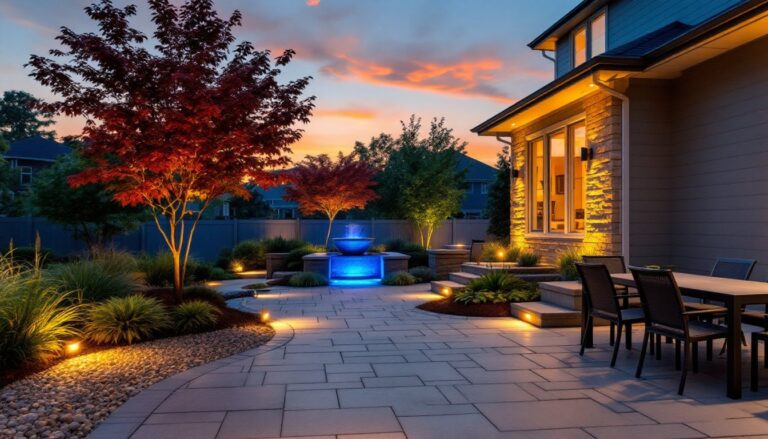
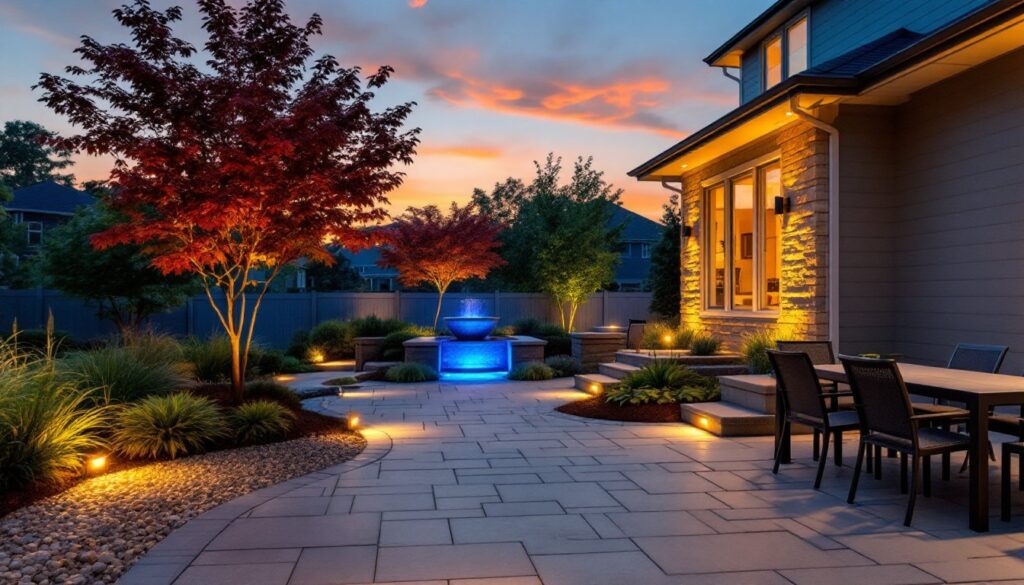
Smart lighting excels at layering effects you can adjust on the fly. Combine uplighting (spotlights aimed at tree canopies or architectural details) with downlighting (fixtures mounted in eaves or pergolas casting downward) and path lighting for a three-dimensional effect. Use warm whites (2700–3000K) for cozy entertaining areas and cooler tones (4000K+) for task-focused spaces like outdoor kitchens.
Color-changing LEDs open playful possibilities: program seasonal palettes (orange and purple for Halloween, red and green for holidays) or sync lights to music during gatherings. Subtle is often smarter, a wash of deep blue on a garden wall beats garish rainbow cycling. Drawing inspiration from curated outdoor designs can help refine your aesthetic before locking in fixture placement.
Accent water features with submersible smart lights (verify IP68 rating for full submersion). The ripple effect of illuminated fountains or pond edges adds movement. Pair with motion sensors that brighten the area when someone approaches, then dim back to ambient levels.
For patios and decks, install recessed step lights or strip lighting under railings. Many smart strips are cuttable to custom lengths and include adhesive backing for quick mounting. Just ensure you’re using outdoor-rated versions, indoor strips fail quickly in moisture.
Zoning is your secret weapon. Create a “Dinner Party” scene that highlights the dining area with warm light while dimming perimeter security fixtures. A “Bedtime” scene turns off entertainment spaces but keeps pathway lights at 30% for late-night trips outside. Automation via smart home integration lets scenes trigger based on calendar events or weather forecasts.
Don’t overlook hardscape grazing: mount linear fixtures at the base of textured stone or brick walls, angled upward. The light rakes across the surface, emphasizing texture and depth. This technique works especially well on retaining walls or outdoor fireplace surrounds.
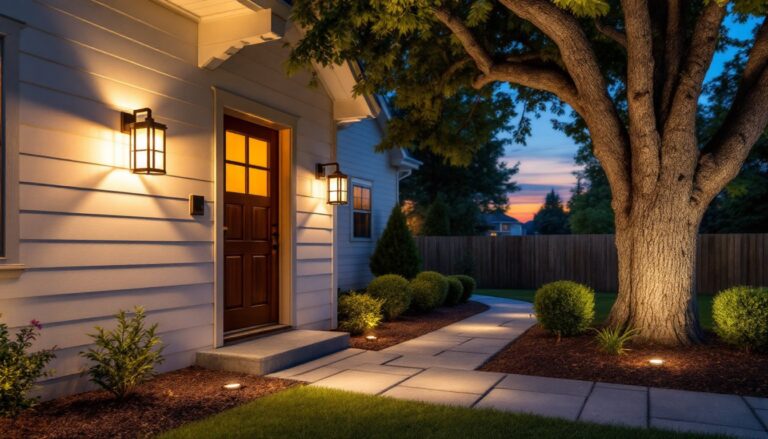
For front yards, balance curb appeal with security. Flank the entry with matching uplights on architectural columns or mature shrubs, then line the walkway with uniform path lights. Add accent spotlights to highlight house numbers or a signature plant. Motion sensors near side gates or dark corners activate brighter “alert” modes when triggered.
Finally, consider seasonal adjustments. Bright whites enhance winter evergreens and holiday decor, while softer ambers complement spring blooms and summer foliage. Smart systems make these shifts a few taps in an app instead of a ladder-and-bulb afternoon.