

Table of Contents
ToggleHampton Bay outdoor lighting is Home Depot’s private-label line of landscape and exterior lighting fixtures. It’s a solid middle-ground option for homeowners looking to illuminate walkways, highlight plantings, or upgrade porch lighting without blowing their renovation budget. The line spans low-voltage LED path lights, solar-powered spots, hardwired wall sconces, and everything in between, all designed for weekend DIY installation. If you’re planning exterior lighting on a reasonable budget and aren’t ready to hire an electrician for every fixture, Hampton Bay deserves a closer look. This guide walks through fixture types, installation basics, and what to expect long-term.
Key Takeaways
- Hampton Bay outdoor lighting offers budget-friendly landscape illumination with low-voltage LED path lights, solar-powered spots, and hardwired wall sconces designed for DIY installation.
- Low-voltage systems are safer and more beginner-friendly than hardwired options, requiring no electrical permits in most areas and minimal shock risk during setup.
- Proper wire gauge selection (10–12 AWG for runs under 50 feet, 10 AWG for longer distances) prevents voltage drop and dimming issues in outdoor lighting systems.
- Regular maintenance—including biannual lens cleaning, annual connector inspections, and proper cable burial at 6 inches deep—extends fixture lifespan and prevents corrosion.
- Hardwired wall sconces demand strict adherence to electrical codes, weatherproofing with silicone caulk, and verification of power using a voltage tester before any installation work.
What Is Hampton Bay Outdoor Lighting?
Hampton Bay is Home Depot’s exclusive house brand, covering outdoor lighting, ceiling fans, and patio furniture. The outdoor lighting segment focuses on affordability and ease of installation, making it accessible for first-time DIYers.
Most Hampton Bay fixtures use low-voltage systems (12V or 24V) powered by a plug-in transformer, though they also offer 120V hardwired options and solar units. Low-voltage setups are popular because they’re safer to work with, no electrical permit required in most jurisdictions, and less risk of shock during installation. You’ll find integrated LED fixtures (non-replaceable bulbs rated for 25,000–50,000 hours) alongside traditional socket-style models that accept standard bulbs.
The line sits squarely in the budget-to-mid-tier range. Expect to pay $15–$40 per path light, $30–$80 for wall sconces, and $50–$150 for complete low-voltage kits with transformer, cable, and multiple fixtures. Build quality is adequate for residential use but won’t match commercial-grade brands like FX Luminaire or Kichler’s pro lines. Plastic housings are common: metal fixtures are powder-coated steel or aluminum, not solid brass.
Warranty coverage is typically one to three years, depending on the product line. Keep your receipt, Home Depot’s return policy is forgiving within 90 days, but warranty claims after that require proof of purchase.
Types of Hampton Bay Outdoor Lighting Fixtures
Hampton Bay’s catalog breaks into a few main categories, each suited to different tasks. Knowing which fixture type matches your project saves time and reduces the need for returns.
Path Lights and Landscape Spotlights
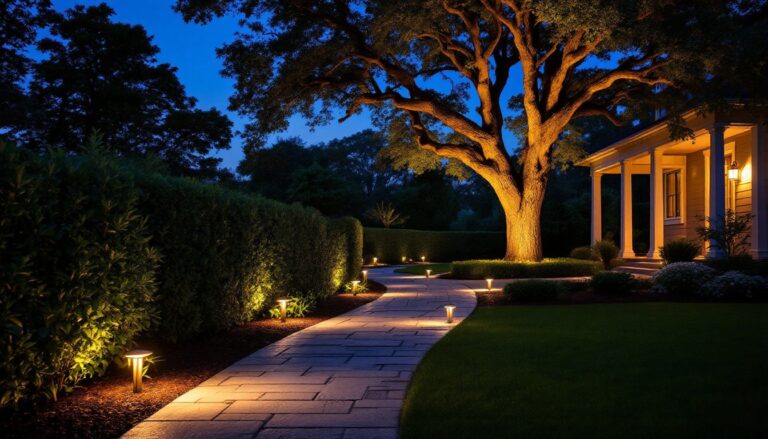
Path lights are short stake-mounted fixtures (typically 10–18 inches tall) designed to mark walkways, driveways, or garden borders. They cast a soft downward pool of light, usually 50–150 lumens per fixture, enough to define edges without glare. Most Hampton Bay path lights use integrated LEDs in 2700K–3000K (warm white), which blends well with landscape plantings.
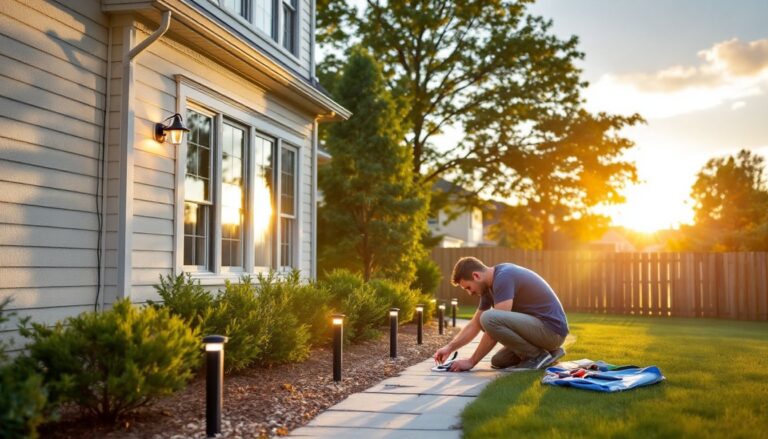
Installation is straightforward: push the stake into soil, connect to low-voltage cable using twist-on wire connectors, and daisy-chain multiple lights back to the transformer. Space fixtures 8–10 feet apart for continuous coverage along a path. Closer spacing works for accent applications.
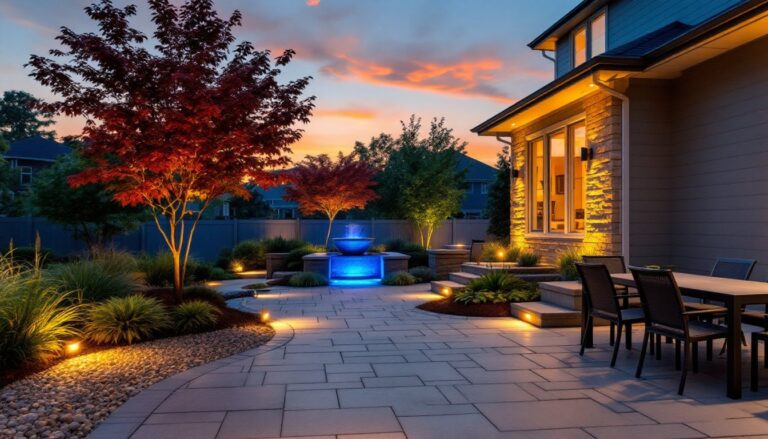
Landscape spotlights are adjustable fixtures meant to uplight trees, architectural features, or signage. They deliver 200–400 lumens in a focused beam (usually 25°–40° spread). Hampton Bay spots often include ground stakes and swivel mounts, letting you reposition the beam seasonally. As noted in smart home device reviews, LED spotlights have largely replaced halogen models due to lower energy draw and reduced heat output.
Both fixture types run on 12V or 24V systems. A typical 200-watt low-voltage transformer supports 15–20 path lights or 6–8 spotlights, depending on wattage per fixture. Always calculate total load before adding fixtures to an existing run, overloading the transformer causes dimming and shortens LED lifespan.
Wall Sconces and Porch Lights
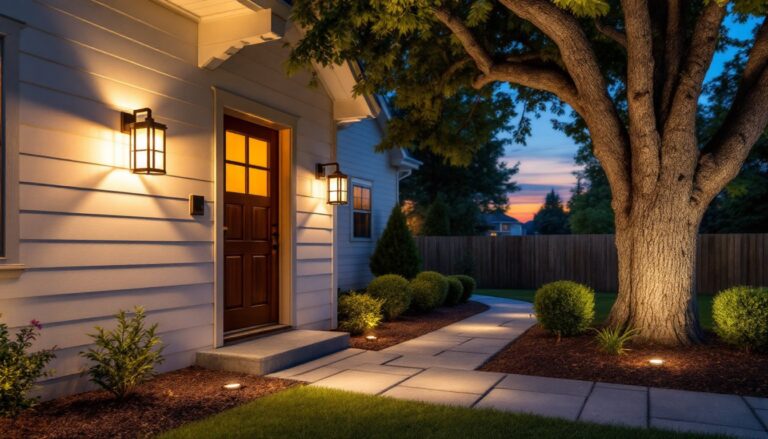
Wall-mounted fixtures include sconces (decorative up/down lights flanking a door) and porch ceiling lights. These are almost always 120V hardwired units that tie into your home’s electrical system. Unlike low-voltage landscape lighting, installing or replacing hardwired fixtures requires basic electrical knowledge, and in some areas, a permit if you’re running new circuit cable.
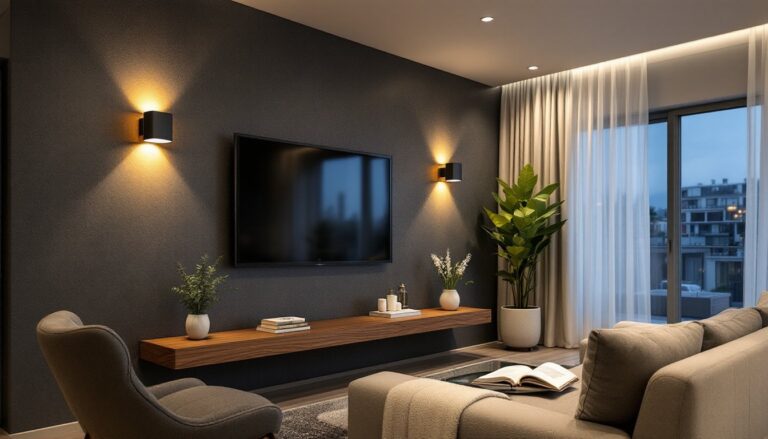
Hampton Bay sconces range from lantern-style traditional designs to modern geometric frames. Most use a standard E26 medium base socket, accepting LED, CFL, or incandescent bulbs up to 60–100 watts. If the fixture lists “LED compatible,” confirm it works with dimmable LEDs if you plan to add a dimmer switch.
When swapping an existing porch light for a Hampton Bay model, the key steps are:
- Turn off power at the breaker. Verify with a non-contact voltage tester.
- Remove the old fixture and inspect the junction box. It should be rated for outdoor use (weatherproof gasket, proper mounting ears).
- Connect black (hot) to black, white (neutral) to white, and bare copper or green (ground) to the grounding screw or wire.
- Seal the backplate with silicone caulk where it meets the siding to prevent water intrusion behind the fixture.
- Restore power and test.
If your existing box is loose, rusted, or missing a ground wire, replace it before mounting the new fixture. The IRC requires outdoor boxes to be securely fastened to structural framing or blocking, never just hanging on the cable. According to recent home automation guides, many homeowners now pair traditional sconces with smart bulbs or add a smart switch for remote control and scheduling.
Porch ceiling lights follow similar wiring but often mount to a round pancake box or an existing fan bracket. Check weight limits, most Hampton Bay ceiling fixtures are under 10 pounds, well within standard box ratings. If installing a new fixture where none existed, you’ll need to fish cable from a nearby switch or junction box, a task best left to a licensed electrician unless you’re comfortable working inside walls and meeting NEC requirements.
Installation Tips for Hampton Bay Outdoor Lights
Low-voltage landscape lighting is one of the most forgiving DIY electrical projects. The transformer plugs into a standard outdoor GFCI outlet, and all downstream wiring is 12V or 24V, safe to handle even when energized (though it’s good practice to power down during installation).
Before you start:
- Plan your layout on paper. Mark fixture locations with flags or spray paint. Measure cable runs to avoid buying too much or too little wire.
- Choose the right wire gauge. For runs under 50 feet, 12 AWG or 14 AWG landscape wire works. Longer runs (up to 100 feet) benefit from 10 AWG to reduce voltage drop. Hampton Bay kits often include 16 AWG cable, which is adequate for short runs with low-wattage LEDs but may cause dimming at distance.
- Bury cable properly. The NEC recommends at least 6 inches deep for low-voltage landscape wire, though some jurisdictions allow shallower burial. Use a flat shovel or edge trimmer to cut a narrow trench. Avoid running cable under heavy foot traffic or where future digging is likely.
Step-by-step for a low-voltage path light system:
- Mount the transformer near a GFCI outlet, ideally under an eave or in a sheltered spot. Most units include a photocell or timer, set it after installation.
- Run the main cable from transformer to the farthest fixture. Use cable staples on wooden surfaces or conduit clips on masonry.
- Connect fixtures using twist-on wire connectors or the quick-connect piercing clamps included with many Hampton Bay lights. Pierce the main cable at each fixture location, no need to cut and splice.
- Test before burying. Power on the system and verify each light. Adjust aim and spacing as needed.
- Bury the cable and backfill trenches. Tamp soil lightly to avoid settling.
For hardwired wall sconces, the process is less forgiving. You’re working with 120V, so always:
- Turn off the breaker and verify power is off with a voltage tester.
- Wear safety glasses and work gloves when drilling into masonry or siding.
- Use weatherproof wire connectors or twist-on connectors inside the junction box. Never rely on electrical tape alone outdoors.
- Apply silicone caulk around the mounting plate and any entry points to keep moisture out.
If you’re adding a new circuit or moving a junction box, consult local codes. Many jurisdictions require a permit for new outdoor wiring, and some mandate that a licensed electrician perform the work.
Maintenance and Troubleshooting Your Outdoor Lighting
Outdoor lighting faces rain, snow, UV exposure, and temperature swings. Regular maintenance extends fixture life and keeps your landscape looking sharp.
Routine care:
- Clean lenses twice a year. Pollen, dust, and cobwebs cut light output. Use a damp cloth and mild detergent, avoid abrasive cleaners that scratch plastic or acrylic.
- Check connections annually. Twist-on connectors and piercing clamps can corrode, especially in wet climates. Apply dielectric grease to wire connections to prevent moisture intrusion.
- Trim plantings. Overgrown shrubs and grass can block fixtures or trap moisture against housings, accelerating rust on metal components.
- Inspect the transformer. Listen for buzzing (sign of a failing core) and check the GFCI outlet. If the GFCI trips repeatedly, you may have a short in the cable or a fixture with water intrusion.
Common issues and fixes:
- Lights dim over time: Voltage drop from undersized wire or corroded connections. Measure voltage at the farthest fixture with a multimeter, should read 10.8V–12V for a 12V system. If it’s under 10V, upgrade to heavier wire or add a second transformer run.
- One or more lights out: Start at the transformer and work downstream. Loose or corroded connectors are the usual culprit. Replace any damaged twist-on connectors.
- Photocell won’t activate: The sensor may be dirty or facing a light source (streetlight, porch light). Clean the sensor lens and reorient if necessary. Some transformers let you override the photocell with a manual switch.
- Flickering LED: Often caused by incompatible dimmer switches (for hardwired sconces). Swap to an LED-rated dimmer or remove the dimmer. Check home security camera comparisons for guidance on integrating smart controls with LED fixtures.
Replacing integrated LEDs: When an integrated LED fixture fails after its rated lifespan, you typically replace the entire fixture, Hampton Bay doesn’t sell LED modules separately. If the fixture is under warranty, contact Home Depot with your receipt.
Winter prep: In cold climates, low-voltage systems can stay in the ground year-round. For hardwired sconces, check gaskets and caulk seals before winter, ice expansion can crack poorly sealed fixtures. Solar path lights should be brought indoors or have batteries removed if temps regularly drop below 0°F, as cold degrades battery capacity.
Conclusion
Hampton Bay outdoor lighting delivers dependable, budget-friendly illumination for most residential projects. Low-voltage path and spot lights install in an afternoon, while hardwired sconces require basic electrical skills and attention to weatherproofing. Plan your layout carefully, use the right wire gauge, and keep connections clean, those three steps prevent the majority of field problems. With routine maintenance, these fixtures should deliver years of reliable service.