

Table of Contents
TogglePool lighting isn’t just about seeing where you’re swimming after dark, it’s about turning a basic concrete hole into a nighttime destination. Whether someone’s hosting evening pool parties, extending swim time after work, or just wants their backyard to look less like a dark void at night, the right lighting setup makes all the difference. From safety to aesthetics, proper illumination impacts how the pool gets used and enjoyed. This guide covers practical outdoor pool lighting ideas that balance function, style, and installation reality, helping homeowners choose systems that work for their space and skill level.
Key Takeaways
- Outdoor pool lighting ideas must prioritize safety by providing adequate illumination of pool edges, steps, and depth changes while following NEC Article 680 requirements and GFCI protection standards.
- Underwater LED lights offer superior energy efficiency (20,000+ hours of lifespan) compared to older halogen fixtures and should be positioned 18 inches below the waterline on the deep end to minimize glare.
- Deck and perimeter lighting using bollard lights, recessed puck lights, or LED strips prevents slip-and-fall accidents and should be spaced 6-8 feet apart for consistent coverage.
- Smart pool lighting systems with color-changing RGB or RGBW LEDs enable scheduling and remote control but require a manual backup switch and stable network connectivity for reliability.
- Solar pool lights work best for decorative accent lighting in sun-exposed areas but shouldn’t replace wired systems for primary safety illumination due to lower brightness (10-50 lumens) and weather-dependent performance.
- Professional installation by a licensed electrician is essential for underwater fixtures and hardwired deck lighting to ensure safety compliance and prevent electrocution risks.
Why Pool Lighting Matters for Safety and Ambiance
Unlit pools are hazards waiting to happen. The National Electrical Code (NEC) Article 680 addresses pool electrical requirements, including lighting, to prevent accidents. Adequate lighting lets swimmers see the pool edge, steps, and depth changes, critical for preventing slips, trips, and misjudged dives.
Beyond safety, lighting sets the mood. A well-lit pool becomes the backyard focal point, making the space usable after sunset. It also deters unwanted visitors (both human and wildlife) by eliminating dark corners.
Consider local codes before installing any pool lighting. Most jurisdictions require GFCI protection for all pool-area electrical circuits, and underwater lights must meet specific UL ratings for wet locations. If the pool wasn’t built with lighting provisions, adding them often requires a licensed electrician, especially for any work involving underwater fixtures or new electrical runs. Don’t skip this step: pool electrocution risks are real and preventable.
Underwater LED Lights for a Stunning Glow
Underwater LED fixtures create that signature illuminated-from-within look. Modern LEDs have largely replaced older incandescent and halogen pool lights due to energy efficiency and longevity, expect 20,000+ hours from quality LEDs versus 2,000-5,000 hours from halogens.
Installation Realities
Most in-ground pools include light niches (recessed housings) installed during construction. Retrofitting lights into an existing pool without niches requires cutting through the pool shell and patching, a job for pool professionals, not a weekend DIY project. If niches exist, swapping old fixtures for LED replacements is straightforward but still involves working with 120V or 12V underwater wiring. Always shut off power at the breaker and verify it’s off before touching any pool electrical components.
Placement and Quantity
For pools up to 400 square feet, one or two lights usually suffice. Larger pools may need three or more, spaced 10-15 feet apart. Place lights on the deep end wall, about 18 inches below the waterline, to minimize glare and illuminate the entire pool volume. Avoid mounting lights where they’ll shine directly into seating areas.
Choosing Fixtures
Look for lights rated for wet locations with appropriate IP ratings (IP68 for full submersion). Most retrofit LEDs use the existing niche and wiring, making upgrades easier. Expect to pay $150-$400 per fixture for quality LEDs, not including installation labor if an electrician is needed.
Perimeter and Deck Lighting Options
Deck lighting addresses the space immediately around the pool, where people walk, sit, and inevitably spill drinks. This is where slip-and-fall accidents happen, so consistent, even lighting is non-negotiable.
Post and Bollard Lights
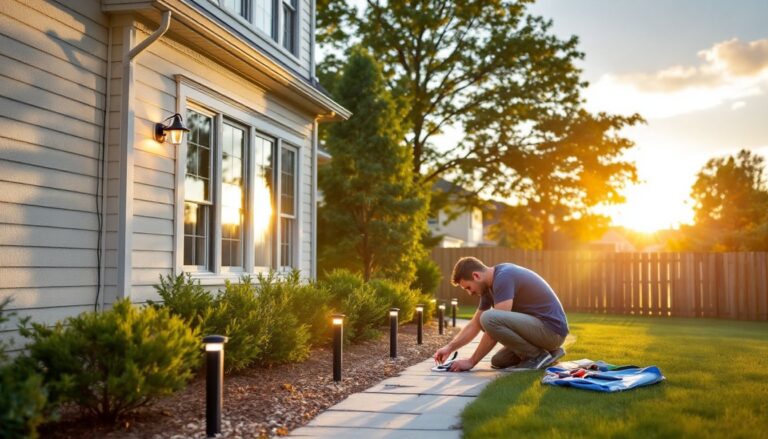
Bollard lights (short, sturdy posts) work well along pathways and deck edges. They provide downward illumination without glare. Install them 6-8 feet apart for continuous coverage. Most run on 120V or low-voltage 12V systems. Low-voltage is safer around water and easier for DIYers to install, though it requires a transformer.
Recessed Deck Lights
For a sleeker look, recessed LED puck lights mount flush in the deck surface. They’re ideal for stairs, seating walls, and deck edges. Installation requires cutting holes and running conduit during deck construction or a retrofit (more involved). Use lights rated for wet locations, decks get soaked. Brass or stainless steel fixtures resist corrosion better than plastic in chlorinated environments.
Strip and Rail Lighting
LED strip lights mounted under railings, benches, or coping provide subtle ambient light. They’re flexible, cuttable to length, and available in waterproof ratings (IP65 or higher for outdoor use). Secure strips with marine-grade adhesive or mounting clips, and protect connections with silicone sealant. Power options include plug-in, hardwired, or battery (least reliable for permanent installations).
Code and Practical Notes
Any hardwired deck lighting within 10 feet of the pool edge typically requires GFCI protection per NEC 680.22. Use conduit for all outdoor wiring, never run loose cable across surfaces. If drilling into concrete decking, use a rotary hammer with a masonry bit and wear eye protection and a dust mask.
Landscape and Accent Lighting Around Your Pool
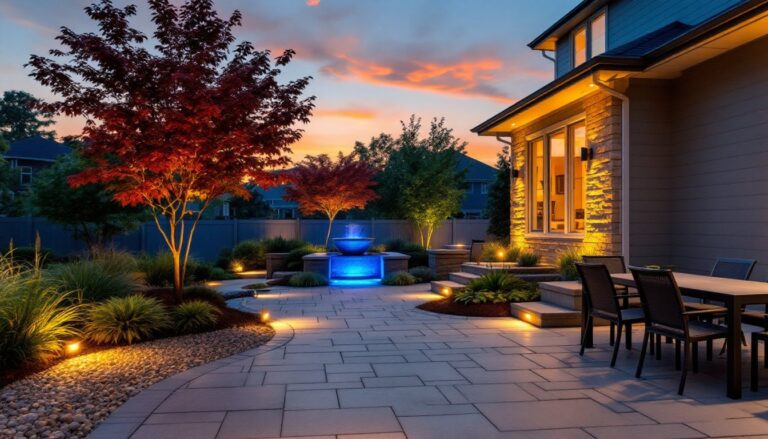
Landscape lighting extends the visual boundaries of the pool area, highlighting plants, hardscaping, and architectural features. It creates depth and draws the eye beyond the water itself.
Uplighting Trees and Shrubs
Bullet or spotlight fixtures positioned at the base of trees or large plantings create dramatic vertical interest. Aim lights upward to wash foliage or bark with light. Use narrow beam angles (10-25 degrees) for tall, single trunks and wider beams (35-60 degrees) for spreading canopies. Low-voltage (12V) systems are standard here, easier to install and safer if a shovel hits a buried line.
Path and Step Lights
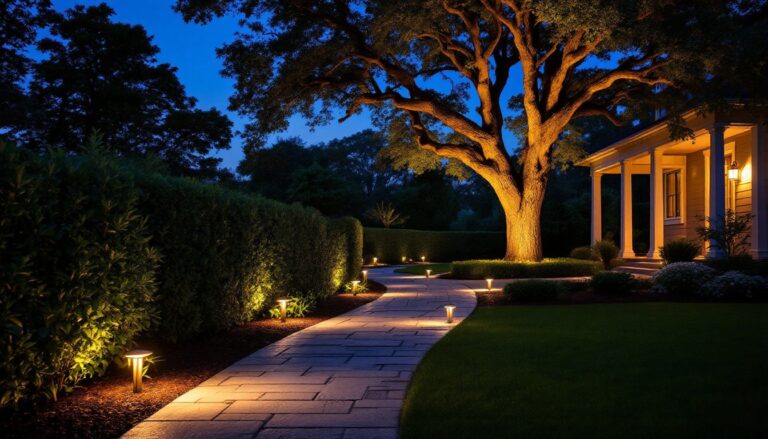
If walkways lead to the pool, low-profile path lights every 8-10 feet keep foot traffic safe. Choose fixtures that direct light downward, not into eyes. Many designers incorporate these using techniques similar to those used in ambient outdoor lighting, which layer different fixture types to create inviting spaces.
Hardscape Accent Lighting
Stone walls, waterfalls, and pool equipment enclosures benefit from wall wash or graze lighting. Mount fixtures close to the surface for texture or further away for even illumination. LED fixtures in the 3W-5W range typically provide enough output without overpowering smaller features.
Plant Selection Matters
Light-colored or glossy foliage reflects more light, so fewer fixtures are needed. Dark greens or matte textures absorb light. Plan lighting during plant selection, not after everything’s installed and you’re wondering why nothing shows up at night.
Wiring and Installation
Bury low-voltage cable 6-12 inches deep (check local code). Use direct-burial-rated cable, not standard zip cord. Run cable in straight lines between fixtures and flag the route, future you (or the next homeowner) will appreciate knowing where the wires are. Connect fixtures using waterproof wire connectors, not wire nuts and electrical tape. Test the entire system before backfilling trenches.
Smart and Color-Changing Lighting Systems
Smart pool lighting integrates with home automation platforms (Google Home, Alexa, Apple HomeKit) or dedicated pool control systems. This means scheduling, dimming, and color changes via smartphone or voice, handy when hands are wet or full of pool floats.
RGB and RGBW LEDs
Color-changing lights use RGB (red, green, blue) or RGBW (adds white) LEDs to produce millions of color combinations. RGBW fixtures provide better true white tones for functional lighting, while RGB excels at saturated colors for parties or mood setting. Expect to pay 20-40% more for color-changing fixtures versus single-color LEDs.
Control Options
Most systems use one of three control methods:
- Dedicated remote or wall controller: Simple, reliable, no app required. Good for tech-averse users.
- WiFi or Bluetooth app control: Allows scene creation, scheduling, and integration with other smart devices. Requires stable network coverage at the pool.
- Integrated pool automation systems: Higher-end setups (Pentair, Hayward, Jandy) bundle lighting with pump, heater, and chemical system control. Professional installation recommended.
Practical Considerations
Smart systems add complexity and potential failure points. Network dropouts, app updates, and compatibility issues are real. Have a manual override or basic on/off switch as backup. For homeowners exploring comprehensive smart home lighting for both indoor and outdoor spaces, compatibility across zones can simplify control.
Installation and Power
Smart fixtures typically draw slightly more power due to control circuitry. Factor this into transformer sizing for low-voltage systems. Most WiFi-enabled lights require a neutral wire at the switch location, older homes may lack this. Hire an electrician if retrofit wiring is needed.
Solar-Powered Pool Lighting Solutions
Solar pool lights appeal to DIYers and eco-conscious homeowners. They eliminate wiring, reduce energy costs, and install in minutes. But they’re not magic, performance depends entirely on sun exposure and battery quality.
Where Solar Works
Solar fixtures need 4-6 hours of direct sunlight daily to charge adequately. Shaded yards, cloudy climates, and winter months drastically reduce performance. They’re best suited for accent and decorative lighting, not primary safety illumination. Don’t rely on solar as the sole light source for pool decks or steps.
Floating and Submersible Solar Lights
Floating solar globes and LED discs create a whimsical effect on the water surface. They’re cordless, portable, and cost $15-$50 each. Downside: they drift, accumulate debris, and require removal for pool cleaning or winter storage. Submersible solar lights exist but are less common and have shorter runtimes.
Stake and String Solar Lights
Solar stake lights line pathways and garden beds around the pool. Quality varies wildly, $10 big-box store lights often fail within a season, while $30-$50 units with replaceable batteries last 3-5 years. Look for lights with polycrystalline solar panels and lithium-ion batteries.
Solar string lights mimic decorative bistro lighting but without extension cords. They’re great for pergolas, fences, and umbrellas. Runtime typically hits 6-8 hours after a full charge. Bulbs are usually not replaceable, so treat the whole string as a consumable.
Limitations to Accept
Solar lights are dimmer than wired equivalents, expect 10-50 lumens per fixture versus 100-400 lumens for wired LEDs. They don’t turn on instantly at dusk: there’s a light sensor lag. And cold weather reduces battery capacity. For supplemental ambiance, they’re fine. For functional lighting, stick with wired systems.
Installation Tips
Position solar panels where they’ll receive maximum sun, south-facing in the Northern Hemisphere. Trim overhanging branches. Clean panels monthly with a damp cloth: dirt and pollen cut efficiency. Replace rechargeable batteries every 2-3 years even if lights still work, weak batteries mean shorter runtimes.
Conclusion
Pool lighting isn’t one-size-fits-all. The best setup balances safety requirements, aesthetic goals, and installation realities. Underwater LEDs deliver the classic look, perimeter lighting keeps walkways safe, landscape accents add depth, smart systems offer control, and solar provides wire-free flexibility. Homeowners should assess their pool’s existing electrical infrastructure, local code requirements, and personal skill level before committing to a lighting plan. When in doubt, especially with underwater or line-voltage work, hire a licensed electrician. A well-lit pool extends the season, improves safety, and makes the backyard a place people actually want to be after the sun goes down.