


Table of Contents
ToggleLighting can make or break a living room. Too dim, and the space feels like a cave. Too bright, and it’s got all the warmth of a hospital waiting room. Most homeowners treat lighting as an afterthought, slap in a ceiling fixture, maybe add a floor lamp, call it done. But the right lighting strategy turns a functional room into one where people actually want to spend time. It’s not about buying the most expensive fixtures or following trends. It’s about layering different light sources, understanding color temperature, and matching your setup to how the room gets used.
Key Takeaways
- Best lighting for living rooms requires layering three types of light sources—ambient, task, and accent—rather than relying on a single overhead fixture to handle all activities.
- Choose warm white bulbs (2700K–3000K) for living rooms to create a cozy, relaxed atmosphere while avoiding the harsh, clinical feel of cooler color temperatures.
- Dimmer switches are essential for adjusting brightness based on time of day and activity, and smart-ready wiring installed during remodels future-proofs your lighting system.
- Proper brightness levels vary by function: aim for 1,500–3,000 lumels for ambient lighting in small rooms and 400–800 lumens per task lamp for reading and detailed work.
- LED retrofit upgrades reduce energy consumption by 75% compared to incandescent bulbs while delivering superior color rendering (CRI 90+) that makes colors and skin tones appear natural.
Why Living Room Lighting Matters More Than You Think
Living rooms do heavy lifting. They’re where you watch TV, read, entertain guests, play with kids, or just zone out after work. A single overhead light can’t handle all that.
Poor lighting causes eye strain, kills the mood, and makes even well-decorated rooms feel flat. Good lighting does the opposite, it adds depth, highlights architectural features, and adapts to different activities. A room lit for movie night shouldn’t look the same as one set up for reading or hosting dinner.
Most building codes require at least one switched lighting outlet in habitable rooms (check your local IRC standards), but code minimums won’t give you a functional, comfortable space. You need multiple light sources on different circuits or switches so you can control intensity and coverage.
Another factor: natural light changes throughout the day. Morning sun hits differently than evening glow, and your artificial lighting needs to fill gaps without fighting the windows. That’s where layering comes in, combining ambient, task, and accent lighting to cover all the bases.
Types of Living Room Lighting You Need to Know
Ambient Lighting
This is your base layer, the general illumination that lets you move around safely and sets the overall brightness. Think ceiling fixtures, recessed cans, or track lighting.
Recessed lighting (also called can lights) works well in rooms with low ceilings or modern aesthetics. Space them about 4 to 6 feet apart for even coverage. Use IC-rated housings if they’ll contact insulation in the ceiling cavity. Most energy-efficient lighting upgrades start here, swapping old incandescent cans for LED retrofit kits drops energy use by 75% and eliminates bulb changes for years.
Ceiling-mount fixtures (flush or semi-flush) fit rooms where you can’t recess into the ceiling or want a decorative element. Size matters: a fixture for a 12×15 living room should be 20 to 24 inches in diameter. Too small looks awkward: too big overwhelms.
Chandeliers add visual interest but need adequate ceiling height, hang the bottom at least 7 feet above the floor in living areas (higher over furniture). If your space leans traditional or farmhouse, vintage farmhouse lighting fixtures bring character without sacrificing function.
Ambient lighting should deliver roughly 20 lumens per square foot in a living room. For a 200-square-foot space, that’s 4,000 lumens total, spread across multiple fixtures.
Task Lighting
Task lighting focuses on specific activities: reading, working on a laptop, hobbies. It’s brighter and more directional than ambient light.
Floor lamps are the easiest add. Look for adjustable models with three-way switches so you can dial in the right brightness. Torchiere styles bounce light off the ceiling for softer coverage: swing-arm or arc lamps direct light exactly where you need it. Pair them with task lighting strategies if you’re setting up a home office corner in the living room.
Table lamps work on end tables or consoles. The bottom of the shade should sit at eye level when you’re seated, usually 26 to 30 inches from the table surface. Use a 60-watt-equivalent LED for reading: lower wattage for ambient fill.
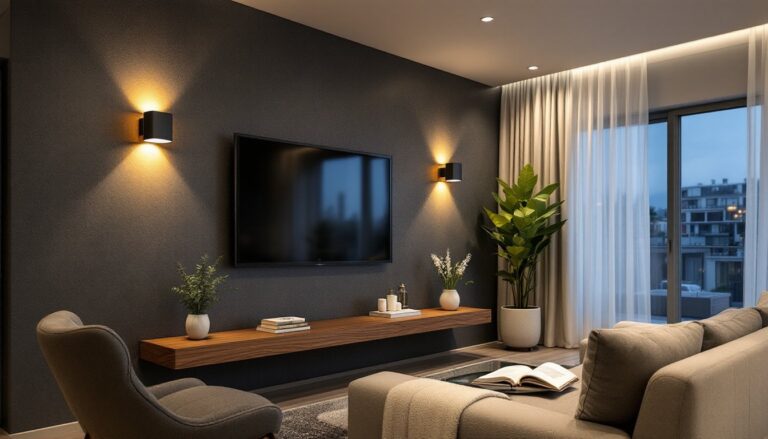
Wall sconces save floor space and add architectural interest. Mount them 60 to 66 inches from the floor, flanking a sofa or favorite chair. Hardwiring requires cutting into drywall and running cable (check if your jurisdiction requires a permit for new circuits), but plug-in sconces eliminate the electrical work.
Don’t skip task lighting just because you have good ambient coverage. Trying to read under a ceiling fixture alone is a fast track to a headache.
Accent Lighting
Accent lighting adds drama and highlights features, artwork, shelving, textured walls, or architectural details. It’s optional but makes a room feel intentional.
Track lighting or picture lights work for art. Aim for three times the ambient light level on the piece you’re highlighting. Adjustable spot lighting fixtures let you tweak the angle without reinstalling hardware.
LED strip lights installed behind floating shelves, under mantels, or along crown molding create a soft glow. They run on low-voltage DC power (usually 12V or 24V) and need a driver or transformer. Avoid the cheap kits with visible hotspots, spend a little more for higher LED density (at least 60 LEDs per meter).
Up-lights placed behind plants or in corners wash walls with light and make ceilings feel higher. They’re an easy DIY win, just plug in and aim.
Accent lighting only works if the rest of your lighting is dialed in. Start with ambient and task, then layer accent for polish.
Best Light Fixtures for Your Living Room Layout
Your room’s size and layout dictate fixture choices. A long, narrow living room needs different coverage than a square space or an open-concept great room.
Small living rooms (under 150 sq ft): Stick with one central ceiling fixture plus one or two lamps. Recessed lighting can make a small room feel bigger by eliminating visual bulk. For a cleaner look, minimalist lighting design keeps fixtures simple and unobtrusive.
Medium living rooms (150–300 sq ft): Combine a central fixture with task lighting on either end, floor lamps by seating areas, a table lamp on a console. If you have a defined reading nook, add a dedicated task light there. Consider LED panel lights for even, glare-free illumination if you’re replacing old fluorescent ceiling fixtures.
Large or open-concept spaces (300+ sq ft): Use multiple ambient sources, recessed lighting on a grid, plus a statement fixture over the main seating area. Break the room into zones (conversation area, TV zone, workspace) and light each independently. Dimmer switches are non-negotiable here: you’ll want to adjust based on time of day and activity.
Vaulted or high ceilings: Pendant lights or chandeliers fill vertical space. Hang pendants 30 to 36 inches above furniture surfaces: adjust higher in open areas to maintain the 7-foot clearance. Pair with recessed cans or wall sconces to avoid a cave effect below.
Low ceilings (under 8 feet): Skip pendants and chandeliers. Use flush-mount ceiling fixtures and recessed lighting. Wall sconces and floor lamps add layering without eating headroom.
One often-missed detail: integrate your lighting systems with smart controls if you’re planning a remodel. Running neutral wires to all switch boxes now (required by 2020+ NEC in most cases) makes it easy to add smart switches or dimmers later.
Choosing the Right Color Temperature and Brightness
Color temperature is measured in Kelvin (K). It affects mood and function more than most DIYers realize.
- 2700K–3000K (warm white): Soft, yellowish light. Best for living rooms where you want a cozy, relaxed vibe. This range mimics incandescent bulbs and works well for ambient and accent lighting.
- 3500K–4100K (neutral white): Crisp but not harsh. Good for task lighting or modern spaces. Some people find it too clinical for a living room: test before committing.
- 5000K+ (daylight/cool white): Blueish tone. Great for garages and workshops, but too cold for most living spaces. Avoid unless you’re matching specific design intent.
Stick with 2700K or 3000K for living rooms. Mixing color temperatures in the same room looks unintentional and messy. Buy all bulbs from the same product line if possible, even within the same Kelvin rating, different manufacturers render colors slightly differently.
Brightness (lumens) determines how much light a bulb throws. Old-school wattage ratings don’t apply to LEDs. A 60-watt incandescent produces about 800 lumens: a 10-watt LED delivers the same output.
Use this guideline for living rooms:
- Ambient lighting: 1,500–3,000 lumens total for smaller rooms: 4,000–6,000 for larger spaces.
- Task lighting: 400–800 lumens per lamp (about 40–60 watts incandescent equivalent).
- Accent lighting: 200–400 lumens per fixture.
Install dimmer switches wherever possible. Not all LEDs are dimmable, check the packaging. Incompatible bulbs will flicker or hum. Lutron and Leviton make reliable dimmers: expect to spend $20–40 per switch (not counting installation).
CRI (Color Rendering Index) also matters if you care about how colors look under artificial light. A CRI of 80 is acceptable: 90+ is excellent. Higher CRI bulbs cost a bit more but make fabrics, artwork, and skin tones look natural. Cheap LEDs often sit around 70 CRI and give everything a washed-out or greenish cast.
One final note: if you’re retrofitting old fixtures or installing new ones, confirm your existing wiring can handle the load. While LEDs draw far less power than incandescent, adding multiple new circuits might require a service panel upgrade, especially in older homes. That’s electrician territory.