


Table of Contents
ToggleInvesting in high-end kitchen lighting isn’t about chasing trends or making a splashy Instagram post. It’s about creating a functional, beautiful workspace where you’ll actually want to cook, entertain, and linger over morning coffee. Quality lighting fixtures deliver better color rendering, longer lifespans, and superior build quality, plus they often integrate with smart home systems. Whether you’re renovating a dated galley kitchen or building from scratch, understanding the landscape of luxury lighting options helps you make informed decisions that pay off in daily usability and long-term home value.
Key Takeaways
- High-end kitchen lighting delivers superior color rendering (CRI above 90), longer operational life (20,000+ hours), and smooth dimming capabilities that budget fixtures cannot match, transforming your cooking and entertaining experience.
- Quality materials like hand-blown glass, natural alabaster, and precision-machined metals justify premium prices through visible craftsmanship, while statement pendant lights and chandeliers serve as focal points that anchor your kitchen’s visual hierarchy.
- A layered lighting approach combining ambient, task, and accent lighting—including under-cabinet LED strips with tunable white capabilities—creates functional zones that adapt from bright food prep to warm dinner ambiance.
- Smart-home integration with Zigbee, Thread, and voice assistant compatibility enables programmed lighting scenes (morning task lighting, dinner party ambiance) and seamless coordination across your home’s lighting control system.
- Proper planning requires consulting local building codes, using GFCI-protected circuits, ensuring ceiling box capacity matches fixture weight, and hiring licensed professionals for complex installations to ensure safety and code compliance.
- Natural materials like sustainably harvested wood and woven rattan are trending in luxury kitchen lighting, softening modern kitchens while modular track systems and adjustable fixtures offer flexibility as your layout needs change.
Why High-End Kitchen Lighting Makes a Difference
Premium kitchen lighting fixtures use better components, think solid brass housings instead of stamped steel, hand-blown glass shades instead of molded plastic, and LED arrays with CRI (Color Rendering Index) ratings above 90 instead of the 80-range LEDs common in budget options. That CRI number matters when you’re prepping food: higher ratings mean colors look natural, so your salmon doesn’t appear gray and your herbs don’t look washed out.
High-end fixtures also last longer. Quality LED drivers and thermal management systems mean 20,000+ hours of operational life versus the 10,000-hour typical of economy options. That’s roughly 10 years at 5 hours daily use before you’re climbing on a ladder with a replacement.
Then there’s dimming capability. Cheap dimmers paired with cheap LEDs give you flicker and a narrow dimming range, maybe 50% to 100%. Premium systems dim smoothly down to 1-5%, letting you shift from bright task lighting during meal prep to ambient glow during dinner. Most luxury fixtures also support 0-10V or ELV (electronic low voltage) dimming protocols, which integrate cleanly with whole-home lighting control systems from manufacturers like Lutron or Control4.
Finally, aesthetics. A well-designed pendant or chandelier becomes a focal point, not just a light source. Materials like hand-forged iron, natural alabaster, or precision-machined aluminum justify their price tags with craftsmanship you can see and feel.
Types of High-End Kitchen Lighting to Consider
Statement Pendant Lights and Chandeliers
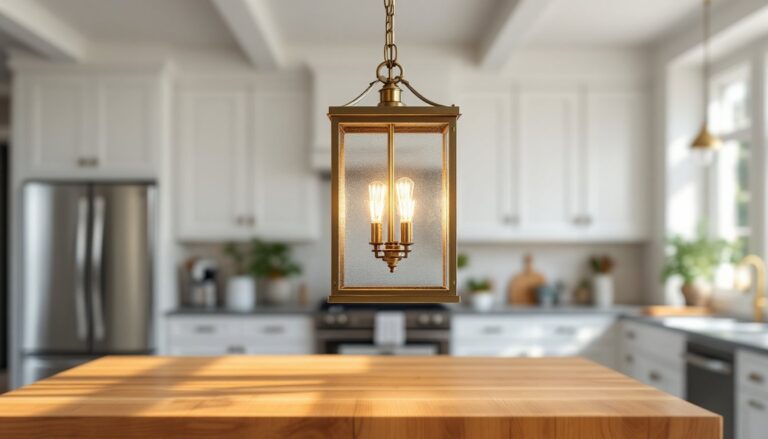
Pendants and chandeliers anchor a kitchen’s visual hierarchy, usually hung over an island or dining area at 30-36 inches above the counter surface for islands, or 30-34 inches above a table. High-end options range from single oversized globes (18-24 inch diameters) to multi-light linear chandeliers spanning 40+ inches.
Materials define the aesthetic: mouth-blown Murano glass offers organic variation, while precision-cut crystal refracts light into spectrum patterns. Hand-turned ceramic and natural stone (like alabaster or marble) diffuse light softly, ideal for ambient glow rather than task focus. Metal finishes, unlacquered brass that patinas over time, oil-rubbed bronze, or brushed nickel, coordinate with cabinet hardware and faucet finishes.
When selecting statement fixtures, match scale to your island dimensions. A general guideline: pendant width should be roughly one-third to one-half the island width for visual balance. For example, a 60-inch island pairs well with a single 20-30 inch pendant or three 8-12 inch pendants spaced evenly.
Designers often showcase curated pendant collections that emphasize minimalist profiles and high-quality materials, proving that luxury doesn’t always mean ornate.
Under-Cabinet and Task Lighting Solutions
Don’t overlook under-cabinet lighting just because it’s hidden from view. Premium task lighting solutions use high-CRI LED strips or puck lights with tunable white capabilities (2700K-5000K color temperature range), letting you shift from warm ambient lighting in the evening to cool task lighting during food prep.
Hardwired systems beat plug-in options for clean installations. Look for low-profile aluminum channels (typically 0.5-0.75 inches tall) that mount to the underside of wall cabinets and include frosted diffusers to eliminate LED hotspots. Quality systems include integral drivers that support smooth dimming and generate minimal electromagnetic interference (EMI), important if you’ve got sensitive audio equipment nearby.
For installation, run 12/2 or 14/2 NM-B cable from a dedicated switch (or from your lighting control system). Connect to a compatible dimmer, most premium LED under-cabinet lights require ELV dimmers, not standard incandescent dimmers. If you’re not comfortable working with 120V wiring, hire a licensed electrician: many jurisdictions require permits for new circuits.
Another luxury option: recessed lighting systems built directly into cabinet soffits or toe kicks, creating layered illumination that highlights architectural details.
Top Design Trends in Luxury Kitchen Lighting for 2026
Integrated smart controls dominate the high-end market. Fixtures now ship with built-in wireless radios (Zigbee, Thread, or proprietary protocols) that sync with voice assistants and home automation platforms. You can program scenes: “morning” triggers cool-white task lighting at 100%, “dinner party” dims pendants to 30% warm white while activating under-cabinet accents.
Sculptural minimalism continues its run. Think geometric forms in blackened steel or brushed brass, pieces that read as modern art when off and deliver focused light when on. Linear suspensions with exposed LED arrays (protected by UV-stable acrylic rods or glass tubes) create floating light lines above islands.
Natural materials are making a comeback. Designers incorporate sustainably harvested wood, woven rattan, and natural linen shades into fixtures that soften the hard surfaces typical in modern kitchens (quartz, stainless steel, tile). These materials pair especially well with organic modern and transitional design schemes.
Adjustable and modular systems offer flexibility. Track-based pendants let you reposition individual lights along a rail as your layout needs change. Swivel-arm sconces and articulating pendants bring task light exactly where needed, then tuck away when not in use.
Several leading design publications highlight the shift toward layered lighting schemes that combine multiple fixture types and light temperatures, moving away from the single-source overhead approach common in older kitchens.
Choosing the Right Fixtures for Your Kitchen Layout
Start with a lighting plan that addresses three layers: ambient (general illumination), task (countertop work areas, stove, sink), and accent (highlighting architectural features or display shelving).
For galley kitchens, a single row of recessed flush-mount fixtures down the centerline provides ambient light. Supplement with under-cabinet task lighting on both sides. If ceiling height allows (8 feet minimum to finished floor), add a centered pendant over a small table or peninsula.
L-shaped and U-shaped layouts benefit from zoned lighting. Use recessed cans (4-inch or 6-inch aperture) on a 4-5 foot grid for general illumination, then layer in pendants over islands or peninsulas, under-cabinet strips on all wall cabinets, and a sconce or small chandelier over the sink window if applicable.
Open-concept kitchens require careful coordination with adjacent living/dining areas. Match finish families (if your kitchen pendants are aged brass, consider matching hardware in the adjacent dining fixture). Use dimmers to balance light levels between zones, you don’t want your kitchen blazing at 100% while the living room is set for movie night.
Ceiling height impacts fixture selection. Standard 8-9 foot ceilings limit pendant drop length (calculate: ceiling height minus 30 inches over island, minus fixture height, equals maximum chain/rod length). 10+ foot ceilings open up options for multi-tier chandeliers and dramatic long-drop pendants.
Consult local building codes. Most jurisdictions follow NEC (National Electrical Code) which requires GFCI protection for receptacles within 6 feet of sinks, but lighting circuits typically don’t require GFCI. But, wet-location-rated fixtures are mandatory for any position within the footprint of a sink.
Installation Tips and Professional Considerations
Permits and inspections: Adding new circuits or relocating existing junction boxes generally requires an electrical permit. Check with your local building department before roughing in new wiring. Even if you’re handy, some jurisdictions require licensed electricians for all 120V work.
Safety first: Turn off power at the breaker panel and verify it’s dead with a non-contact voltage tester before touching any wires. Wear safety glasses when drilling overhead (especially into tile or plaster ceilings). Use a stable ladder or scaffolding rated for your weight plus the fixture.
Ceiling box capacity matters. Standard 4-inch octagon boxes are rated for fixtures up to about 50 pounds if properly secured to framing. Heavier chandeliers require a fan-rated box or a dedicated support bar spanning between joists. If you’re retrofitting and can’t access the joist bay from above, an old-work ceiling brace (expandable bar that installs through the ceiling hole) works for fixtures up to 50-70 pounds depending on model.
Wiring high-end fixtures: Most use standard 120V connections (black hot, white neutral, green/bare ground), but some low-voltage systems (12V or 24V) require a remote transformer. Mount transformers in accessible locations (not buried in insulation) for heat dissipation and future service.
Dimmer compatibility: Confirm your fixture’s LED driver is compatible with your dimmer type. Mismatched systems cause flicker, buzz, or limited dimming range. When in doubt, buy dimmers from the fixture manufacturer or use their recommended compatibility list.
Hire help when needed: Installing a 200-pound chandelier isn’t a one-person job. For complex smart lighting integration, specialized lighting control systems often benefit from professional programming to sync scenes across multiple zones.
Budget $150-$400 per fixture for professional installation in most markets, more for heavy chandeliers requiring structural reinforcement or if you’re adding new circuits through finished ceilings.