

Table of Contents
ToggleOutdoor lighting does more than help you find the front door at night. It shapes how your home looks after sunset, deters intruders, extends usable hours on patios and decks, and adds measurable resale value. Yet many homeowners treat it as an afterthought, slapping up a motion-sensor flood light and calling it done. A thoughtful lighting plan balances function, safety, and curb appeal, whether you’re illuminating a brick Colonial or a modern ranch. This guide walks through the types of fixtures, layout strategies, and installation tips you’ll need to light your home’s exterior properly in 2026.
Key Takeaways
- House outdoor lighting significantly improves home security, curb appeal, and resale value while extending the usable hours of patios and decks during evening hours.
- Low-voltage LED pathway and landscape lighting systems are the most DIY-friendly option, drawing 1–3 watts per fixture and lasting 25,000–50,000 hours when properly installed.
- Motion-activated security floodlights (1500–3000 lumens) and dusk-to-dawn fixtures provide effective deterrents when mounted 8–10 feet high and adjusted to avoid triggering on small animals.
- A layered lighting design combining ambient (general area), task (focused work light), and accent (highlighting features) creates visual interest while avoiding the flat, inefficient look of uniform spacing.
- Always verify GFCI protection requirements, call 811 before trenching, and test your complete lighting layout at night before burying wires to catch design issues early.
- Most homeowners can complete low-voltage outdoor lighting projects for $800–$2,000 in materials within a weekend, but line-voltage installations require a licensed electrician and building permits.
Why Outdoor Lighting Matters for Your Home
Security sits at the top of most homeowners’ lists. Adequate lighting eliminates dark pockets where someone could approach unnoticed. According to research on home security published by CNET, well-lit properties see a marked drop in break-in attempts compared to dimly lit neighbors. Motion-activated lights near entry points create an active deterrent without running 24/7.
Safety ranks a close second. Steps, grade changes, and pathway edges become trip hazards after dusk. The International Residential Code (IRC) doesn’t mandate outdoor lighting levels for single-family homes, but the National Electric Code (NEC) requires GFCI protection for all outdoor receptacles, something to remember when planning new circuits. Adequate lighting reduces liability if a guest takes a tumble on your walkway.
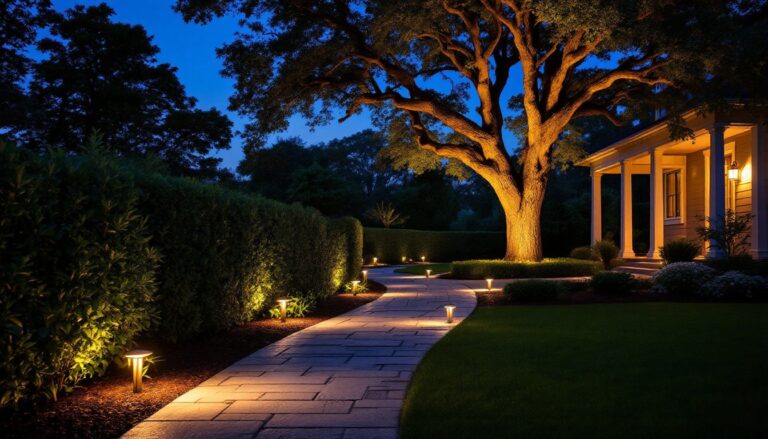
Curb appeal and property value get a real boost. Real estate agents consistently note that homes with thoughtful landscape and architectural lighting photograph better and draw stronger offers. Uplighting a mature oak or washing a stone façade with light adds drama that daytime-only landscaping can’t match. You’re not just lighting a house: you’re creating an after-dark composition that neighbors and appraisers notice.
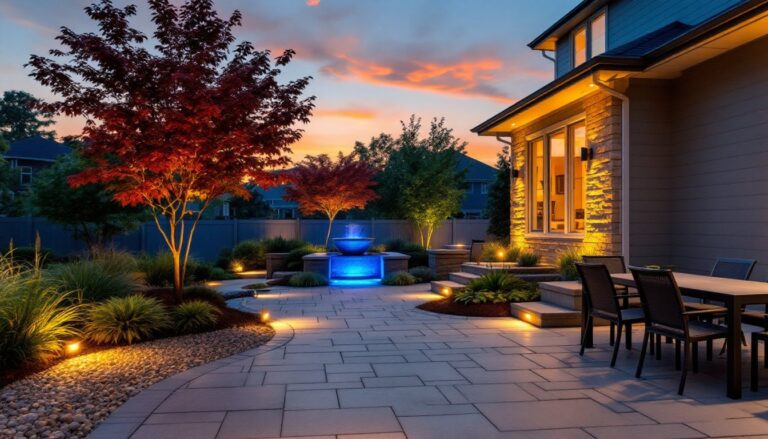
Extended use of outdoor spaces pays dividends in everyday living. A well-lit deck or patio means dinner parties and grilling don’t end at sunset. Ambient lighting paired with task lighting over cooking zones turns a backyard into a second living room from April through October in most climates.
Types of Outdoor Lighting for Every Area
Pathway and Landscape Lighting
Low-voltage LED path lights (typically 12V systems) are the workhorse of walkway illumination. They draw 1–3 watts per fixture and last 25,000–50,000 hours. Look for fixtures with at least 80 lumens output and a color temperature between 2700K and 3000K (warm white) to match incandescent tones. Space them 8–10 feet apart along walkways, aiming downward to minimize glare.
Landscape spotlights and well lights highlight plantings, trees, and architectural features. Use 3-watt to 7-watt LED spots for shrubs and 10-watt to 20-watt for large trees (20+ feet tall). Mount spotlights at least 18 inches from tree trunks to avoid bark damage and point them upward at a 30–45° angle. Well lights sit flush with the ground: they’re ideal for uplighting columns or washing stone walls but collect leaves and need seasonal cleaning.
Deck and step lights mount directly into risers or post caps. Choose fixtures rated for wet locations (not just damp) and verify they’re compatible with composite decking if that’s what you’re working with, some fasteners can void composite warranties. Recessed stair lights should provide 10–20 lumens per tread to clearly define edges without blinding users descending the stairs. If you’re adding decorative string lights for ambiance, bistro-style fixtures can create a welcoming atmosphere over dining areas.
Security and Motion-Sensor Lighting
Motion-activated flood lights remain the most common security fixture. Modern LED floods output 1500–3000 lumens and draw 15–30 watts. Adjust the sensitivity dial so small animals don’t trigger it constantly, and set the timer to 3–5 minutes rather than leaving it on all night. Mount them 8–10 feet high and angle down at a 20° slope to cover doorways and driveways without blasting neighbors’ windows.
Dusk-to-dawn fixtures use photocells to turn on automatically at sunset. They’re practical for garage entries and side gates where you want consistent illumination without fiddling with timers. Expect 800–1200 lumens from a standard wall-mount fixture. Smart outdoor lighting systems integrate with home automation platforms, allowing you to schedule scenes, adjust brightness, and receive alerts if a light goes out, features covered in detail by most connected home reviews.
Camera-integrated fixtures pair lighting with video surveillance. If you’re installing one, run both power and Ethernet (Cat6) or ensure strong Wi-Fi signal. Hardwired power is always more reliable than solar or battery-powered models for security-critical locations. Check local codes: some jurisdictions require permits for low-voltage wiring if it’s buried deeper than 12 inches or crosses property lines.
Planning Your Outdoor Lighting Layout
Start by walking your property at dusk with a flashlight. Note where you stumble, which features you’d like to highlight, and which dark corners feel uninviting. Take photos from the street to see what passersby and delivery drivers see.
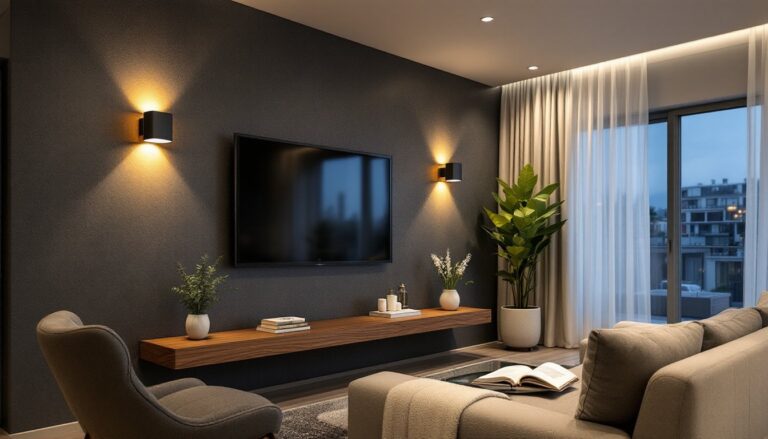
Layer your lighting: use ambient (general area illumination), task (focused light for cooking or reading), and accent (highlighting focal points). A front yard might combine path lights (ambient), a spotlight on the house number (task), and uplights on a Japanese maple (accent). Avoid the “airport runway” look, too many evenly spaced path lights create visual monotony.
Count your circuits and voltage drop. Low-voltage systems lose brightness over distance. A 12V transformer can typically serve 200–300 watts of fixtures, but keep runs under 100 feet on 12-gauge wire or you’ll see significant dimming at the end. For longer runs, install a second transformer or upgrade to 10-gauge wire. Standard 120V line-voltage fixtures need GFCI protection and weatherproof boxes: hire an electrician if you’re uncomfortable working with line voltage or if your project requires a permit.
Mind the shadows and glare. Position lights so they illuminate the target, not your eyes. Fixtures mounted too low or aimed horizontally create glare and actually reduce visibility. Use shielded or hooded fixtures near seating areas. A common mistake highlighted in outdoor design guides is overlighting, which washes out details and wastes energy.
Match fixture finishes and styles to your home’s architecture. Bronze or black fixtures suit traditional and craftsman styles: brushed nickel or stainless fit modern and coastal homes. Mixing finishes within a single zone looks unfinished, stick to one or two finishes maximum across the front yard.
Calculate materials and budget. Path lights run $20–$80 each, spotlights $30–$120, and a quality 300-watt transformer $80–$150. Add 10% for wire, connectors, stakes, and replacements. Expect $800–$2,000 in materials for a typical front-yard project (four-bedroom home, 50-foot walkway, three accent lights). Labor runs $500–$1,500 if you hire a landscaper or electrician, but most low-voltage installations are within DIY reach.
Installation Tips and DIY Considerations
Safety first: always turn off power at the breaker before working on 120V circuits. Wear safety glasses and gloves when drilling into masonry or cutting wire. Use a non-contact voltage tester to confirm circuits are dead. If you’re trenching for buried wire, call 811 to locate underground utilities, gas, electric, water, and cable all lurk beneath lawns.
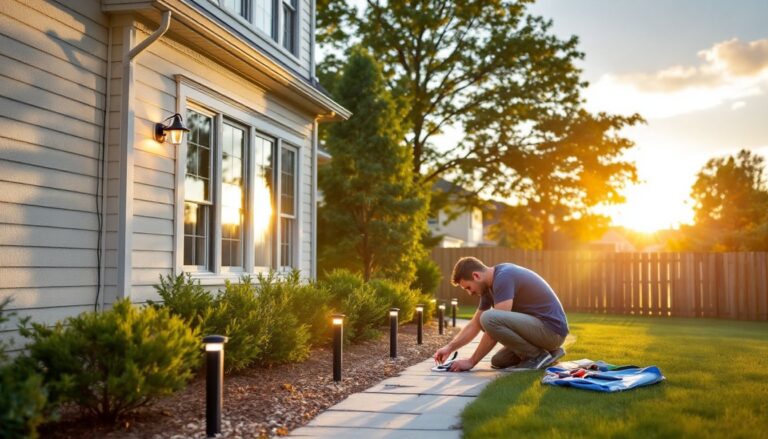
Low-voltage systems are the most DIY-friendly. Mount the transformer near a GFCI outlet (most codes require it within 12 inches of the ground or inside a weatherproof box). Run 12-gauge or 14-gauge direct-burial wire in shallow trenches (6–8 inches deep). Use wire connectors rated for direct burial or gel-filled connectors, standard wire nuts will corrode. Stake fixtures firmly: loose stakes tilt over time and ruin your lighting angles.
Line-voltage installations (120V) require weatherproof boxes, conduit (often 1/2-inch PVC or rigid metal), and GFCI breakers. If you’re adding a new circuit, you’ll need a permit in most jurisdictions. Hire a licensed electrician if you’re not comfortable pulling wire through conduit, making panel connections, or meeting local code requirements. The NEC mandates that outdoor receptacles and fixtures be on GFCI protection and that all connections in wet locations use weatherproof covers.
Mounting on different surfaces demands different hardware. For wood siding or trim, use stainless-steel screws and silicone caulk around the base to prevent water intrusion. For brick or stone, use a hammer drill with a masonry bit and plastic anchors or sleeve anchors rated for the fixture weight. For vinyl siding, avoid crushing the siding, mount to a block behind the siding or use specialized vinyl-siding hooks. Never mount heavy fixtures to hollow vinyl alone.
Test before you bury. Lay out all fixtures, connect them, and power up the system. Walk the layout at night to verify beam angles, brightness, and coverage. Adjust now, it’s much easier than digging up a trench later. Once you’re satisfied, bury wire in a neat trench and backfill with soil, tamping gently to avoid settling.
Transformer location and timer settings matter. Mount transformers in a garage, shed, or weatherproof enclosure. Avoid mounting them on the exterior wall where they’re exposed to rain and temperature swings. Most transformers include a built-in timer or photocell: set them to turn on at dusk and off at midnight (or dawn) depending on your security needs. Smart timers let you adjust schedules seasonally without reprogramming.
Maintenance and troubleshooting: clean lenses twice a year (spring and fall). Dirt, pollen, and spider webs cut light output by 30% or more. Check wire connections annually, corrosion and moisture are the top causes of fixture failure. If a fixture stops working, test voltage at the socket with a multimeter. Low voltage (below 10.8V on a 12V system) signals voltage drop or a bad transformer. Replace LED bulbs or entire fixtures if housings crack, moisture inside a fixture will kill electronics fast. For vintage-inspired fixtures that complement your home’s style, farmhouse-style outdoor options offer both durability and classic aesthetics.
Conclusion
Outdoor lighting transforms a home’s safety, functionality, and nighttime presence. Whether you’re installing low-voltage path lights along a front walk or adding security floods at the garage, the key is planning layers of light, respecting code requirements, and testing before you commit. Most homeowners can handle low-voltage projects with basic tools and a weekend. For line-voltage work or anything structural, bring in a licensed electrician. Done right, your lighting will last a decade or more, and you’ll wonder why you waited so long to light up the night.