

Table of Contents
ToggleOutdoor security lighting isn’t just about deterring break-ins, it’s about extending your home’s usable space after dark, reducing trip hazards on walkways, and giving you peace of mind when you pull into the driveway at 10 PM. The right fixtures do more than flood your yard with light: they respond intelligently to movement, integrate with your phone, and run efficiently without spiking your electric bill. This guide breaks down what actually works in 2026, from motion-activated floodlights to solar-powered perimeter lights, and where to position them for real protection, not just a false sense of security.
Key Takeaways
- The best outdoor security lighting combines motion-activated fixtures with strategic placement at entry points, delivering 700–1,300 lumens for doors and garages while preventing hiding spots and deterring intruders.
- Motion-activated floodlights, smart security lights with cameras, and solar-powered options each offer distinct advantages—hardwired LED fixtures provide consistent output, smart models add remote monitoring, and solar lights require no wiring or permits.
- Proper placement at 8–10 feet high covering all entry points (front door, garage, side doors) combined with layered ambient lighting creates overlapping detection zones that eliminate blind spots and reduce false triggers.
- LED security lights use daylight-white color temperatures (5,000–6,500K) for accurate camera visibility, last 10–20 years, and should be rated IP65 or higher to withstand weather and protect against glare or neighbor complaints.
- Beyond crime deterrence, outdoor security lighting prevents trip hazards on walkways and may qualify for modest homeowner’s insurance discounts when properly documented and integrated with neighborhood watch programs.
Why Outdoor Security Lighting Matters for Your Home
Well-placed security lighting does three things: it eliminates hiding spots, signals occupancy, and gives you visibility when you need it. Burglars consistently report avoiding homes with visible exterior lighting, it’s not complicated psychology.
Beyond crime deterrence, exterior lights prevent injuries. Unlit steps, uneven pavement, and dark driveways are liability risks, especially if you have guests or elderly family members visiting. A 200-lumen pathway light or motion-activated wall sconce can prevent a twisted ankle or worse.
Modern systems also add convenience. Motion sensors trigger lights as you carry groceries from the car, and smart models let you check your property remotely or simulate occupancy when you’re traveling. Many jurisdictions encourage exterior lighting as part of neighborhood watch programs, and homeowners insurance providers sometimes offer modest discounts for documented security measures, check your policy.
That said, poorly aimed lights create glare, annoy neighbors, and waste energy. The goal isn’t to light up your yard like a prison yard: it’s strategic illumination that balances safety, efficiency, and livability.
Key Features to Look for in Security Lighting
Start with lumens, not watts. For perimeter security, aim for 700–1,300 lumens per fixture on entry points (doors, garage) and 200–400 lumens for pathways. Anything over 1,500 lumens risks blinding you or your neighbors.
Motion sensing is non-negotiable for most security lights. Look for adjustable sensitivity and range, cheap PIR (passive infrared) sensors trigger on raccoons or windblown branches. Quality models let you set detection zones and time delays (10–60 seconds is typical). Microwave or dual-tech sensors reduce false triggers but cost more.
Color temperature matters. 5,000–6,500K (daylight white) improves visibility and renders colors accurately on security cameras. Warm white (2,700–3,000K) is fine for decorative accents but makes it harder to identify details at night.
Weatherproofing: Anything outdoors should be rated IP65 or higher. IP65 handles rain and dust: IP66 or IP67 adds protection against heavy spray or temporary submersion (useful near sprinklers or coastal areas).
Power source affects placement flexibility. Hardwired fixtures (120V) deliver consistent brightness but require electrical boxes and often permits. Battery or solar models install anywhere but need periodic maintenance. We’ll compare these in detail below.
If you’re integrating with existing systems, check for compatibility with smart home platforms (Alexa, Google Home, HomeKit) or security ecosystems (Ring, Arlo). Some lights include built-in cameras or tie into whole-home automation for scheduled on/off cycles.
Top Types of Outdoor Security Lights
Motion-Activated Floodlights
Hardwired LED floodlights are the workhorses of perimeter security. A dual-head fixture with 1,800–2,400 combined lumens covers a two-car driveway or backyard corner. Installation requires mounting to a junction box (often replacing an old porch light) and connecting hot, neutral, and ground wires, straightforward if you’re comfortable with basic electrical, but this work may require a permit depending on local codes.
Look for adjustable heads so you can aim each lamp independently. Many models include photocells that prevent daytime activation and save energy. Expect LED units to last 25,000–50,000 hours, roughly 10–20 years of typical use, with minimal maintenance.
Battery-powered motion floods (often using replaceable D-cells or rechargeable packs) offer installation flexibility but deliver lower output (400–900 lumens) and require battery swaps every 6–12 months depending on usage. They’re ideal for sheds, detached garages, or rental properties where hardwiring isn’t an option.
Smart Security Lights with Camera Integration
Smart floodlights combine motion-activated lighting with 1080p or 4K cameras, two-way audio, and cloud recording. These units typically replace existing outdoor light fixtures and use your home’s 120V wiring, but they also require a strong Wi-Fi signal, plan on placing them within 30–50 feet of your router, or use a mesh extender.
Many platforms now incorporate AI-based person detection to filter out animals and vehicles, reducing false alerts. Smart home integrations have become standard, allowing lights to trigger indoor chimes, lock doors, or activate other devices when motion is detected.
Installation is similar to standard hardwired lights, with the addition of syncing to a mobile app and configuring detection zones. Some models require a subscription for cloud storage ($3–10/month), while others include local storage via microSD.
If you already have standalone security cameras, consider smart bulbs in standard outdoor sockets (PAR38 or A19) instead. These screw into existing fixtures, offer app control, and cost $15–40 per bulb, but they don’t include cameras and depend on the existing switch staying on.
Solar-Powered Security Lights
Solar fixtures have improved dramatically. Modern units use monocrystalline panels and lithium-ion batteries for better performance in partial shade and cold weather. Expect 300–800 lumens from quality solar floods, enough for side yards, fence lines, or supplemental lighting around entry points.
The Aootek Solar Outdoor Flood Lights exemplify this category, offering multiple LED heads and adjustable brightness modes. Most solar lights include three modes: dim constant light, motion-triggered full brightness, or off until motion detected.
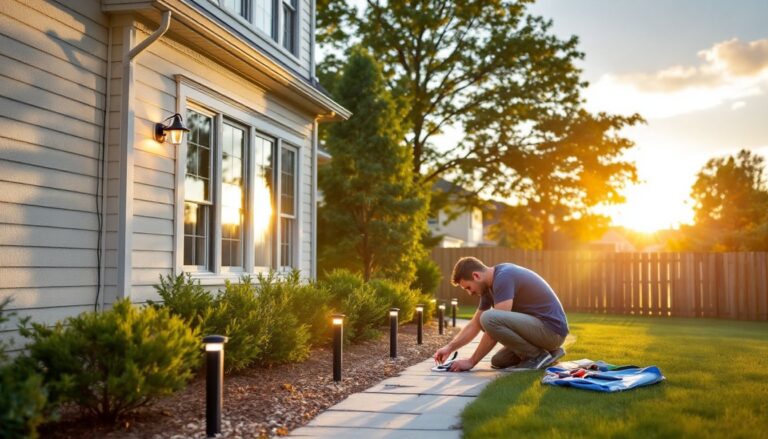
Installation is tool-free: mount the panel in full sun (south-facing in the Northern Hemisphere), run the low-voltage wire to the light head (usually 10–16 feet), and secure with screws or stakes. No permits, no electrician.
The catch? Solar lights dim in winter or during long cloudy stretches, especially in northern climates. Budget models use NiMH batteries that degrade in 1–2 years: better units use replaceable 18650 lithium cells. Clean panels twice a year to maintain output, and expect to replace batteries every 2–4 years depending on climate.
Strategic Placement Tips for Maximum Protection
Mount motion lights 8–10 feet high, high enough to prevent tampering but low enough to trigger reliably. Placing them under eaves also protects sensors from direct rain and extends lifespan.
Cover all entry points first: front door, back door, garage side door, and basement access. These are the most common intrusion points and deserve the brightest, most reliable fixtures. Add secondary lighting along pathways and dark corners where someone could approach unseen.
Avoid aiming lights directly at neighbors’ windows or streets, this creates glare complaints and can violate local light pollution ordinances. Use shields, shrouds, or directional fixtures to focus beams downward and onto your property. Warm-toned bistro lighting works well for entertaining spaces but won’t trigger or provide the lumens needed for security zones.
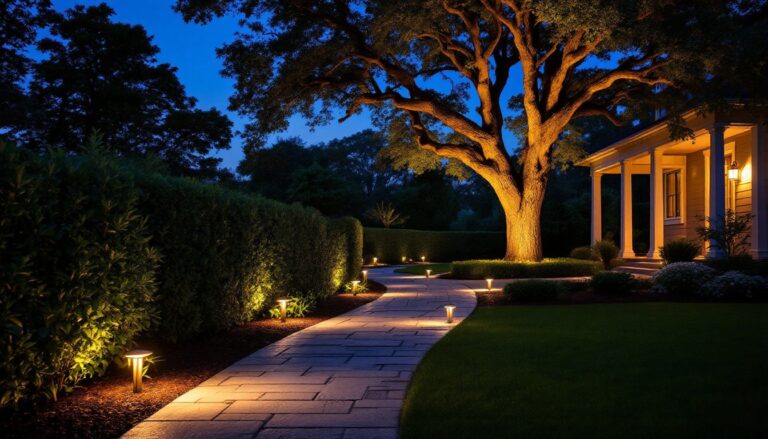
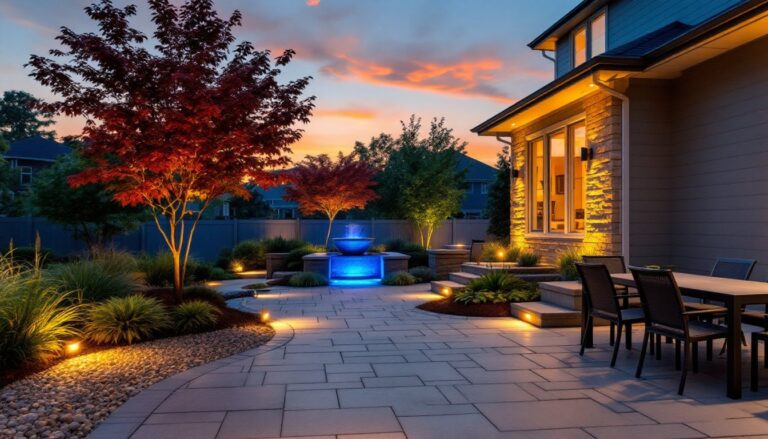
Layer your lighting. Combine bright task lighting (motion floodlights at doors) with low-level ambient lighting (path lights, soffit strips) that stays on all night. This reduces the harsh on/off effect of pure motion sensing and makes it harder for someone to time their approach between activations.
For larger properties, consider overlapping detection zones. Place fixtures so motion in one area triggers lights in adjacent zones, eliminating blind spots. Many smart home systems now allow grouped triggers, movement at the driveway can activate both the garage light and front porch simultaneously.
Test your setup after installation. Walk your property at night from multiple approach angles to confirm coverage. Adjust sensor angles, sensitivity, and timer duration as needed. Most systems require a week or two of observation to fine-tune settings and reduce false triggers from passing cars or wildlife.